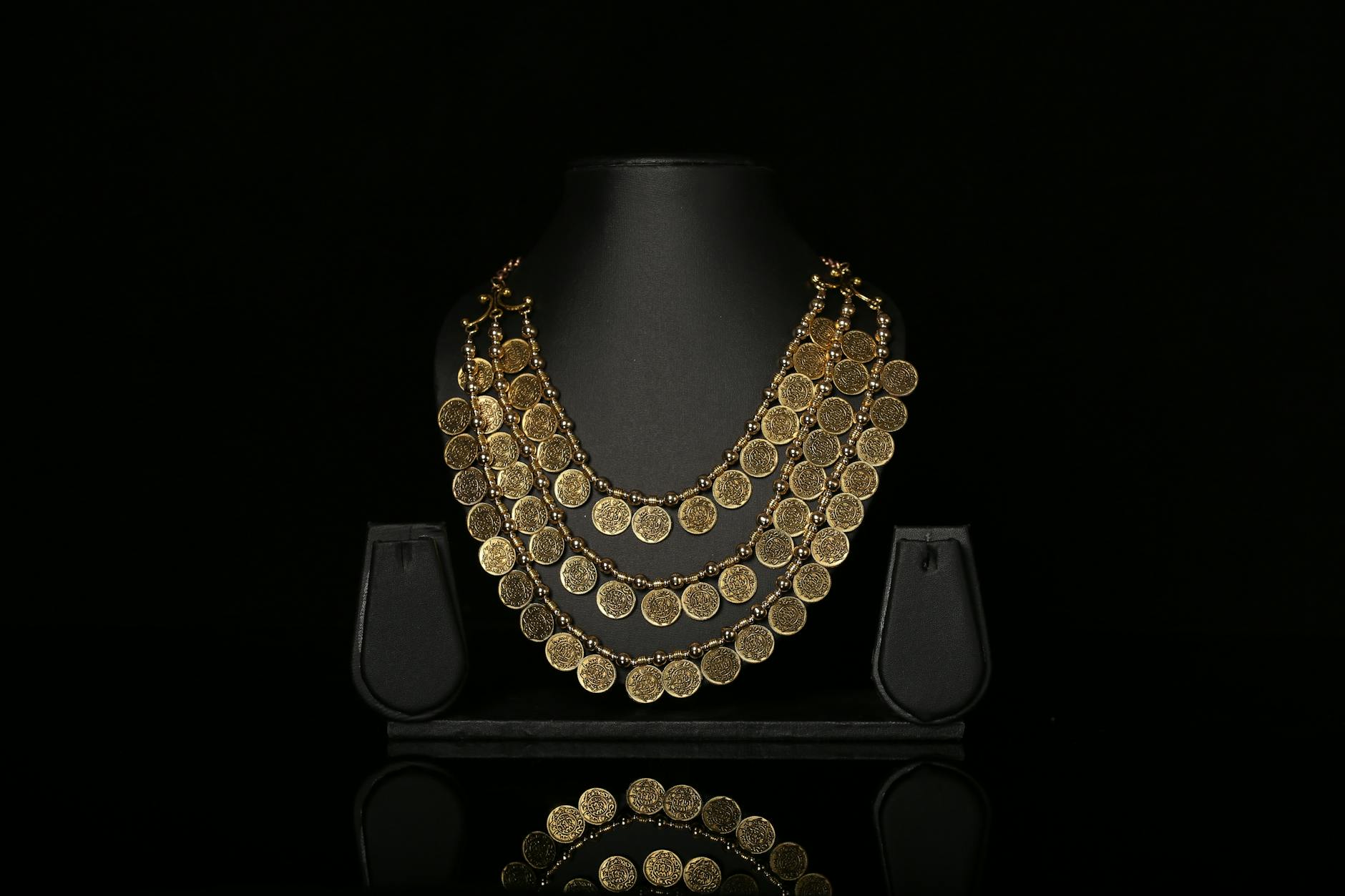
The Thushi is the most recognisable piece in a Maharashtrian bride's trousseau — a snug gold-bead choker that hugs the neck high. While modern interpretations have proliferated, the classic Thushi follows a tradition that dates back centuries to the Peshwa era. This 2026 guide explains the heritage, how to identify authentic pieces, typical pricing and where to commission your own.
The Thushi sits between the collarbones and the chin — never lower. This snug fit is the Thushi's signature, which is why off-the-shelf "Thushi-style" necklaces from chain stores often miss the look entirely. Authentic Thushi requires the fit to be measured precisely to the wearer's neck.
The Peshwa-era origin
The Thushi's origins trace to 18th-century Maharashtra during the Peshwa rule. Goldsmiths in Pune and Kolhapur developed the technique of hand-shaping uniform gold beads — a labor-intensive process where each bead is individually hammered, drilled, and polished. The Peshwa era's emphasis on craftsmanship is evident in heritage Thushi pieces, where slight irregularities in bead size are signs of authenticity rather than defects.
Marathi tradition holds that a bride wears her Thushi during the lagna (wedding) ceremony as a symbol of marital wealth and family prosperity. The piece is often passed mother to daughter — heritage Thushi from grandmothers' generation are sometimes refurbished and passed forward.
What makes a Thushi distinctly Maharashtrian
Three structural features define a true Thushi:
- Bead uniformity: all beads are identical in size and shape. Variations of less than 0.5mm reflect handcrafted nature without compromising the consistent look.
- Tight stringing: beads are strung close together with no visible thread or gap between adjacent beads. This creates the smooth, almost solid-looking surface.
- Snug fit: the necklace must sit high on the throat — not at the base of the neck. This requires custom fitting to the wearer.
Heritage vs machine-made: the visible differences
Five tells distinguish authentic handcrafted from machine-made:
- Bead surface texture: handcrafted beads have subtle hammered dimples; machine-made are smoothly rounded.
- Bead size variation: heritage pieces show 0.2–0.5mm size differences across beads — a sign of hand-shaping. Perfect uniformity = machine.
- Drilling holes: handcrafted beads have slightly off-centre or uneven drill holes; machine drilling is perfectly centred.
- Clasp design: traditional Thushi uses a bead-twisted clasp (gold beads woven into the closing mechanism); machine-made versions use modern lobster clasps or screw locks.
- String/thread material: heritage pieces are strung on twisted gold wire; machine-made on fishing-line-style synthetic thread.
Typical weight, making charge, and price (2026)
Pricing varies dramatically by craftsmanship:
- Plain machine-made (40g 22K): Gold ₹5.45 lakh + 12% making (₹65,000) + GST. Total: ~₹6 lakh.
- Mid-tier handcrafted (70g 22K): Gold ₹9.5 lakh + 17% making (₹1.6 lakh) + GST. Total: ~₹11.5 lakh.
- Heritage Kolhapuri handcrafted (100g 22K): Gold ₹13.6 lakh + 22% making (₹3 lakh) + GST. Total: ~₹17.5 lakh.
- With diamond/Polki accents: add ₹1.5–6 lakh depending on stone grade and quantity.
The making charge variation reflects real labour — a master karigar takes 6–9 weeks to handcraft a heritage Thushi versus 5–7 days of machine work. Use our gold price formula to verify any quote you receive.
Pairing the Thushi with other Maharashtrian pieces
A Marathi bride's neck stack is layered:
- Thushi: highest, snug to the throat (the centerpiece).
- Bormaal: gold-and-pearl chain just below.
- Mohan Mala: long multi-strand bead necklace falling below.
- Kolhapuri Saaj: the longest layer with 21 ornamental pendants.
The complete Maharashtrian bridal neck stack creates the layered look unique to Marathi weddings — quite different from the single-statement neckpiece of North Indian brides. Plan the full bridal trousseau with all five regional pieces.
Where to commission
Three primary sources for authentic Thushi:
- Pune's Tulsibaug: 200+ year-old jewellers, the historic centre. Heaviest concentration of master karigars. Pricing competitive due to high competition.
- Mumbai's Zaveri Bazaar: larger selection including modern variations with diamond/Polki accents. Higher retail margin but more design choices.
- Kolhapur's Rajwada Bazaar: heaviest, most ornate handcrafted pieces. The traditional Kolhapuri style is the most ornamental. Custom orders take 6–9 weeks but result in heritage-grade pieces.
For Maharashtra tehsils outside these major cities, our Maharashtra jeweller directory lists local BIS-licensed jewellers who can custom-order Thushi pieces sourced from Pune or Kolhapur master karigars. Allow 8–12 weeks for the full commission process.
Modern adaptations
For modern brides who want lighter Thushi for daily wear or office occasions, three adaptations exist:
- Light Thushi (25–35g): hollow construction with thinner gold sheet. Visually similar but feasible for daily wear.
- Diamond-accent Thushi: small diamonds set into selected beads. Modern aesthetic while maintaining heritage form.
- Pearl-accent Thushi: alternating gold beads with cultured pearls. Lighter and more contemporary.
Care and maintenance
Specific care for the Thushi's tight bead structure:
- Avoid pulling on the necklace — the tight stringing can stretch over time.
- Clean with soft toothbrush + mild soap, particularly between beads where soap residue and oils accumulate.
- Restring every 5–10 years if the original stringing weakens — a master karigar can re-string for ₹2,000–₹6,000.
- Store flat in airtight bag — coiling stresses the structure.
- BIS hallmark verification annually via BIS Care app.
The Thushi in modern Maharashtrian weddings
While traditional brides still favour the heavy 100g+ Kolhapuri Thushi, modern Maharashtrian families adapt the piece in three ways. First, lighter constructions for non-wedding daily wear — the bride keeps the heritage Thushi for ceremonial use only. Second, modular Thushi designs where additional bead strands can be added or removed depending on occasion. Third, mixing Thushi with contemporary diamond accents for fusion bridal looks that still honour the heritage form.
For Maharashtrian families with limited budget, modular planning helps: commission a base 50g Thushi for the wedding, then add bead strands or pendants over years as anniversary gifts. The Thushi grows alongside the marriage — a meaningful tradition many young couples adopt.
Authoritative references
For BIS hallmarking standards on the Thushi's gold beads: bis.gov.in. For Maharashtra government's traditional craft GI tags including Kolhapuri Saaj (which often pairs with Thushi): ipindia.gov.in. For verified Maharashtra jewellers in your tehsil: our Maharashtra directory.
More in Wedding & Bridal
Share this article
Our editorial team comprises jewellery industry veterans, certified gemmologists, and passionate writers with decades of combined experience across India's gold, diamond, and gemstone markets. Every article is researched, fact-checked, and written to help Indian buyers make smarter, safer jewellery decisions.
Passionate about jewellery and love to write? We'd love to hear from you.
Join us as a writer →Ready to buy? Find verified jewellers near you
Browse 10,000+ BIS hallmark certified jewellers across India. Compare ratings, check today's gold rate, and book a visit.
Keep Reading