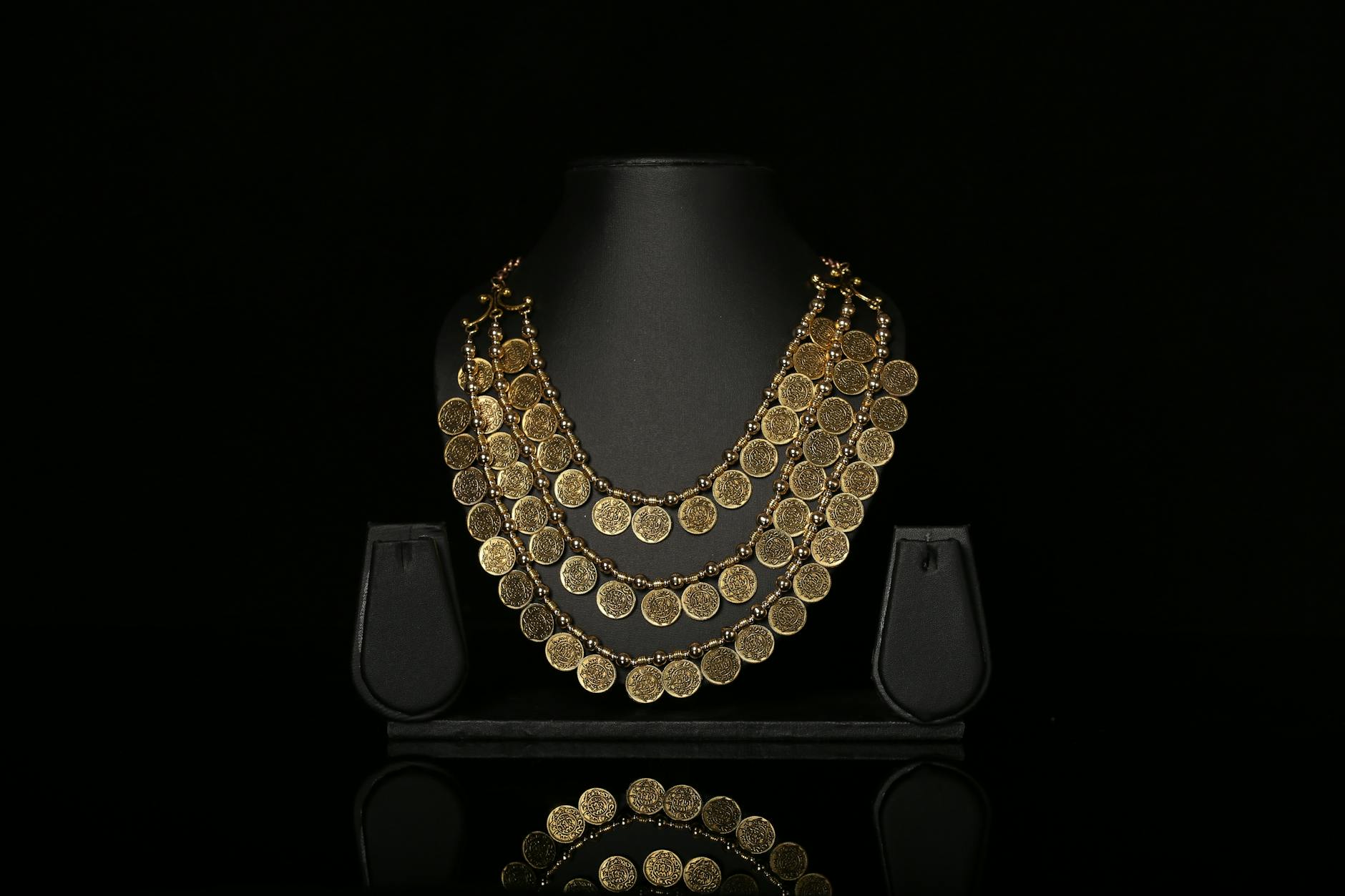
Navratri is not just India's most widely celebrated festival — it is one of its most jewellery-conscious. The nine-day festival in honour of Devi (the divine feminine) has a deep tradition of colour-coded dressing, with each day assigned a colour associated with a form of the Goddess. For millions of Indian women, choosing jewellery that complements the day's colour is as central to the Navratri experience as the puja itself. This guide covers Navratri 2026 specifically — dates, the nine-day colour schedule, traditional pieces by Devi form, and how to plan your festival jewellery.
Navratri 2026 dates and colour calendar
Shardiya Navratri 2026 begins on 22 September and concludes with Vijayadashami (Dussehra) on 1 October 2026.
| Day | Date | Devi Form | Colour | Jewellery Accent |
|---|---|---|---|---|
| 1 | 22 Sep | Shailaputri | Yellow / Orange | Topaz, citrine, yellow sapphire accent pieces |
| 2 | 23 Sep | Brahmacharini | Green | Emerald, green tourmaline, jade accents |
| 3 | 24 Sep | Chandraghanta | Grey | Oxidised silver, grey moonstone, labradorite |
| 4 | 25 Sep | Kushmanda | Orange | Coral, carnelian, orange sapphire accents |
| 5 | 26 Sep | Skandamata | White | Pearl, white kundan, moonstone |
| 6 | 27 Sep | Katyayani | Red | Ruby, red coral, garnet, red Meenakari |
| 7 | 28 Sep | Kalaratri | Royal Blue | Blue sapphire, lapis lazuli, blue topaz |
| 8 | 29 Sep | Mahagauri | Pink | Rose quartz, pink tourmaline, pearl with pink tones |
| 9 | 30 Sep | Siddhidatri | Purple | Amethyst, purple jade, violet sapphire |
| 10 | 1 Oct | Vijayadashami | Peacock Green / Multi | Full festive set — any auspicious colours |
Note: colour schedules vary between published sources and regional traditions. The above follows the most widely circulated 2026 Navratri colour calendar for North India.
Traditional jewellery by Devi form
Shailaputri (Day 1): Mountain-born Goddess
Shailaputri is associated with the earth and mountains — her traditional colour is yellow, connected to turmeric and auspicious beginnings. Gold itself is the earth metal par excellence. Day 1 is traditionally when new gold jewellery purchases are made (if not on Akshaya Tritiya). A new gold piece — even a small pendant or pair of earrings — worn for the first time on Day 1 is considered auspicious.
Brahmacharini (Day 2): The Ascetic
Green is associated with nature, growth and new beginnings. Green-stone accent pieces in gold — emerald studs, green tourmaline drops, jade-inlaid pendants — are the traditional jewellery accent. Meenakari (enamel) jewellery with green Meenakari work on gold is particularly appropriate for this day.
Chandraghanta (Day 3): The Moon-Belled
Grey and silver tones on Day 3 make oxidised silver jewellery the natural choice — and this is one of the few days where silver takes precedence over gold in the colour coordination. Grey moonstone or labradorite set in silver are beautiful Day 3 options. For those who prefer gold, a grey-toned piece (white gold or grey enamel) works.
Skandamata (Day 5): White / Purity
The white day is the occasion for pearl jewellery in India — pearl necklaces, pearl earrings, pearl maang tikka. Pearls have been associated with purity and Devi worship across Indian traditions. Kundan jewellery with large white Kundan stones (clear glass or white quartz) in gold foil settings is the classical traditional option. Pearl and gold combinations are quintessentially Indian and look particularly beautiful with white and cream sarees.
Katyayani (Day 6): Red / The Warrior
Day 6 is the most jewellery-elaborate day for many traditions. Red is the auspicious colour for married women and for Devi in her warrior form. Corals, rubies, garnets, and red Meenakari gold jewellery are all appropriate. This is the day for elaborate red-toned sets — a Meenakari choker with ruby or red stone accents, or South Indian temple jewellery with coral settings.
Regional Navratri jewellery traditions
Gujarat (Garba)
Gujarat's Garba tradition during Navratri requires jewellery that can withstand hours of energetic circular dancing. Key pieces:
- Kamarband (waist belt): Worn for Garba — keeps the energy of the dance visible and adds percussion-like movement.
- Ghungroo payal: Anklets with small bells that add sound to the footwork of Garba.
- Chandbali earrings: Crescent-moon shaped drops that sway with movement — a Garba classic.
- Hasli (collar necklace): Sits close to the neck, doesn't bounce during dancing.
- Oxidised silver: More common than pure gold for Garba jewellery because it is lighter and its antique finish suits traditional Gujarati aesthetics.
North India (Durga Puja / Navratri puja)
North Indian Navratri focuses on the daily puja and the elaborate Ashtami/Navami observances. Jewellery is complete-shringar on the ceremonial days. The nine-colour clothing coordination is observed daily, with jewellery accented to match. Traditional North Indian pieces — Kundan, Polki, Meenakari — are particularly appropriate for the festival context.
West Bengal (Durga Puja)
Bengal's Durga Puja overlaps with Navratri (Shashthi through Navami). Bengali Durga Puja jewellery is traditionally gold — the Goddess is adorned with gold ornaments in the idol, and devotees dress accordingly. Shakha-Pola and gold jewellery are worn by married women for the puja on all four days. See our Shakha-Pola guide for the tradition behind these marriage bangles.
Shopping smart for Navratri 2026
Navratri falls in the Navratri-Diwali window (22 September–20 October 2026) — the most concentrated jewellery shopping season in India. Making charge promotions from major chains start from early September. For gold purchases planned for Navratri, shop in late August or early September to beat the peak-season rush and secure making charge discounts before the festival premium hits. See our making charges negotiation guide for specific timing advice.
For verifying the purity of any gold piece purchased for Navratri, use the BIS Care app HUID check. Find BIS-registered jewellers in your city through our India-wide jeweller directory — search by state or district for local options.
More in Wedding & Bridal
Share this article
Our editorial team comprises jewellery industry veterans, certified gemmologists, and passionate writers with decades of combined experience across India's gold, diamond, and gemstone markets. Every article is researched, fact-checked, and written to help Indian buyers make smarter, safer jewellery decisions.
Passionate about jewellery and love to write? We'd love to hear from you.
Join us as a writer →Ready to buy? Find verified jewellers near you
Browse 10,000+ BIS hallmark certified jewellers across India. Compare ratings, check today's gold rate, and book a visit.
Keep Reading