Introduction: The Golden Splendor of Tamil Bridal Traditions
Tamil Nadu's relationship with gold is among the deepest and most enduring of any culture on earth. The state accounts for nearly 40% of India's total gold consumption, and nowhere is this devotion to gold more magnificently expressed than in the Tamil wedding. A Tamil bride, adorned from head to toe in gold jewelry of extraordinary craftsmanship, is not merely wearing ornaments — she is embodying Goddess Lakshmi herself, a living symbol of prosperity, grace, and divine feminine power.
The Tamil bridal jewelry tradition draws from over two thousand years of continuous goldsmithing heritage. The Sangam literature of the early centuries CE describes Tamil women wearing many of the same jewelry forms — temple necklaces, waist belts, anklets, and ornate hair pieces — that today's Tamil brides still wear. This unbroken chain of tradition makes Tamil wedding jewelry one of the oldest living jewelry traditions in the world.
What distinguishes Tamil bridal jewelry from other Indian traditions is the concept of "temple jewelry" — gold ornaments whose designs are drawn directly from the sculptures and carvings of Tamil Nadu's ancient temples. The devadasi (temple dancer) tradition preserved these designs through centuries, and when the Bharatanatyam dance form was revived in the early 20th century, temple jewelry experienced a renaissance that continues to this day. A Tamil bridal set is, in essence, a portable temple — every motif, every curve, every stone placement references the divine architecture that defines Tamil cultural identity.
In 2026, with gold rates at historic levels and Tamil wedding culture more vibrant than ever, understanding the complete landscape of Tamil bridal jewelry — from the sacred Thali to the spectacular Oddiyanam, from the ancient traditions of Kanchipuram to the contemporary innovations of Chennai's jewelry houses — is essential for every Tamil bride, groom, and family. This guide provides that understanding in comprehensive detail.
The Complete Tamil Bridal Jewelry Set: Piece by Piece
Overview of the Traditional Ensemble
A complete Tamil bridal jewelry set, known colloquially as "muzhu set" or full set, encompasses jewelry for every part of the body. The traditional Tamil belief is that a bride should have no body part unadorned with gold — gold on the head, ears, nose, neck, arms, wrists, waist, fingers, and toes creates a complete golden aura that blesses the marriage with Lakshmi's perpetual presence.
| Piece | Tamil Name | Body Part | Weight Range | Approx. Price (22K, 2026) |
|---|---|---|---|---|
| Manga Malai | Manga Malai | Neck | 40-100g | ₹2,60,000-₹6,50,000 |
| Kasu Malai | Kasu Malai | Neck | 30-80g | ₹1,95,000-₹5,20,000 |
| Jimikki Kammal | Jimikki | Ears | 10-25g pair | ₹65,000-₹1,62,500 |
| Oddiyanam | Oddiyanam | Waist | 80-200g | ₹5,20,000-₹13,00,000 |
| Vanki | Vanki | Upper arm | 15-40g | ₹97,500-₹2,60,000 |
| Thali | Thali Kodi | Neck | 5-15g | ₹32,500-₹97,500 |
| Nethichutti | Nethichutti | Forehead | 10-25g | ₹65,000-₹1,62,500 |
| Jada Billai | Jadanagam | Hair | 30-60g | ₹1,95,000-₹3,90,000 |
| Mookuthi | Mookuthi | Nose | 1-3g | ₹6,500-₹19,500 |
| Vangi (bangles) | Valaiyal | Wrists | 20-40g per pair | ₹1,30,000-₹2,60,000 |
| Metti | Metti | Toes | 5-10g (silver) | ₹500-₹1,200 |
| Arasi (rings) | Modhiram | Fingers | 3-8g | ₹19,500-₹52,000 |
Manga Malai: The Mango Necklace
History and Symbolism
The Manga Malai, literally translating to "mango garland," is the crown jewel of Tamil bridal necklaces. This exquisite necklace features a series of mango-shaped (paisley) gold pendants arranged along a gold chain, growing progressively larger toward the center. The mango motif, known as "manga" in Tamil, is one of the most ancient and auspicious symbols in Indian art, representing fertility, abundance, and the sweetness of married life.
The origin of the Manga Malai is traced to the Chola dynasty (9th-13th century CE), whose master goldsmiths created necklaces inspired by the mango orchards that were considered a sign of agricultural prosperity. The mango shape also mirrors the form of Goddess Lakshmi's eyes in temple sculptures, adding a devotional dimension to its aesthetic beauty.
Design Variations
Traditional Manga Malai: Features 15-21 mango-shaped pendants in graduating sizes, each with raised designs of deities, flowers, or peacocks. The mangoes are typically in 22K gold with ruby and emerald accents at the center of each pendant. The chain is a thick gold rope or interlocking link design. Nagapadam Manga Malai: A variation where the mango pendants are framed by serpent (naga) motifs, connecting the necklace to the protective symbolism of the snake in Tamil mythology. This design is particularly popular among Chettiar and Mudaliar families. Contemporary Manga Malai: Modern versions feature lighter, hollow mango pendants with a more refined, less bulky profile. Some contemporary designs replace the traditional rope chain with a sleeker box chain or include diamond accents within each mango for added sparkle.Cost Analysis
The Manga Malai is typically the second most expensive piece in the Tamil bridal set (after the Oddiyanam). A traditional bridal Manga Malai weighs 40-100 grams, with most brides choosing pieces in the 50-70 gram range.
| Category | Weight | Gold Value (22K) | Making Charges | Stones | Total |
|---|---|---|---|---|---|
| Light contemporary | 35-45g | ₹2,17,000-₹2,79,000 | ₹35,000-₹54,000 | ₹10,000-₹25,000 | ₹2,62,000-₹3,58,000 |
| Medium traditional | 50-70g | ₹3,10,000-₹4,34,000 | ₹60,000-₹1,05,000 | ₹25,000-₹60,000 | ₹3,95,000-₹5,99,000 |
| Heavy bridal | 80-100g | ₹4,96,000-₹6,20,000 | ₹96,000-₹1,50,000 | ₹50,000-₹1,00,000 | ₹6,42,000-₹8,70,000 |
Jimikki Kammal: The Iconic Tamil Earring
Cultural Significance
The Jimikki Kammal burst into national and international consciousness through the 2017 Malayalam film song of the same name, but in Tamil Nadu, these bell-shaped drop earrings have been an essential part of women's adornment for centuries. The word "jimikki" refers to the characteristic jingling sound the earring makes when the wearer moves, while "kammal" simply means earring in Tamil.
The sound of the Jimikki is not merely decorative — in Tamil wedding tradition, the melodious tinkling of a bride's earrings is considered auspicious, announcing her presence and filling the home with the music of prosperity. The Natyashastra, the ancient Indian text on performing arts, describes dancers wearing similar bell-shaped earrings that create rhythm through movement, linking the Jimikki to both matrimonial and artistic traditions.
Design Elements
A traditional Jimikki Kammal consists of three main components: the stud (the upper portion that sits against the earlobe), the connecting element (a short chain or gold link), and the dome or bell (the lower, hollow portion that creates the jingling sound). Inside the dome, a small gold ball moves freely, producing the signature sound.
Classic Jimikki: A simple gold dome suspended from a flat gold stud. The dome may be smooth, hammered, or decorated with filigree. Weight: 8-15 grams per pair. This is the most traditional and widely worn version. Temple Jimikki: Features deity figures on the stud portion — Lakshmi, Saraswati, or a peacock — with a larger, more ornate dome. Weight: 15-25 grams per pair. These are specifically designed for weddings and major festivals. Kundan Jimikki: Incorporates uncut diamonds (polki) or colored stones into the design, blending Tamil craftsmanship with Mughal-inspired stone setting. This fusion style has become very popular among modern Tamil brides. Weight: 12-20 grams per pair. Chandbali Jimikki: A cross between the North Indian chandbali and the Tamil jimikki, featuring a crescent moon shape above the dome. This hybrid design appeals to brides seeking a less region-specific aesthetic. Weight: 10-18 grams per pair.Cost Breakdown
| Jimikki Type | Weight (pair) | Gold + Making | Stones | Total Price |
|---|---|---|---|---|
| Classic simple | 8-12g | ₹55,000-₹85,000 | None | ₹55,000-₹85,000 |
| Medium temple | 14-18g | ₹96,000-₹1,30,000 | ₹5,000-₹15,000 | ₹1,01,000-₹1,45,000 |
| Heavy bridal | 20-28g | ₹1,40,000-₹2,00,000 | ₹15,000-₹40,000 | ₹1,55,000-₹2,40,000 |
| Kundan/diamond | 12-18g | ₹85,000-₹1,30,000 | ₹30,000-₹1,50,000 | ₹1,15,000-₹2,80,000 |
Oddiyanam: The Sacred Waist Belt
The Centerpiece of Tamil Bridal Grandeur
If the Tamil bridal ensemble has one piece that takes every guest's breath away, it is the Oddiyanam — the magnificent gold waist belt that encircles the bride's waist over her Kanchipuram silk saree. The Oddiyanam is not merely an ornament; it is an engineering marvel of goldsmithing, consisting of multiple articulated gold plates linked together to conform flexibly to the body's contours.
The Oddiyanam's significance extends beyond aesthetics. In Tamil tradition, the waist belt represents the bride's purity and her readiness for motherhood. The clasping of the Oddiyanam by the groom's family is part of some wedding ceremonies, symbolizing the bride's acceptance into her new family. The weight of the Oddiyanam — often the single heaviest piece in the entire bridal collection — represents the family's capacity to provide for the bride's security.
Design and Construction
A traditional Oddiyanam consists of 15-25 individually crafted gold plates, each featuring temple motifs, deity figures, or nature scenes. The plates are connected by gold hinges that allow the belt to flex and move with the body. The central plate (the clasp) is typically the largest and most ornate, often featuring a full figure of Lakshmi or a multi-headed serpent (ananta).
The back plates are typically simpler and lighter than the front, as they are hidden against the body. Skilled jewellers design the Oddiyanam so that the weight distribution is comfortable for extended wear — a poorly balanced Oddiyanam can cause significant discomfort during a multi-hour Tamil wedding ceremony.
Cost and Investment
The Oddiyanam is almost always the most expensive single piece in a Tamil bridal set. The weight ranges from 80 grams for a lightweight modern version to 200 grams or more for a traditional heavy piece. Most bridal Oddiyanams fall in the 100-150 gram range.
| Category | Weight | Gold Value | Making | Stones | Total |
|---|---|---|---|---|---|
| Modern light | 60-80g | ₹3,72,000-₹4,96,000 | ₹60,000-₹96,000 | ₹15,000-₹40,000 | ₹4,47,000-₹6,32,000 |
| Standard bridal | 100-140g | ₹6,20,000-₹8,68,000 | ₹1,20,000-₹2,10,000 | ₹40,000-₹1,00,000 | ₹7,80,000-₹11,78,000 |
| Grand traditional | 160-220g | ₹9,92,000-₹13,64,000 | ₹1,92,000-₹3,30,000 | ₹1,00,000-₹2,00,000 | ₹12,84,000-₹18,94,000 |
Vanki: The Armlet of Divine Grace
Temple Origins
The Vanki (also spelled "Vangi") is a V-shaped armlet worn on the upper arm, and its design is drawn directly from the ornaments seen on deity figures in Tamil Nadu's great temples. The distinctive V-shape, which opens toward the shoulder and closes toward the elbow, is unique to South Indian jewelry traditions. In temple sculptures at Tanjore, Chidambaram, and Madurai, virtually every female divine figure wears a Vanki, establishing it as an ornament of the gods that human brides are privileged to wear.
The Vanki serves a symbolic function during the wedding ceremony itself. In many Tamil wedding traditions, the groom ties the Vanki on the bride's arm, signifying his commitment to protect and support her. This moment, while less publicized than the Thali-tying, carries deep emotional resonance.
Design Variations
Naga Vanki: Features intertwined serpent motifs, symbolizing protection and fertility. The most traditional and widely chosen design. Lakshmi Vanki: Features a central Lakshmi figure flanked by elephants (gaja-lakshmi motif). This design is considered especially auspicious for weddings. Peacock Vanki: Features peacock motifs with gemstone eyes and spread tail feathers. This design is popular among contemporary brides for its aesthetic beauty. Minimalist Vanki: A simplified V-shape in plain or textured gold without figurative motifs. This modern version weighs 10-15 grams and works well for brides who want to honor tradition without the full weight of a traditional piece.A traditional bridal Vanki weighs 15-40 grams, with prices ranging from ₹1,05,000 to ₹2,80,000. The making charges for Vanki are among the highest in Tamil jewelry (₹1,200-₹2,000 per gram) due to the complex three-dimensional sculpting required.
Temple Jewelry: The Soul of Tamil Bridal Adornment
What Makes Temple Jewelry Unique
Temple jewelry is not a single piece but a design philosophy that unifies the entire Tamil bridal ensemble. Every piece in a temple jewelry set — from the necklace to the hair ornament — features motifs drawn from Tamil Nadu's temple architecture and sculpture. Lakshmi, Ganesh, peacocks, lotuses, temple gopurams (towers), and mythological scenes are rendered in gold with extraordinary detail and devotion.
The technique behind temple jewelry involves a distinctive process. A base design is carved in wax, which is then used to create a mold for gold casting. After casting, the piece is hand-finished — details are sharpened, surfaces are textured, and stones are set. The process for a single complex piece can take weeks. This labor-intensive method gives temple jewelry its characteristic depth and three-dimensionality that machine-made jewelry cannot replicate.
Key Temple Jewelry Motifs
Lakshmi: The goddess of wealth is the most common motif, appearing on necklaces (Lakshmi Haar), earrings, waist belts, and hair ornaments. A Lakshmi figure surrounded by elephants (gaja-lakshmi) is considered the most auspicious bridal motif. Peacock: The national bird appears in various forms — single peacock, peacock pair (representing the couple), peacock with spread tail. Peacock motifs are especially prominent on Jimikki and Nethichutti (forehead ornament). Mango (Paisley): The manga shape appears on virtually every type of Tamil jewelry. Beyond the Manga Malai, mango motifs border necklaces, adorn earring studs, and decorate bangles. Temple Gopuram: The distinctive pyramidal tower of South Indian temples appears as a pendant motif on necklaces, symbolizing the sacred architecture that houses the divine.Kanchipuram vs. Chennai: Two Schools of Tamil Jewelry
The Kanchipuram Tradition
Kanchipuram, the temple city 70 kilometers southwest of Chennai, has been a center of goldsmithing for over a thousand years. Just as the city is famous for its silk sarees, its gold jewelry tradition is among the finest in India. Kanchipuram jewellers specialize in heavy, traditional temple jewelry with a focus on hand-crafted techniques passed down through generations of artisan families.
The Kanchipuram jewelry aesthetic is uncompromisingly traditional. Pieces tend to be heavier, with thick gold construction, large gemstone settings, and designs that faithfully reproduce historical templates. The making process is slower and more labor-intensive than Chennai's more mechanized operations, which is reflected in higher making charges but also superior craftsmanship on individual pieces.
Where to shop in Kanchipuram: The area around the Kamakshi Amman Temple has several heritage jewellers. Prices for making charges run ₹1,000-₹2,000 per gram, but the artisanal quality is consistently high. Many families from across Tamil Nadu make pilgrimages to Kanchipuram specifically for bridal jewelry purchases, combining the shopping trip with temple visits.The Chennai Tradition
Chennai's jewelry industry, centered around T. Nagar and Mylapore, is a powerhouse of scale and variety. The city's jewellers — from iconic brands like GRT, Joyalukkas, Kalyan, and NAC to hundreds of family-owned shops — offer an enormous range of Tamil bridal jewelry in every weight, style, and budget category.
Chennai jewelry tends to be more varied and innovative than Kanchipuram's traditionally focused offerings. You will find classic temple sets alongside contemporary interpretations, lightweight options for budget-conscious brides, and fusion designs that incorporate international influences. The competitive environment of T. Nagar, where dozens of major jewellers operate within walking distance of each other, keeps pricing sharp and customer service high.
Where to shop in Chennai:| Area | Specialty | Making Charges | Best For |
|---|---|---|---|
| T. Nagar (Usman Road) | Full range, branded | ₹600-₹1,200/g | One-stop shopping, variety |
| Mylapore | Traditional temple jewelry | ₹800-₹1,500/g | Authentic traditional pieces |
| Sowcarpet | North Indian + Tamil fusion | ₹500-₹1,000/g | Budget-friendly, variety |
| Anna Nagar | Contemporary, designer | ₹800-₹1,800/g | Modern Tamil bride |
| Kanchipuram (road) | Heritage artisan | ₹1,000-₹2,000/g | Heirloom-quality craftsmanship |
The Modern Tamil Bride: Styling for 2026
The Three-Necklace Formula
The traditional Tamil bride wears multiple necklaces layered at different lengths. The modern approach distills this to a curated three-necklace stack: a choker-length Attigai (stone-studded flat necklace), a mid-length Manga Malai or Kasu Malai, and a long Rani Haar or traditional Muthu Malai (pearl strand). This three-layer formula provides the visual abundance expected of a Tamil bride while keeping the total weight manageable.
Balancing Gold Weight with Comfort
The average complete Tamil bridal set weighs between 300 and 800 grams of gold, with the national average for Tamil weddings hovering around 500 grams. For a bride who is not accustomed to wearing heavy jewelry, this amount of gold can be physically overwhelming during a ceremony that may last several hours.
Modern brides are increasingly making strategic choices to balance tradition with comfort. Hollow-core construction techniques can reduce the weight of a piece by 30-50% while maintaining the visual impact. Choosing a statement Oddiyanam but opting for lighter earrings, or wearing a heavy Manga Malai but choosing minimalist bangles, allows the bride to present a traditionally rich appearance without being burdened by excessive weight.
Photography-Optimized Jewelry Selection
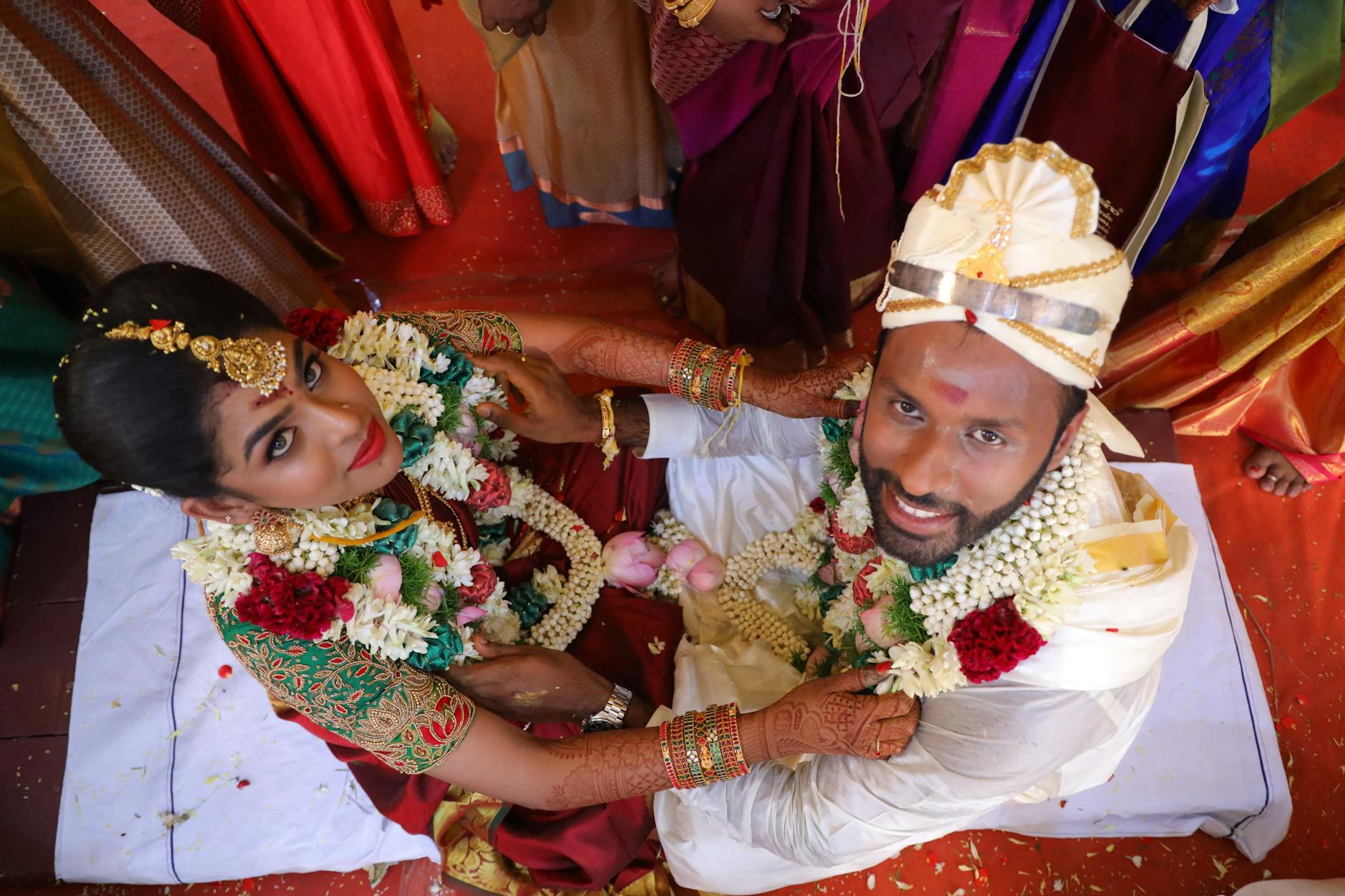
The Tamil wedding photograph — particularly the formal "muhurtham" portrait of the couple during the sacred tying of the Thali — is one of the most important images in a Tamil family's album. Modern brides consider how jewelry will photograph when making their selections. Gold with a high polish reflects light beautifully in natural settings but can create glare under studio lighting. Matte or antique-finished gold photographs more consistently across lighting conditions. Temple jewelry with deep relief carving creates shadows that add dimension to photographs. Stone-studded pieces, particularly with rubies and emeralds, add color contrast that makes the gold stand out even more in images.
The Reception Look
Many Tamil brides change their jewelry for the reception, opting for a lighter, more contemporary look. A single statement necklace — perhaps a diamond and gold piece or a modern geometric design — paired with statement earrings and sleek bangles transitions the bride from the traditional ceremony aesthetic to the celebration atmosphere of the reception. This two-look approach has practical benefits: the heavy traditional jewelry is worn for the shorter ceremony period, and lighter contemporary pieces are worn for the longer reception with its dancing, socializing, and photography.
Regional Traditions Within Tamil Nadu
Iyer and Iyengar (Brahmin) Traditions
Tamil Brahmin brides typically wear jewelry that, while still substantial, tends toward refined craftsmanship rather than maximum weight. The Thali design differs between Iyer (Shaivite) and Iyengar (Vaishnavite) families — the Iyer Thali features a Shiva lingam, while the Iyengar Thali features the Namam (Vishnu's mark). Brahmin families often favor the Attigai (a flat, stone-studded choker) as the primary necklace over the Manga Malai. Pearl strands interspersed with gold elements are also more prominent in Brahmin bridal sets.
Chettiar Traditions
The Nattukotai Chettiar community, renowned for their business acumen and wealth, are known for the most elaborate bridal jewelry in Tamil Nadu. Chettiar wedding jewelry can weigh over a kilogram in total, with individual pieces — particularly the Oddiyanam and Manga Malai — reaching weights that are unusual even by Tamil standards. The Chettiar Thali is distinctively large and ornate. Chettinad's traditional jewellers, based in Karaikudi and surrounding towns, specialize in these heavy, traditional pieces.
Mudaliar and Gounder Traditions
These agricultural communities have their own distinctive jewelry patterns, often featuring nature motifs — agricultural implements, grain, animals — that reflect their connection to the land. The jewelry tends to be solid and robust in construction, designed to endure daily wear in active lifestyles. Making charges tend to be lower than for the intricate temple designs favored by Brahmin families.
Nadar Traditions
The Nadar community of southern Tamil Nadu has a distinctive bridal jewelry tradition that includes the "Thaali Kodi" (a multi-pendant necklace) and specific bangles with identifying designs. The community's bridal jewelry aesthetic balances traditional Tamil elements with influences from the neighboring Kerala tradition.
Understanding Making Charges and Pricing
The Making Charge Landscape
Making charges are the single most variable component of Tamil wedding jewelry pricing, and understanding them is essential for budget management. Making charges represent the cost of the jeweller's labor, craftsmanship, and overhead. They are typically expressed as a per-gram charge added to the gold value.
| Making Charge Range | What to Expect |
|---|---|
| ₹400-₹600/g | Machine-made, minimal handwork, basic designs |
| ₹600-₹1,000/g | Semi-handmade, moderate detail, standard bridal quality |
| ₹1,000-₹1,500/g | Handmade, fine detail, high-quality bridal pieces |
| ₹1,500-₹2,500/g | Master artisan handwork, museum-quality craftsmanship |
| ₹2,500+/g | Designer/branded, exclusive designs, celebrity jewellers |
Negotiating Making Charges
Making charges are negotiable, especially when purchasing a complete bridal set. Most jewellers offer a bundled rate for full-set purchases that is 10-20% lower than the per-piece making charge. The best negotiating leverage comes from competitive comparison — visit at least three jewellers, obtain written quotes, and use competing offers as leverage. Purchasing during off-peak months (March-June, excluding Akshaya Tritiya) when jewellers are hungry for business also yields better making charge rates.
Hidden Costs to Watch
Beyond gold value and making charges, be aware of these additional costs: stone charges (rubies, emeralds, and pearls are priced separately from the gold), wastage charges (some jewellers add a 2-5% "wastage" charge for gold lost during the making process), GST at 3% on the total gold value plus making charges, and hallmarking fees. Always insist on a fully itemized invoice that separates gold weight, making charges, stone charges, wastage, and taxes.
Frequently Asked Questions
1. What is the average cost of a complete Tamil bridal jewelry set in 2026?
The average complete Tamil bridal set in 2026, including all traditional pieces from Thali to Metti, ranges from ₹15,00,000 to ₹50,00,000 for middle-class to upper-middle-class families. The gold weight typically falls between 200 and 600 grams. At the lower end, a thoughtfully curated set of 200 grams across 8-10 pieces costs approximately ₹15,00,000-₹18,00,000. At the higher end, a comprehensive set exceeding 500 grams with premium craftsmanship and significant gemstone work reaches ₹40,00,000-₹50,00,000. These ranges include GST and making charges but exclude diamond jewelry, which is budgeted separately.
2. Who pays for the Tamil bridal jewelry — the bride's family or the groom's family?
Traditionally, the bride's family provides the majority of the bridal jewelry as part of the stridhan (the bride's personal wealth that remains her property). The groom's family typically provides the Thali (sacred wedding pendant), which is tied during the ceremony. Some groom's families also gift a necklace set and bangles. In contemporary practice, many couples and families negotiate the jewelry arrangement based on their combined financial situation. It is increasingly common for the couple themselves to contribute to or fully fund the jewelry purchase, especially in dual-income households.
3. Is the Oddiyanam compulsory for a Tamil wedding?
While the Oddiyanam is a traditional component of the complete Tamil bridal ensemble, it is not a religious or ceremonial requirement for the wedding to be valid. The only jewelry piece with direct ceremonial significance is the Thali, which is tied as part of the wedding ritual. Many brides, particularly those with smaller budgets, choose to omit the Oddiyanam and redirect that budget toward other pieces they will wear more frequently. However, for traditional families and formal Tamil weddings, the Oddiyanam is a strong expectation. A compromise option is to rent an Oddiyanam for the ceremony or to purchase a lighter, more affordable version.
4. How do I choose between Kanchipuram and Chennai for buying bridal jewelry?
Choose Kanchipuram if you prioritize artisanal hand-craftsmanship, want heirloom-quality pieces, are looking for heavily traditional designs, and do not mind higher making charges. Choose Chennai if you want the widest possible variety, need competitive pricing through comparison shopping, prefer the convenience of modern showrooms with certification, or want access to both traditional and contemporary designs. Many families do both — purchasing the key heritage pieces (Manga Malai, Oddiyanam, Vanki) from Kanchipuram artisans and the remaining pieces from Chennai's branded stores.
5. Can I wear temple jewelry if I am not Hindu?
Temple jewelry, while rooted in Hindu iconography, has become a widely appreciated art form that transcends religious boundaries. Christian and Muslim Tamil brides frequently incorporate temple jewelry elements into their bridal look, either choosing pieces with non-deity motifs (peacocks, flowers, geometric patterns) or embracing the full temple aesthetic as a cultural rather than religious expression. The decision is personal and should be guided by the bride's comfort level. Many contemporary temple jewelry designs feature nature motifs rather than deity figures, making them accessible to brides of all faiths.
6. How should I care for temple jewelry with rubies and emeralds?
Temple jewelry with gemstones requires careful maintenance. Rubies and emeralds set in traditional lac (resin) settings are more vulnerable than those in modern prong settings. Avoid exposing gemstone-set pieces to water, steam, or sudden temperature changes, as these can loosen lac settings. Store each piece individually in soft cloth pouches. Clean gently with a dry, soft brush — never use liquid cleaners. Have gemstone settings professionally checked every 2-3 years. If a stone feels loose, stop wearing the piece immediately and take it to a jeweller to prevent loss.
7. What is the significance of the Kasu Malai (coin necklace)?
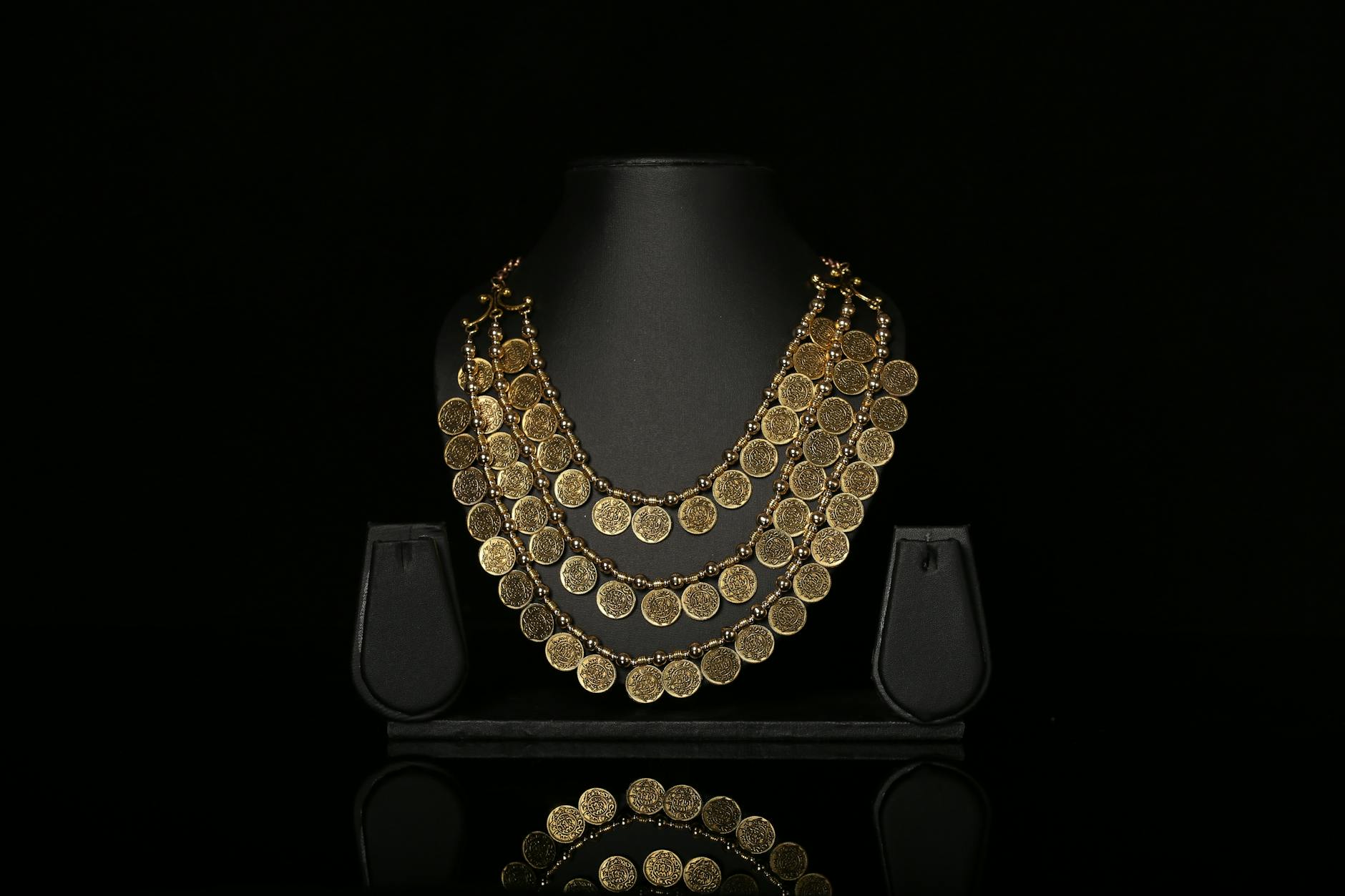
The Kasu Malai is a necklace made of gold coins (kasu) linked together. Each coin typically features the image of Lakshmi on one side and a lotus or a deity on the other. The coin necklace represents accumulated wealth and prosperity — each coin symbolizing a blessing for the married life. The Kasu Malai is one of the most ancient Tamil jewelry forms, with archaeological evidence of similar coin necklaces dating back to the Chola period. A typical bridal Kasu Malai uses 21, 27, or 33 coins (odd numbers are considered auspicious) and weighs 30-80 grams, costing ₹2,00,000-₹5,50,000.
8. Are there lightweight alternatives to traditional heavy Tamil bridal jewelry?
Yes, and the market for lightweight bridal jewelry has grown significantly. Modern techniques including hollow-core construction, filigree work, and laser-cut designs can create pieces that look identical to their heavier counterparts but weigh 40-60% less. A traditional Manga Malai that would typically weigh 60 grams can be crafted in a lightweight version at 30-35 grams with the same visual presence. The trade-off is reduced gold investment value and potentially lower resale weight. Some jewellers specialize in lightweight bridal collections — ask specifically for "light weight bridal" or "hollow bridal" collections when visiting stores.
9. What is the best time of year to buy Tamil wedding jewelry?
The best time to buy is during Akshaya Tritiya (April-May), when almost every jeweller offers reduced making charges, stone discounts, and promotional pricing. Dhanteras (October-November) is the second-best buying occasion. Avoid purchasing during peak wedding season (November-February) when demand drives up making charges and reduces negotiating leverage. If your wedding is in January, aim to complete jewelry purchases by September for the best combination of pricing and availability. Gold weight can be accumulated gradually through gold savings schemes offered by most major jewellers, which allow monthly deposits that build toward a jewelry purchase.
10. How do I verify the authenticity of antique temple jewelry?
Antique temple jewelry is a growing market, but it is also susceptible to fraud. Genuine antique pieces will show signs of age — slight irregularities in casting, hand-finished details, natural wear on high-contact surfaces, and older stone-setting techniques (lac rather than prong). However, these signs can be faked. For valuable antique purchases, insist on provenance documentation, have the gold purity tested at a BIS-approved assaying center, and if the claimed value is high, commission an independent appraisal. Purchasing from established, reputable dealers with verifiable track records is the safest approach.
11. Can Tamil bridal jewelry be modified or restyled later?
Absolutely, and this is a common practice. After the wedding, many brides restyle heavy ceremonial pieces into more practical everyday jewelry. A heavy Manga Malai can be separated into individual mango pendants and set into smaller necklaces. Jimikki can have their dome section removed to create elegant studs. An Oddiyanam's plates can be converted into a lighter necklace or bracelet. When restyling, you pay only the making charges for the new design (the gold is reused), making it a cost-effective way to maximize the utility of your bridal jewelry investment.
12. What Tamil bridal jewelry pieces work for non-Tamil brides who love the aesthetic?
Several Tamil jewelry pieces have crossed regional boundaries to become universally popular. The Jimikki Kammal works with virtually any Indian bridal outfit and has been adopted by brides across India. Temple chokers (Attigai) pair beautifully with North Indian lehengas and even Western gowns. The Vanki has become a pan-Indian bridal accessory. Mango motif necklaces appeal to brides from all communities. If you love the Tamil jewelry aesthetic, start with these crossover pieces. Find jewellers specializing in South Indian temple jewelry through the JewellersInCity store finder — many ship nationwide and offer virtual consultations for brides outside Tamil Nadu.
Budget Planning: Sample Tamil Bridal Sets at Different Price Points
Essential Set (₹8,00,000 - ₹12,00,000)
| Piece | Weight | Approx. Cost |
|---|---|---|
| Thali with chain | 8-12g | ₹55,000-₹85,000 |
| Manga Malai (light) | 35-45g | ₹2,50,000-₹3,30,000 |
| Jimikki Kammal | 10-14g | ₹70,000-₹1,00,000 |
| Attigai choker | 25-35g | ₹1,75,000-₹2,50,000 |
| Bangles (2 pairs) | 30-40g | ₹2,10,000-₹2,90,000 |
| Nethichutti | 10-15g | ₹70,000-₹1,10,000 |
| Metti (silver) + Mookuthi | 2-3g gold | ₹15,000-₹25,000 |
| Total | 120-164g | ₹8,45,000-₹11,90,000 |
Comprehensive Set (₹20,00,000 - ₹35,00,000)
| Piece | Weight | Approx. Cost |
|---|---|---|
| Thali with chain | 10-15g | ₹70,000-₹1,10,000 |
| Manga Malai | 55-75g | ₹4,00,000-₹5,50,000 |
| Kasu Malai | 35-50g | ₹2,50,000-₹3,70,000 |
| Jimikki Kammal (temple) | 16-22g | ₹1,15,000-₹1,65,000 |
| Attigai choker | 30-40g | ₹2,15,000-₹3,00,000 |
| Oddiyanam (medium) | 100-130g | ₹7,50,000-₹10,00,000 |
| Vanki | 18-25g | ₹1,30,000-₹1,85,000 |
| Bangles (3 pairs) | 50-70g | ₹3,60,000-₹5,20,000 |
| Nethichutti | 15-20g | ₹1,10,000-₹1,50,000 |
| Jada Billai (hair) | 30-40g | ₹2,15,000-₹3,00,000 |
| Metti + Mookuthi + Rings | 5-8g gold | ₹40,000-₹65,000 |
| Total | 364-495g | ₹26,55,000-₹36,65,000 |
Conclusion: Honoring a Timeless Tradition
Tamil bridal jewelry is far more than gold shaped into beautiful forms. It is a living testament to one of the world's oldest and most sophisticated artistic traditions. When a Tamil bride wears her Manga Malai, she is connected to the Chola queens who wore the same mango motifs a thousand years ago. When the Jimikki jingles at her ears, she echoes the temple dancers whose movements brought the divine into human spaces. When the Oddiyanam encircles her waist, she carries the weight of prosperity that her family bestows upon her new life.
As you prepare for a Tamil wedding in 2026, approach the jewelry selection with the reverence it deserves. Take time to learn about each piece, understand its significance, and choose items that speak to both your family's traditions and your personal aesthetic. The jewelry you select will be worn, treasured, and potentially passed down through generations — each piece becoming richer in meaning with every wedding it witnesses.
Discover master temple jewellers and hallmark-certified gold specialists across Tamil Nadu on JewellersInCity. From Kanchipuram's artisan workshops to Chennai's grand showrooms, find the perfect partner for the most important jewelry purchase of your life.
More in Wedding & Bridal
Share this article
Our editorial team comprises jewellery industry veterans, certified gemmologists, and passionate writers with decades of combined experience across India's gold, diamond, and gemstone markets. Every article is researched, fact-checked, and written to help Indian buyers make smarter, safer jewellery decisions.
Passionate about jewellery and love to write? We'd love to hear from you.
Join us as a writer →Ready to buy? Find verified jewellers near you
Browse 10,000+ BIS hallmark certified jewellers across India. Compare ratings, check today's gold rate, and book a visit.
Keep Reading