South Indian bridal jewellery is among the most spectacular and gold-intensive wedding tradition in the world. A South Indian bride does not merely wear jewellery — she embodies centuries of goldsmithing artistry, family wealth, and auspicious symbolism from the crown of her head to the rings on her toes. This comprehensive guide walks through every state's traditional bridal set, the pieces involved, weight ranges, budget estimates at 2026 gold rates, and practical guidance for modern brides navigating the tradition.
Why 22K Gold Dominates South Indian Bridal Jewellery
Unlike North Indian bridal tradition where Kundan (24K gold foil with uncut gemstones), Polki (uncut rough diamonds), and Meenakari (enamel work) often take precedence, South Indian bridal jewellery is firmly built on 22K (916) gold — high-purity, high-weight, and often handcrafted in traditional South Indian temple jewellery styles.
The reason is both cultural and practical: in South India, gold is considered the ultimate store of Stridhan — a woman's independent wealth that she owns exclusively and can rely on throughout her life. The weight of gold a bride wears at her wedding (and receives as gifts) is a direct expression of family prosperity and a financial security net. A South Indian bride wearing 200 grams of gold jewellery is, at 2026 rates, carrying approximately ₹15,00,000–₹17,00,000 in gold value alone, before making charges.
Tamil Nadu Bridal Jewellery Set
Tamil Nadu bridal jewellery is perhaps the most elaborate of all South Indian traditions, featuring a remarkable number of specialised pieces for every part of the body — including unique ornaments worn exclusively by Tamil brides.
| Piece | Description | Typical Weight |
|---|---|---|
| Nethi Chutti / Tikka | Forehead ornament on hair parting | 5–15g |
| Maatal / Jhalamalai | Head ornament chains connecting temple to ear | 10–25g |
| Jhumki / Kamba earrings | Large chandelier earrings with drops | 8–20g |
| Mookuthi (nose pin) | Left nostril nose pin or ring | 2–5g |
| Aaram / Necklace | Short close-fitting necklace | 15–40g |
| Haaram / Long Necklace | Long pendant necklace, multiple layers | 30–80g |
| Vanki (armlet) | V-shaped upper arm ornament | 15–35g |
| Bangles (Valayal) | Gold bangles, sets of 4–12 | 30–80g |
| Oddiyanam (waist belt) | Elaborately carved gold waist belt | 40–120g |
| Kolusu (anklets) | Gold or silver anklets | 20–50g silver |
A complete Tamil Nadu bridal set typically weighs 100–300g of gold depending on family tradition and wealth. At 2026 gold rates (approximately ₹7,200–₹7,700 per gram for 22K), a 150g set in gold alone is ₹10,80,000–₹11,55,000 before making charges. Total set with making charges: ₹13,00,000–₹20,00,000+ for a full traditional set.
Kerala Bridal Jewellery Set
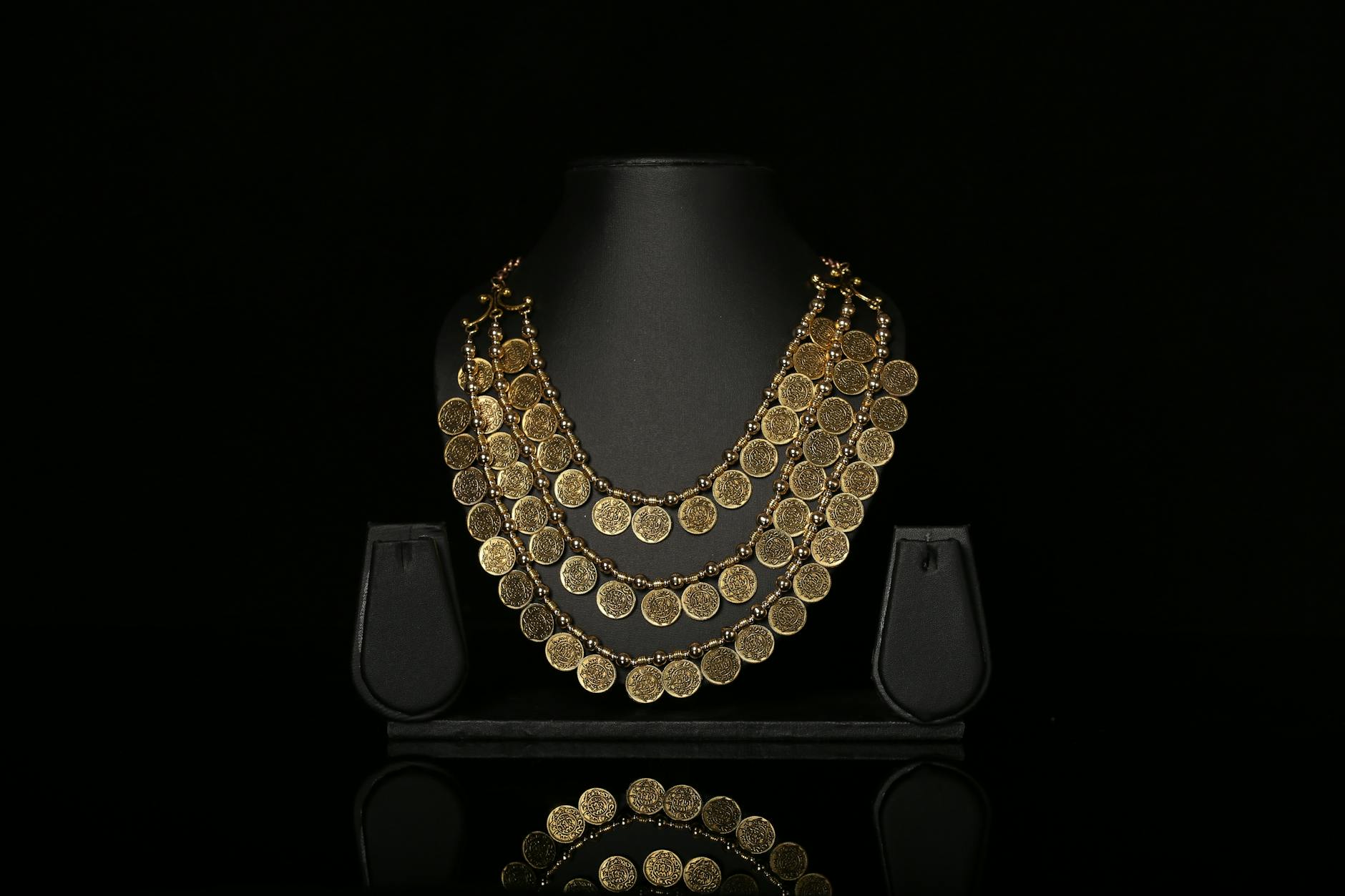
Kerala's bridal gold tradition is characterised by long, layered necklaces with specific traditional designs — Kasumala (coin necklace), Manga Mala (mango motif), Palakka Mala (leaf motif) — and a preference for Nagapadam (cobra hood) motif work that is distinctive to Kerala goldsmithing.
| Piece | Description | Typical Weight |
|---|---|---|
| Kasumala | Necklace of gold coins with Lakshmi motif | 20–60g |
| Manga Mala | Long necklace with mango-shaped pendants | 25–70g |
| Palakka Mala | Green stone (palakka) set gold necklace | 20–50g |
| Elakkathali | Short leaf-motif necklace worn at neck base | 10–25g |
| Jimikki earrings | Bell-shaped gold earrings, Kerala's most iconic | 6–15g |
| Paadam (nose ornament) | Septum or nostril nose ornament | 3–8g |
| Bangles | Chura-style smooth or patterned gold | 25–60g |
| Payal (anklets) | Silver anklets (gold not worn below waist) | 30–80g silver |
A complete Kerala bridal set typically weighs 80–200g gold. Budget estimate: ₹7,00,000–₹16,00,000 for a complete set at 2026 rates. Thrissur (Kerala's "cultural capital" and gold hub) has the densest concentration of bridal jewellery showrooms in South India — a Kerala bride should ideally do her bridal shopping in Thrissur if possible, where competition keeps prices and making charges lower.
Andhra Pradesh and Telangana Bridal Jewellery
The Telugu bridal jewellery tradition blends South Indian gold tradition with elements influenced by the Nizam's of Hyderabad — making Hyderabadi pearls and some Mughal-influenced designs part of the Telugu bridal aesthetic alongside traditional gold pieces.
| Piece | Description | Typical Weight |
|---|---|---|
| Kasulaperu / Lakshmi Haram | Goddess Lakshmi coin necklace | 30–80g |
| Addabyaram | Wide flat necklace with temple motifs | 40–100g |
| Jada Pirulu | Hair ornaments woven into braid | 20–50g |
| Rakodi | Hair pin/comb ornament | 10–25g |
| Oddiyanam (waist belt) | Elaborate carved gold belt | 40–120g |
| Vanki (armlet) | Upper arm ornament | 15–35g |
Telugu bridal set total weight: 100–250g gold. Budget: ₹8,00,000–₹18,00,000 for a complete traditional set. Hyderabad's Abids and Secunderabad areas are the jewellery hubs — known for both traditional Telugu pieces and distinctive Hyderabadi pearl jewellery that complements bridal gold sets.
Karnataka Bridal Jewellery Set
Karnataka bridal jewellery is distinct for its use of emerald-green (typically coloured glass or real emeralds) against yellow gold — the Kemp set is most associated with this tradition, particularly for Kodava and Kannada brides. The Bangalore goldsmithing tradition is also known for delicate filigree-like work in gold.
| Piece | Description | Typical Weight |
|---|---|---|
| Kemp / Hara necklace | Red stone (kemp) set gold necklace | 20–50g |
| Mohanmala | Long graduated gold necklace | 25–60g |
| Nakkallu (head ornament) | Elaborate hair ornament set | 15–40g |
| Bale (bangles) | Wide gold bangles, Kannada style | 30–70g |
| Odyanam (waist belt) | Gold waist belt, often kemp-set | 35–100g |
Karnataka bridal set total weight: 80–200g gold. Budget: ₹7,00,000–₹15,00,000. Bangalore's Commercial Street area and Jewellers' Street (Chickpet area) are the primary bridal jewellery shopping destinations in Karnataka.
Temple Jewellery vs Real Gold for the Wedding
Temple jewellery — the elaborate, deity-motif adorned pieces associated with classical Bharatanatyam dance — has a complex role in South Indian bridal tradition. Authentic temple jewellery is made in real gold with rubies and emeralds set in traditional temple-style designs. However, a very large market exists for imitation temple jewellery: pieces made with gold-plated copper or brass base metal, with synthetic stone and glass-work replicating the originals at a tiny fraction of the price.
For the wedding ceremony itself, real gold is always preferred and expected in traditional South Indian families — it will be examined by family members and represents Stridhan. For pre-wedding photography (mehendi photoshoots, portrait sessions) and classical dance performances, high-quality imitation temple jewellery serves perfectly well and prevents real gold from risk of damage or loss.
💡 Pro Tip
The bridal jewellery rental market is growing rapidly in South India, particularly for the Oddiyanam (waist belt) and Vanki (armlet) — pieces worn only at the wedding but representing substantial gold weight and cost. Several established jewellers in Chennai (T. Nagar), Thrissur, and Hyderabad (Abids) now offer rental programmes for specific bridal pieces at a fraction of purchase price. If a piece is primarily for the wedding ceremony photos and not intended for regular future use, rental is a financially wise option worth exploring.
Making Charges: South Indian vs North Indian Bridal Jewellery
South Indian bridal jewellery typically carries higher making charges than equivalent-weight North Indian pieces, primarily because of the handcrafted nature of traditional South Indian goldsmithing. Pieces like the Oddiyanam, Vanki, and elaborate Haaram involve hours of skilled craftsmanship in hollow construction (tubing the gold to reduce weight while maintaining visual size), stone-setting, and finishing.
Typical making charges in South Indian bridal jewellery range from 8–25% of gold value for simpler chain-style pieces, up to 20–40% for elaborate handcrafted pieces like Oddiyanam, heavily worked Haaram, or intricate Maatal. Compare this to North Indian bridal jewellery where making charges on Kundan and Polki sets can range 30–60% (due to setting work) but the gold component itself is lower (thin foil settings, not solid gold).
Key Jewellery-Buying Cities in South India
- Thrissur, Kerala: India's undisputed gold jewellery capital by density of jewellers. Competitive pricing, widest selection of Kerala bridal sets. Major chains and independent master craftsmen both operate here.
- T. Nagar, Chennai: Tamil Nadu's bridal jewellery shopping district, home to virtually every major jewellery brand and hundreds of independent shops. Usman Road and T.T.K. Road have the highest concentration.
- Abids, Hyderabad: Telangana's traditional jewellery district, known for both traditional Telugu gold pieces and Hyderabadi pearl sets. Active bargaining market alongside established showrooms.
- Commercial Street, Bangalore: Karnataka's retail jewellery hub. Both contemporary gold jewellery and traditional Kemp and Kannada bridal sets available.
- Coimbatore: An important regional centre for Tamil Nadu bridal jewellery with generally lower making charges than Chennai due to lower overhead costs.
⚠️ Plan at Least 3 Months Ahead for Bridal Orders
Custom-crafted South Indian bridal pieces — particularly Oddiyanam, Vanki, and elaborate necklaces — require substantial lead time. Most master craftsmen in Thrissur and T. Nagar work on 6–12 week timelines for full custom bridal sets. For peak wedding season orders (November–February), shops begin booking craftsmen 3–4 months in advance. If your wedding is in the peak season, begin your bridal jewellery consultations no later than August–September to secure the best craftsmen and avoid rush premiums.
Frequently Asked Questions
What is the minimum gold set for a South Indian bride?
There is no absolute rule, but for a traditional South Indian wedding, a "minimum" bridal set that would be considered socially appropriate in most families would include: a Haaram/necklace, earrings, bangles, and the Thali/Mangalsutra that the groom ties. This minimal set might weigh 40–70g gold (₹3,00,000–₹5,50,000 at current rates). Many modern brides, particularly in urban South India, choose a curated smaller set of 50–80g of genuinely beautiful, high-quality pieces over a large set of heavy but design-heavy pieces. Quality and personal significance matter more than maximising total weight.
Can I mix Tamil Nadu and Kerala bridal pieces?
For Tamil-Kerala intercommunity weddings (increasingly common in South India), mixing pieces from both traditions is not only acceptable but can create a beautiful blend. The general guideline is consistency of finish and karatage — all pieces should be 22K and have a similar level of traditional craftsmanship. Mixing a heavily worked Addabyaram-style Tamil necklace with Kerala's Kasumala and Jimikki earrings, for instance, is visually harmonious and personally meaningful for a bride from both backgrounds. Discuss the combination with your jeweller, who can advise on which pieces work visually together.
Is it better to buy from a large chain or an independent jeweller?
Both have advantages. Large chains (Malabar, Tanishq, Kalyan, Joyalukkas, GRT) offer standardised hallmarking, exchange policies, and consistent quality control. Independent master craftsmen offer more customisation, potentially better craftsmanship for traditional pieces, and sometimes better making charge rates for straightforward designs. For the most important and complex pieces (Oddiyanam, custom Haaram), an experienced independent goldsmith with strong reputation in traditional South Indian work often produces superior results. For simpler chain-type pieces and standardised items, chains are perfectly reliable.
More in Wedding & Bridal
Share this article
Our editorial team comprises jewellery industry veterans, certified gemmologists, and passionate writers with decades of combined experience across India's gold, diamond, and gemstone markets. Every article is researched, fact-checked, and written to help Indian buyers make smarter, safer jewellery decisions.
Passionate about jewellery and love to write? We'd love to hear from you.
Join us as a writer →Ready to buy? Find verified jewellers near you
Browse 10,000+ BIS hallmark certified jewellers across India. Compare ratings, check today's gold rate, and book a visit.
Keep Reading