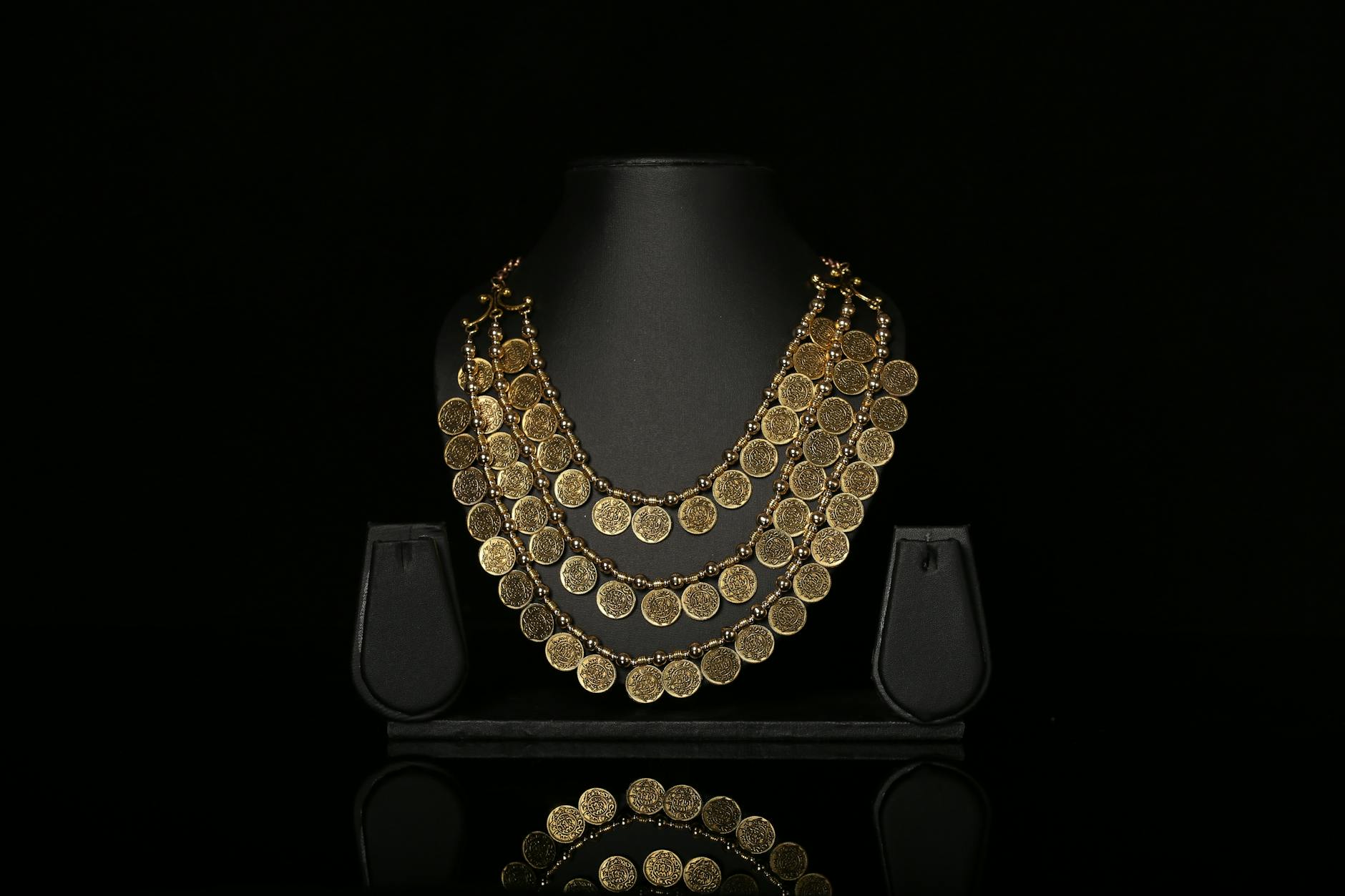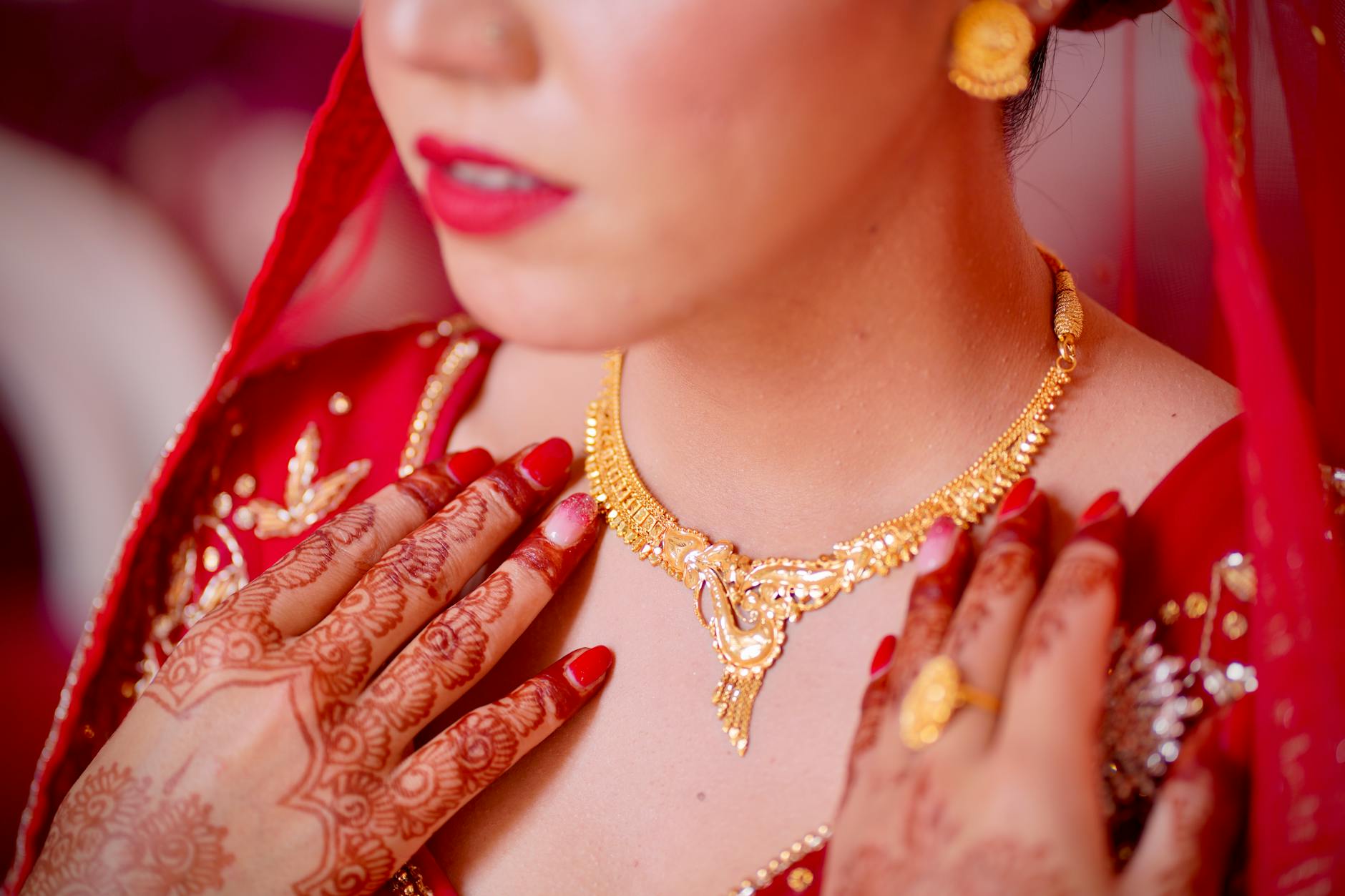
Second-hand bridal jewellery is having a significant moment in India. Once spoken about only in hushed tones — associated with financial hardship or taboo — pre-owned jewellery is now openly discussed in bridal planning communities, featured in sustainable wedding guides, and actively sought by brides who prioritise value, rare designs, and environmental responsibility. This is not a niche trend: it is a structural shift in how urban India thinks about bridal jewellery spending. Driven by sustainability consciousness, rising gold prices, and the sheer availability of beautiful pre-owned pieces, more Indian brides are looking beyond brand-new jewellery. A well-chosen pre-owned set can save you 30–50% compared to buying the same gold weight new, while giving you access to designs that are discontinued or difficult to find. This guide tells you exactly where to look, what to check, and how to avoid getting burned.
Why Second-Hand Bridal Jewellery Makes Sense in 2026
Gold is gold. A 22K hallmarked necklace purchased five years ago has the same gold content as one purchased today — and with gold prices up significantly over the past three years, the gold value in older pieces has only increased. The primary reason second-hand jewellery is cheaper is not that the gold is worth less, but that you are not paying for the making charges (15–25% of piece value for a new piece), nor for the brand premium attached to new purchases.
Sustainability is the second driver. India produces enormous quantities of jewellery, and the environmental cost of new gold mining is significant. Choosing pre-owned gold does not require new mining and reduces demand for fresh production. A growing cohort of urban Indian brides — particularly in metros — actively cites this as a factor in their decision.
The third reason is design availability. Many beautiful traditional designs — Hyderabadi Jadau, old Calcutta filigree, temple jewellery from the 1970s–90s — are either discontinued or now made with machine production at lower quality. Estate sales and inherited pieces can yield genuinely superior craftsmanship at lower cost.
What "Second-Hand" Covers
The pre-owned jewellery market in India operates across several distinct channels, each with different risk profiles:
- Inherited family jewellery — the most common and lowest-risk form. Many Indian brides wear their mother's, grandmother's, or mother-in-law's bridal jewellery. The provenance is known, there is emotional significance, and there is no financial transaction risk.
- Exchange at jewellers — selling or exchanging old jewellery at an established brand (Tanishq, Malabar, Kalyan) to fund new purchases. Technically you are selling second-hand jewellery, not buying it, but this is the most common form of recycling bridal jewellery in India.
- Platform purchases — buying pre-owned jewellery from organised platforms or peer-to-peer marketplaces. This is where due diligence becomes critical.
Where to Buy Pre-Owned Bridal Jewellery in India
| Platform / Channel | Risk Level | Hallmark Guarantee? | Return Policy |
|---|---|---|---|
| Caratlane Pre-Loved | Low | Yes (verified) | 7–14 days |
| Malabar Exchange Program | Low | Yes (re-tested) | Store policy |
| Melorra Exchange | Low–Medium | Partial | Case-by-case |
| OLX / Quikr | High | No | None |
| Pawn shops | High | Rarely | None |
| Estate sales / family | Very Low | Verify separately | N/A |
Critical Checks Before Buying Any Pre-Owned Jewellery
Whether you are buying from a platform or from an individual, these five checks are non-negotiable:
1. HUID Hallmark Verification
Every piece of hallmarked gold jewellery sold in India after April 2023 must carry a 6-character HUID (Hallmark Unique ID) number. Download the BIS Care app (Bureau of Indian Standards) and scan or enter the HUID to verify the hallmark is genuine and registered to the piece you are holding. This is the single most important check you can do. A missing HUID on a post-2023 piece, or an HUID that returns an error in BIS Care, is a red flag.
2. Weight Verification
Bring your own portable digital scale (available for ₹300–500 on Amazon) and weigh the piece in front of the seller. Cross-check this against the weight on the bill or certificate. A discrepancy of more than 0.1g warrants explanation. Gold is priced per gram — an incorrect weight means you are overpaying directly.
3. Stone Certification for Diamond Pieces
If the pre-owned piece contains diamonds, insist on the original GIA, IGI, or SGL certificate. Without a certificate, diamonds in second-hand pieces are nearly impossible to value accurately. Do not accept verbal assurances about diamond quality — the difference between SI1 and I1 clarity at the same stated carat weight can mean a 30–40% price difference.
4. Structural Integrity Inspection
Check every clasp, link, prong, and setting. Push and wiggle each stone — a stone that moves in its setting is poorly secured and will fall out with normal wear. Examine solder joints under good light. Check that clasps open and close smoothly. For necklaces, flex the chain gently — any stiffness indicates damaged links. The cost of repairs and restoration should be factored into your purchase price before agreeing to a deal.
5. Cleaning and Restoration Costs
Pre-owned jewellery often needs professional cleaning and minor restoration. A professional jewellery cleaning and polishing service costs ₹200–800 per piece. If prongs need to be re-tipped or a clasp replaced, budget ₹500–2,000 per piece more. These are not reasons to avoid second-hand purchases, but they must be factored in when calculating your effective price versus buying new.
⚠️ Red Flags — Walk Away From These Situations
No hallmark on post-2023 jewellery. Seller is reluctant to allow you to weigh the piece independently. Price is dramatically below today's gold rate for the stated weight (suggests lower purity or false weight). Seller claims "original purchase price" justifies a high price — old purchase prices are irrelevant; only today's gold rate and weight matter. Diamonds described as "excellent quality" with no certificate. Pressure to decide immediately.
How to Price Pre-Owned Gold Jewellery Fairly
The correct way to price pre-owned gold jewellery is based on today's gold rate, not the original purchase price. The formula:
Fair price = (Weight in grams × Today's 22K gold rate) × 0.85 to 0.95
The 85–95% factor accounts for the fact that you cannot buy gold at exactly retail gold rate in the secondary market — the seller needs some margin. If the piece has significant artistic or collectible value (antique, exceptional craftsmanship), a modest premium above this calculation may be justified. If the piece has damage or needs restoration, the calculation should be at the lower end (85%) or below.
💡 Pro Tip
Before any pre-owned purchase, check today's 22K gold rate on JewellersInCity, calculate the fair value yourself, and walk into the negotiation knowing your number. Most peer-to-peer sellers on OLX or family-to-family transactions will accept a reasoned, data-backed offer. Show them the BIS gold rate and your weight measurement. This turns negotiation into a fact-based conversation rather than an emotional one.
Redesigning Inherited Bridal Jewellery
One of the most common scenarios in Indian weddings is inheriting jewellery from the previous generation that is beautiful in gold content but dated in design. Redesigning — also called "melting and making" — is an excellent option. You retain 100% of the gold value (minus a small wastage charge of 1–2% for the melting process) and pay making charges only on the new design. This is typically 30–40% cheaper than buying an equivalent new piece from scratch.
For resizing: rings and bangles are routinely resized by any established jeweller for ₹300–1,500 depending on complexity. Necklace restringing (replacing the string on a traditional necklace) costs ₹200–500. Clasp replacement: ₹300–800.
Insuring Pre-Owned Bridal Jewellery
Pre-owned jewellery should be insured the same way as new jewellery. Get the piece valued by a registered jeweller (cost: ₹200–500 per piece) and use that valuation to obtain a jewellery floater policy or add it to your household insurance under the jewellery clause. The original purchase price is irrelevant for insurance — current market value is what matters.
Frequently Asked Questions
Documentation and Paperwork for Pre-Owned Purchases
A pre-owned jewellery purchase should always be accompanied by proper documentation. Without a paper trail, you have no recourse if the piece turns out to be misrepresented. Here is what you should collect:
- Written receipt — on seller's letterhead or a signed handwritten receipt, stating the weight, purity, HUID (if applicable), and agreed price
- Original purchase invoice (if available from the seller) — establishes provenance and original purity certification
- BIS hallmark certificate or HUID printout from the BIS Care app — screenshot this and store it separately from the physical piece
- Condition report — a signed statement of the piece's condition at the time of sale; critical for any future insurance or dispute
- Diamond certificate for any pieces with certified diamonds — GIA, IGI, or SGL certification should transfer with the piece
For high-value transactions (above ₹50,000), insist on a formal agreement or at minimum a bank transfer (not cash) so there is a financial record. Cash transactions for large amounts of jewellery are legally required to be reported under India's anti-money laundering provisions — a reputable seller will not object to a bank transfer.
The Circular Economy Argument
Gold is one of the most recycled materials on earth — approximately 30% of the world's gold supply at any given time comes from recycled gold. Every gram of gold that is reused rather than freshly mined saves approximately 20 tonnes of rock that would otherwise be displaced, along with the water, energy, and chemical processing involved in gold extraction. India's domestic gold recycling market was valued at over $3 billion in 2024 and growing.
When you choose pre-owned bridal jewellery, you participate in this circular economy. Your choice keeps a piece in use rather than contributing to demand for new production. For brides who are conscious of environmental impact alongside budget — and this demographic is growing rapidly in Indian metros — second-hand jewellery is a coherent choice that aligns spending with values.
Is it bad luck to wear second-hand bridal jewellery?
This is a cultural question more than a factual one, and attitudes vary widely across communities and generations. In many Indian families, wearing a mother's or grandmother's jewellery at a wedding is considered auspicious — it carries the blessings of previous brides in the family. For jewellery from non-family sources, some families prefer to have a pandit perform a brief puja (sanctification ceremony) before the first wear. Ultimately this is a personal and family decision, and increasingly urban families have no concern with it whatsoever.
How do I know I am paying a fair price for pre-owned gold?
Use the formula above: weigh the piece, look up today's 22K gold rate, multiply, and apply an 85–95% factor. Any price above 95% of today's gold rate for plain gold jewellery should be questioned. For pieces with significant diamond or gemstone content, additional valuation from a certified gemologist is worth the ₹500–1,000 cost.
More in Wedding & Bridal
Share this article
Our editorial team comprises jewellery industry veterans, certified gemmologists, and passionate writers with decades of combined experience across India's gold, diamond, and gemstone markets. Every article is researched, fact-checked, and written to help Indian buyers make smarter, safer jewellery decisions.
Passionate about jewellery and love to write? We'd love to hear from you.
Join us as a writer →Ready to buy? Find verified jewellers near you
Browse 10,000+ BIS hallmark certified jewellers across India. Compare ratings, check today's gold rate, and book a visit.
Keep Reading