Walk into any Punjabi wedding — Hindu or Sikh — and the bride's jewellery communicates family pride, cultural identity, and the significant weight of generational wealth. Punjabi bridal jewellery is bold, layered, and laden with meaning. Every piece has a name, a ritual context, and typically a specific person who gives it. This guide covers all the essential pieces, the customs behind them, and how to plan a bridal jewellery budget in 2026.
The Cultural Logic of Punjabi Bridal Jewellery
Unlike South Indian traditions where jewellery is often community-specific (Minnu for Kerala Christians, Kasu Mala for Tamil Hindus), Punjabi bridal jewellery is surprisingly unified across Hindu and Sikh communities. The Chooda, Kalira, Maang Tikka, Nath, and layered necklace sets appear across both traditions with minor variations. What differs is the weight, the maker, and the specific motifs — not the fundamental form.
The primary social dynamic: the groom's family gifts jewellery to the bride (often called shagun jewellery or bhaata), and the bride's family gifts jewellery as part of her dowry. Understanding this two-source structure helps when planning who is buying what.
The Essential Pieces: Head to Toe
1. Maang Tikka (Centre Head Ornament)
A pendant that sits at the centre of the hair parting, held by a chain threaded through the hair or clipped. Punjabi Maang Tikkas tend to be larger and heavier than Bengali or South Indian equivalents. Stone-set designs in polki diamond, emerald, or ruby are traditional; contemporary brides also choose single-stone solitaire Tikkas.
2. Passa / Jhoomar (Side Head Ornament)
The Passa is a distinctively Punjabi piece — a sweeping side ornament worn on the right side of the head, hanging chains reaching toward the cheek. Traditional Jhoomar designs are elaborate floral or peacock forms with dangling pearl or stone drops. The combination of Maang Tikka + Passa creates the signature Punjabi bridal head silhouette.
3. Mathapatti (Full Forehead Chain)
A forehead chain spanning the full width — Maang Tikka connects centrally while the Mathapatti extends to both temples. High-festive bridal styling uses all three head pieces simultaneously; contemporary styling often chooses one or two.
4. Nath (Nose Ring)
Punjabi Nath are large, often gold with pearls and stones, worn on the left nostril and supported by a chain connecting to the hair or ear. The Nath size varies culturally — traditional families prefer large statement Nath; contemporary brides may choose more compact versions. The Nath is typically removed immediately after wedding ceremonies for practicality. Compare nose ring traditions across India.
5. Necklace Set
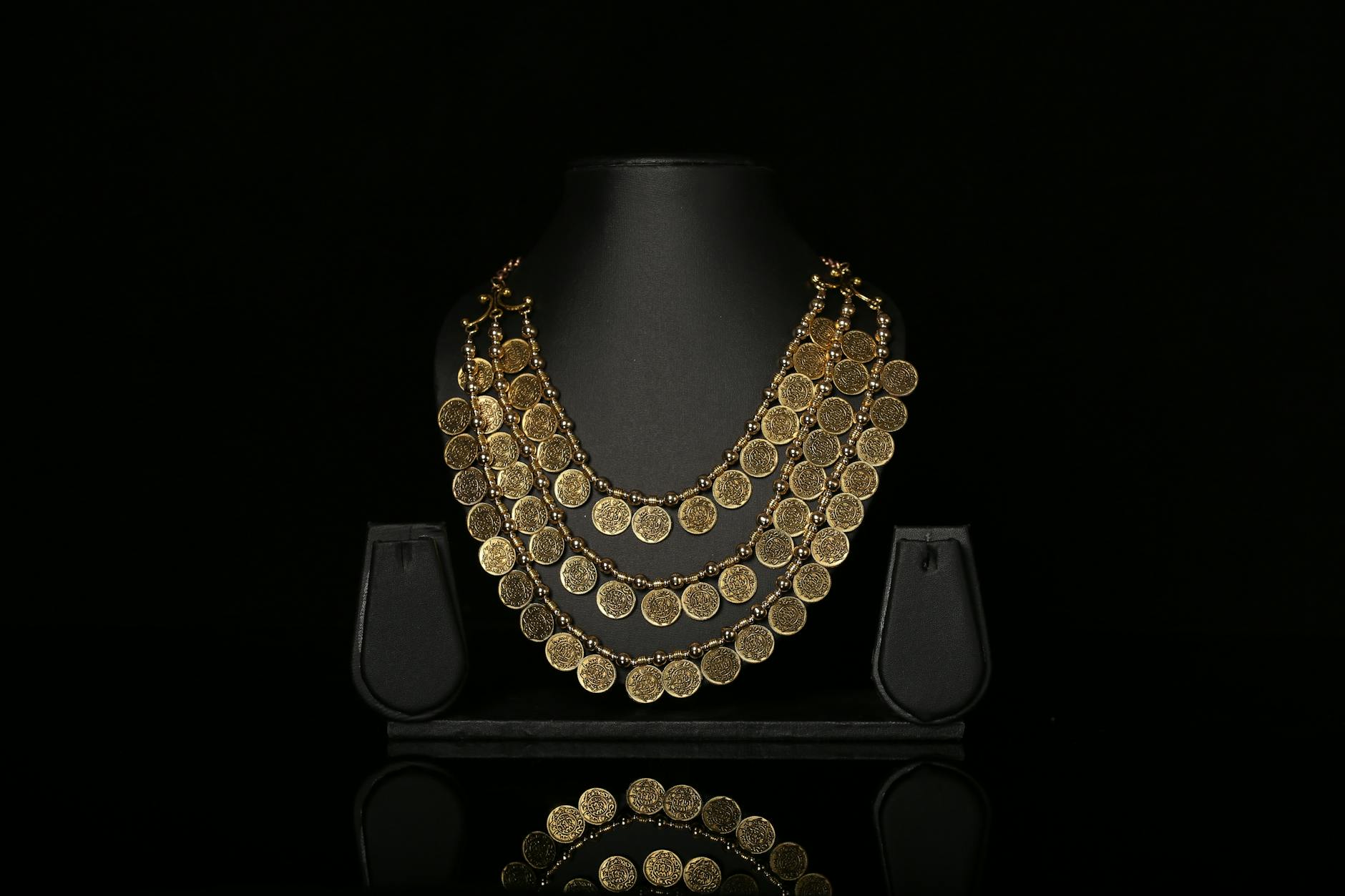
Punjabi bridal necklace sets are typically multi-piece: a close-fitting choker plus a longer pendant necklace worn simultaneously. Common choices:
- Polki / Jadau sets: Uncut diamond or polki in gold, the traditional choice for statement-making
- Kundan sets: Rajasthani-style Kundan has become widely adopted in Punjabi bridal jewellery
- Diamond sets: Contemporary brides increasingly choose certified diamond solitaire or cluster pieces
- Heavy gold sets: Plain yellow gold sets with minimal stone work remain popular for families prioritising gold weight
6. Earrings (Jhhumka / Chandbali)
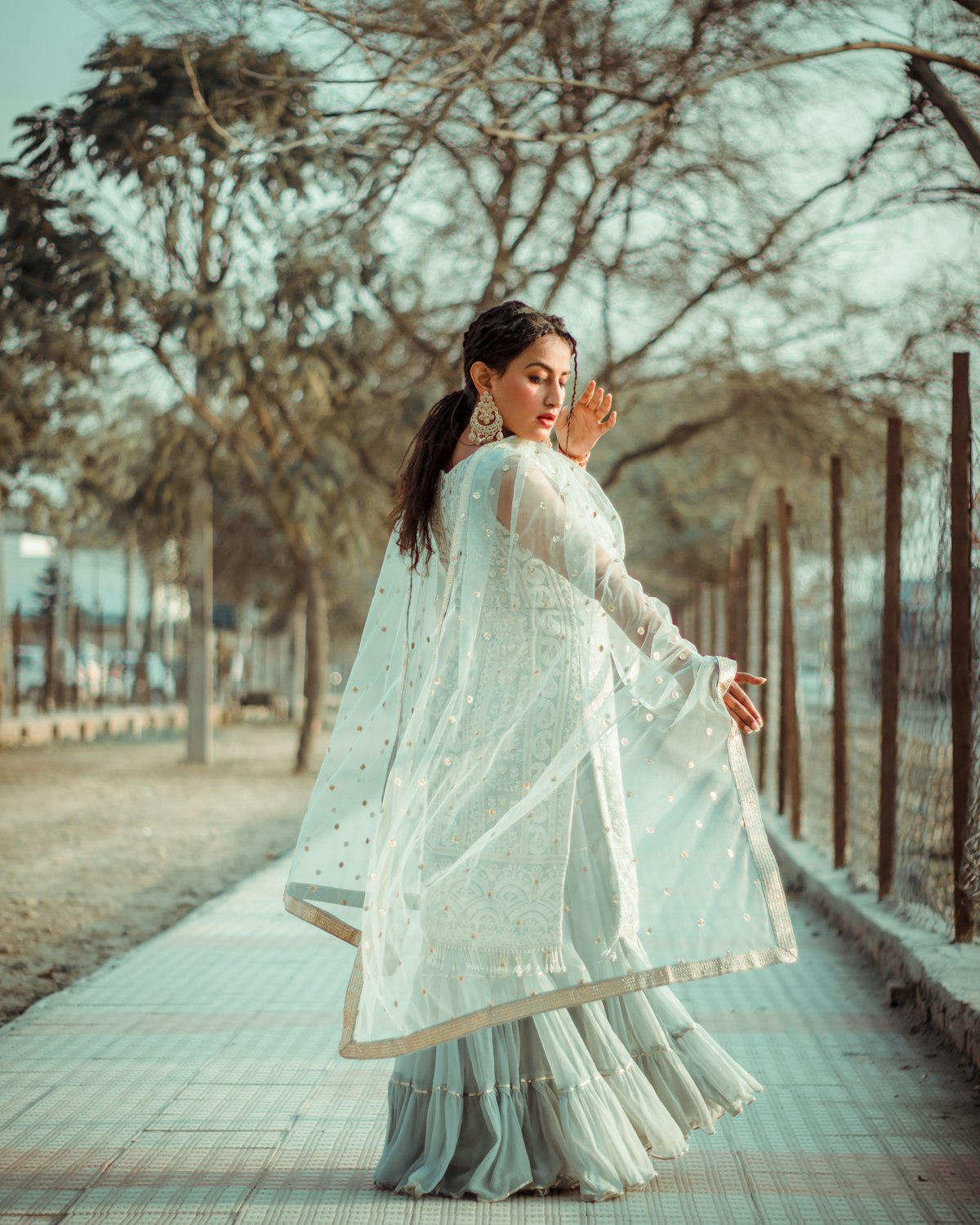
Heavy earrings are essential. Jhumka (bell-shaped drops) and Chandbali (crescent moon drops) are the dominant forms. Ear chains (Kan Chain or Ear to Hair Chain) connecting earring to hair clip are a distinctively Punjabi styling choice — seen in both traditional and contemporary bridal looks.
7. Chooda (Red and White Bangles)
The Chooda ceremony happens on the morning of the wedding. The bride's maternal uncle (mama) gifts the bangles and they are tied onto the bride's wrists, which she must not show to the sun before the ceremony. Traditionally red and white glass (now often resin or plastic), the Chooda set may include 21 or more bangles per arm. Gold kadas and stone-set gold bangles are added to the Chooda stack for festive layering.
8. Kalira
Kalira are the dangling metallic umbrella-shaped pendants tied to the Chooda bangles. Traditionally in gold-plated metal with hanging discs and bells, contemporary Kalira come in floral, peacock, and geometric forms — sometimes personalised with initials or motifs. The Kalira ceremony (sisters tying the Kalira and the bride shaking them over guests) is a joyful pre-wedding ritual. Kalira weight tip: gold Kalira exist but are primarily decorative — they are usually hollow or gold-plated rather than solid gold.
9. Haath Phool (Hand Jewellery)
A Haath Phool is a decorative hand piece — rings connected to a bracelet by chains, framing the back of the hand. It is worn over the bridal mehndi and creates a jewellery effect across the hand surface. Available in gold-plated, silver, and 22K gold versions.
10. Bangles (Kangan / Kara)
Beyond the Chooda set, Punjabi brides add gold Kangans (broad bangles) in 22K gold. Heavy Kada bangles in gold are often family heirlooms passed down from mothers and grandmothers. A bride may wear the Chooda plus 2–4 gold Kangans per arm for the wedding day.
11. Waist Belt (Kamarbandh)
A gold waist belt (Kamarbandh) worn over the bridal lehenga. Less universal in Punjabi weddings than in Rajasthani or South Indian traditions, but worn by many brides who want the full traditional look.
12. Anklets (Payal / Pajeb)
Silver anklets (Payal) are the traditional Punjabi choice. Gold anklets exist but silver is considered more traditional for this piece. Multi-strand silver Pajeb with bells are the classic form.
Hindu Punjabi vs Sikh Bridal Differences
| Aspect | Hindu Punjabi | Sikh |
|---|---|---|
| Ceremony | Saptapadi (seven rounds) | Anand Karaj (Lavaan — four rounds of Guru Granth Sahib) |
| Mangalsutra | Often worn; North Indian style | Not required; optional choice |
| Sindoor | Applied at ceremony | Not traditional; some families choose it |
| Religious motifs | Deity images acceptable | Some families prefer Gurbani inscriptions over deity images |
| Core pieces | Same: Chooda, Kalira, Tikka, Nath, necklace | Same: Chooda, Kalira, Tikka, Nath, necklace |
Budget Planning: 2026 Estimates
Using April 2026 22K gold rate (approximately ₹7,000–₹7,500/gram):
| Budget Range | Approximate Gold | What You Get |
|---|---|---|
| ₹3–5 lakh | 40–70 grams | Necklace set, earrings, Tikka, bangles — basic full set |
| ₹5–10 lakh | 70–140 grams | Full set + Passa, Haath Phool, Payal, heavier pieces |
| ₹10–20 lakh | 140–280 grams | Statement Polki/Jadau set + complete traditional ensemble |
| ₹20 lakh+ | 280+ grams | Heirloom-grade sets with certified diamonds or real emeralds |
Note: Chooda, Kalira, and Haath Phool are not typically pure gold — factor separately. Full Polki sets add significant cost beyond gold weight.
Where to Shop for Punjabi Bridal Jewellery
Amritsar
Amritsar's Lawrence Road and Hall Bazaar are the go-to for traditional Punjabi jewellery. The city's jewellers have been dressing brides for centuries and deep knowledge of regional styles. Browse Amritsar jewellers here.
Ludhiana
Ludhiana's Ghumar Mandi is a major jewellery hub — known for competitive prices and wide selection of contemporary Polki and diamond bridal sets.
Chandigarh
Sector 17's commercial hub has flagship showrooms of all major national chains (Tanishq, Malabar, Kalyan) alongside regional boutiques. Good for contemporary designs and certified diamond jewellery. Browse Chandigarh jewellers.
Delhi
Karol Bagh's Wedding Street and Chandni Chowk's Dariba Kalan have unrivalled selection for Punjabi-style bridal jewellery. Many Punjabi families based in Delhi or nearby travel here specifically for bridal shopping.
Key Buying Tips
- Distinguish plain gold weight from making charges. For Polki and Jadau sets, making charges can match or exceed gold cost — understand both components.
- Hallmark all purchases. BIS HUID is mandatory. Verify on the BIS Care app.
- Polki vs diamond: know the difference. Polki diamonds are uncut and unpolished — they have historical charm but lack the brilliance of cut diamonds. Neither is intrinsically better; they serve different aesthetic goals. Diamond guide here.
- Plan Chooda and Kalira separately. These are not typically gold-weight investments — buy for aesthetics and cultural significance, not resale value.
- Book appointments at major showrooms 2–3 months before the wedding season. October–December is peak wedding season; showrooms get extremely busy.
Conclusion
Punjabi bridal jewellery is a complete system — every piece plays a specific cultural and aesthetic role, from the sacred Chooda to the statement Passa. Understanding the system before you shop transforms the process from overwhelming to purposeful. Read our full bridal jewellery budget guide for more planning help, and find verified Punjab jewellers on JewellersInCity.
More in Wedding & Bridal
Share this article
Our editorial team comprises jewellery industry veterans, certified gemmologists, and passionate writers with decades of combined experience across India's gold, diamond, and gemstone markets. Every article is researched, fact-checked, and written to help Indian buyers make smarter, safer jewellery decisions.
Passionate about jewellery and love to write? We'd love to hear from you.
Join us as a writer →Ready to buy? Find verified jewellers near you
Browse 10,000+ BIS hallmark certified jewellers across India. Compare ratings, check today's gold rate, and book a visit.
Keep Reading