The mangalsutra is the most intimate piece of jewellery in a married Hindu woman's collection.
Unlike the bridal set worn on the wedding day and stored carefully afterward, the mangalsutra is worn continuously — to the office, to the gym, to bed, through every season and every year.
This changes everything about how you should choose it.
What matters is not how spectacular it looks on the day; what matters is how beautiful, comfortable, and meaningful it remains every day for the rest of your marriage.
The Significance and Regional Diversity of the Mangalsutra
The mangalsutra (from Sanskrit: "auspicious thread") is worn as a symbol of marriage across most Hindu traditions in India, but its form, design, and even name vary enormously by region.
Understanding this diversity helps you choose a design that is both personally meaningful and culturally appropriate:
Maharashtra
The Maharashtrian mangalsutra is one of the most distinctive — two rows of black beads (typically 21 per strand) with gold separators, terminating in a pendant of two bowl-shaped gold cups (the vati).
The double-strand black bead design is immediately recognisable and is the design most commonly sold nationally as the "standard" mangalsutra.
The vati pendant's design varies by community within Maharashtra.
Tamil Nadu
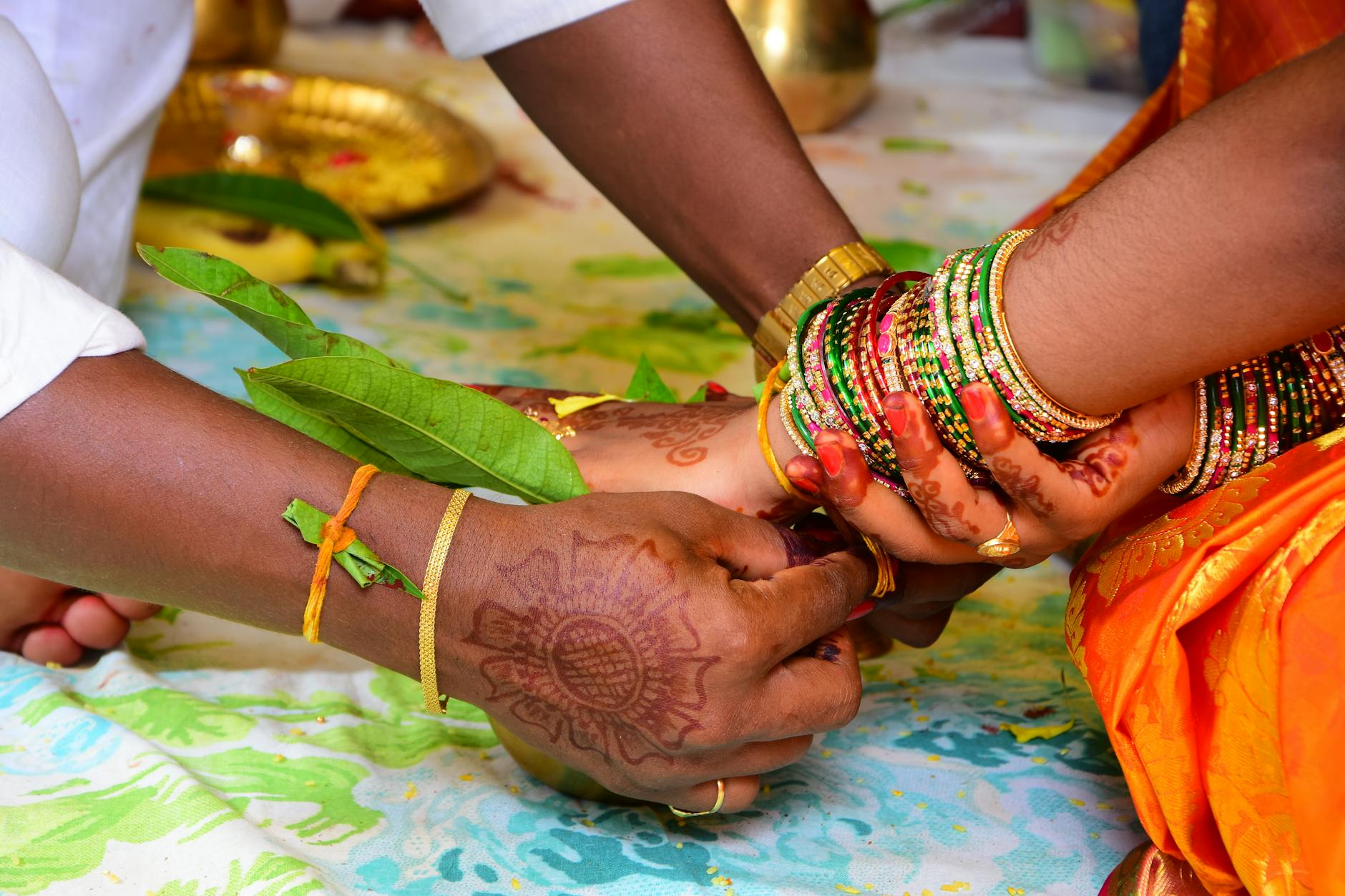
The South Indian thaali is tied around the bride's neck by the groom using a yellow thread (kankanam) during the ceremony.
Post-ceremony, many Tamil brides replace the thread with a gold chain, though some traditions maintain the thread for a period.
The pendant's design is community-specific — typically a simple gold disc, a lotus, or a specific traditional form.
Tamil thaali design is generally simpler and more understated than North Indian mangalsutra pendants.
Karnataka
Karnataka traditions vary significantly by community.
Some wear double-strand black beads similar to Maharashtra; others use a single gold chain with a specific pendant design.
Distinct community traditions — Brahmin, Lingayat, Vokkaliga — each have their own mangalsutra forms.
Gujarat and Rajasthan
North and West Indian mangalsutra designs are less standardised than Maharashtra or South India.
A single strand of black and gold beads with a pendant is common, but the pendant design varies widely — diamond solitaires, contemporary abstract shapes, and traditional forms all coexist.
The Chain: The Component That Matters Most for Daily Wear
Most women focus on the pendant design when choosing a mangalsutra. The more important consideration for daily comfort is the chain.
Weight: The Most Important Factor You Are Not Thinking About
A 30-gram mangalsutra chain is a very different object from a 5-gram chain.
Thirty grams of gold hanging around your neck all day, every day, becomes physically noticeable — the chain pulls, the pendant swings, and the constant weight becomes a background irritant.
For daily wear, the sweet spot is 5–12 grams for the chain (excluding pendant).
If you love the aesthetic of a heavier, more traditional chain, consider owning two mangalsutras: one light for daily wear, one heavier traditional piece for festivals and occasions.
Chain Type: Preventing Tangles
Certain chain types tangle more readily than others.
For daily wear, box chains and snake chains are the most tangle-resistant — their structure means they lie flat, cannot knot, and require no daily detangling. Rope chains are more prone to tangling and can be harder to unclasp. Flat link chains (like the standard black-bead mangalsutra chain) need a well-made clasp that doesn't catch on clothing.
18K Chain with 22K Pendant: The Practical Choice
22K gold (91.6% pure) is softer than 18K gold (75% pure).
A 22K chain under daily stress — clasp opening and closing, friction against clothing and skin, the weight of the pendant — will show wear sooner than an 18K chain.
Many experienced jewellers recommend an 18K gold chain (for durability) with a 22K pendant (for the richer yellow colour that matches traditional bridal gold).
The slight colour difference between 18K and 22K is negligible when the chain is carrying black beads as separators.
The Pendant: Style and Meaning
The pendant is the visual signature of the mangalsutra — the piece that is seen and noticed.
In 2026, there are genuine options across the traditional-to-contemporary spectrum:
| Style | Description | Best For | Approx. Price Range |
|---|---|---|---|
| Traditional vati (Maharashtrian) | Two gold cup-shaped pendants on double black bead strand | Traditional Maharashtrian families; those wanting cultural continuity | ₹8,000–₹35,000 |
| Diamond solitaire pendant | A single round brilliant diamond in prong or bezel setting on a plain chain | Modern women wanting elegance with daily wearability | ₹25,000–₹3,00,000 |
| Contemporary geometric | Abstract gold shapes — circles, bars, minimal forms — in 18K or 22K | Design-forward women in professional environments | ₹10,000–₹60,000 |
| Deity pendant | Gold pendant featuring Lakshmi, Ganesha, or religious motif | Traditionally devout families; South Indian traditions | ₹5,000–₹50,000 |
| Diamond cluster | Multiple diamonds in floral or geometric arrangement | Women wanting visible sparkle with meaningful daily wear | ₹50,000–₹5,00,000+ |
Traditional vs Contemporary: The Honest Comparison
| Factor | Traditional Mangalsutra | Contemporary Mangalsutra |
|---|---|---|
| Daily comfort | Heavier; may require adjustment period | Typically lighter; designed for all-day wear |
| Office appropriateness | Can be noticeable; some workplaces prefer minimal | Discreet; passes in all professional environments |
| Cultural meaning | Full traditional resonance; family recognition immediate | Still meaningful; symbol is in the wearing, not just the form |
| Resale value | Gold value is recoverable; making charges lost | Diamond pendants retain value better than plain gold if quality certified |
| Longevity of design | Timeless traditional design — will not look dated | Contemporary styles evolve; may look of its era in 20 years |
| Repairability | Standard black bead replacement; any jeweller can help | May require original brand for specialised repairs |
Pricing: What You Actually Need to Spend
Mangalsutra pricing varies more than almost any other jewellery category because the range of designs is so wide:
- ₹8,000–₹20,000: Simple plain gold pendant with thin chain; basic black bead strand. Perfectly appropriate and genuinely beautiful in its simplicity.
- ₹20,000–₹80,000: Better-quality chain, small diamond pendant or more elaborate gold pendant; standard weight for comfortable daily wear.
- ₹80,000–₹3,00,000: Diamond pendant with certified stone(s), heavier chain, jeweller name brand; a statement piece that is still appropriate as daily wear.
- ₹3,00,000–₹10,00,000+: Premium diamond cluster pendants, significant carat weight, premium brand; mangalsutra as fine jewellery investment piece.
The Two-Mangalsutra Strategy
Many women find they use two mangalsutras effectively: one lightweight contemporary piece for daily wear (office, gym, casual) and one more traditional or elaborate piece for festivals, weddings, and religious occasions.
The total budget for both together can be less than spending a large single amount on one piece that is simultaneously too heavy for daily wear and not traditional enough for ceremony.
Discuss this openly with your jeweller — it is a perfectly practical approach.
How to Choose for Your Lifestyle
Ask yourself these questions honestly before choosing:
- What is my professional environment, and will I wear this to work every day?
- Am I physically active — swimming, gym, sports? (This affects chain type and stone setting choice — bezel settings are more durable than prong settings for active lifestyles.)
- How much daily maintenance am I willing to do? (Black beads need occasional restringing; chains need occasional professional cleaning.)
- What does my family tradition specify? (Some families are specific about the form — have this conversation before you fall in love with a pendant design that won't be accepted.)
- Is this purely a marital symbol or also an investment? (If investment matters, prioritise gold weight and certified diamond quality over design complexity.)
The mangalsutra you choose will be photographed at your wedding, touched every morning when you put it on, and present in every significant moment of your marriage.
Choose it as carefully as you choose everything else that is meant to last a lifetime — because this one genuinely is.
More in Wedding & Bridal
Share this article
Our editorial team comprises jewellery industry veterans, certified gemmologists, and passionate writers with decades of combined experience across India's gold, diamond, and gemstone markets. Every article is researched, fact-checked, and written to help Indian buyers make smarter, safer jewellery decisions.
Passionate about jewellery and love to write? We'd love to hear from you.
Join us as a writer →Ready to buy? Find verified jewellers near you
Browse 10,000+ BIS hallmark certified jewellers across India. Compare ratings, check today's gold rate, and book a visit.
Keep Reading