The North Indian bride is an icon — draped in red or deep pink, adorned with layers of gold jewellery that announce her status, heritage, and family wealth. Whether you are a Punjabi bride from Amritsar, a Rajasthani dulhan from Jaipur, or a Delhi girl planning her big day, the jewellery traditions of North India are rich, codified, and deeply meaningful. This guide covers every piece in the traditional North Indian bridal set, regional variations, weight expectations, and a clear price guide so you can plan your budget with confidence.
The Complete North Indian Bridal Jewellery Set
A traditional North Indian bridal set is not just one necklace and a pair of earrings. It is a head-to-toe system of ornaments, each piece carrying cultural significance. Here is every item, from the crown of the head to the tips of the toes.
Head Ornaments
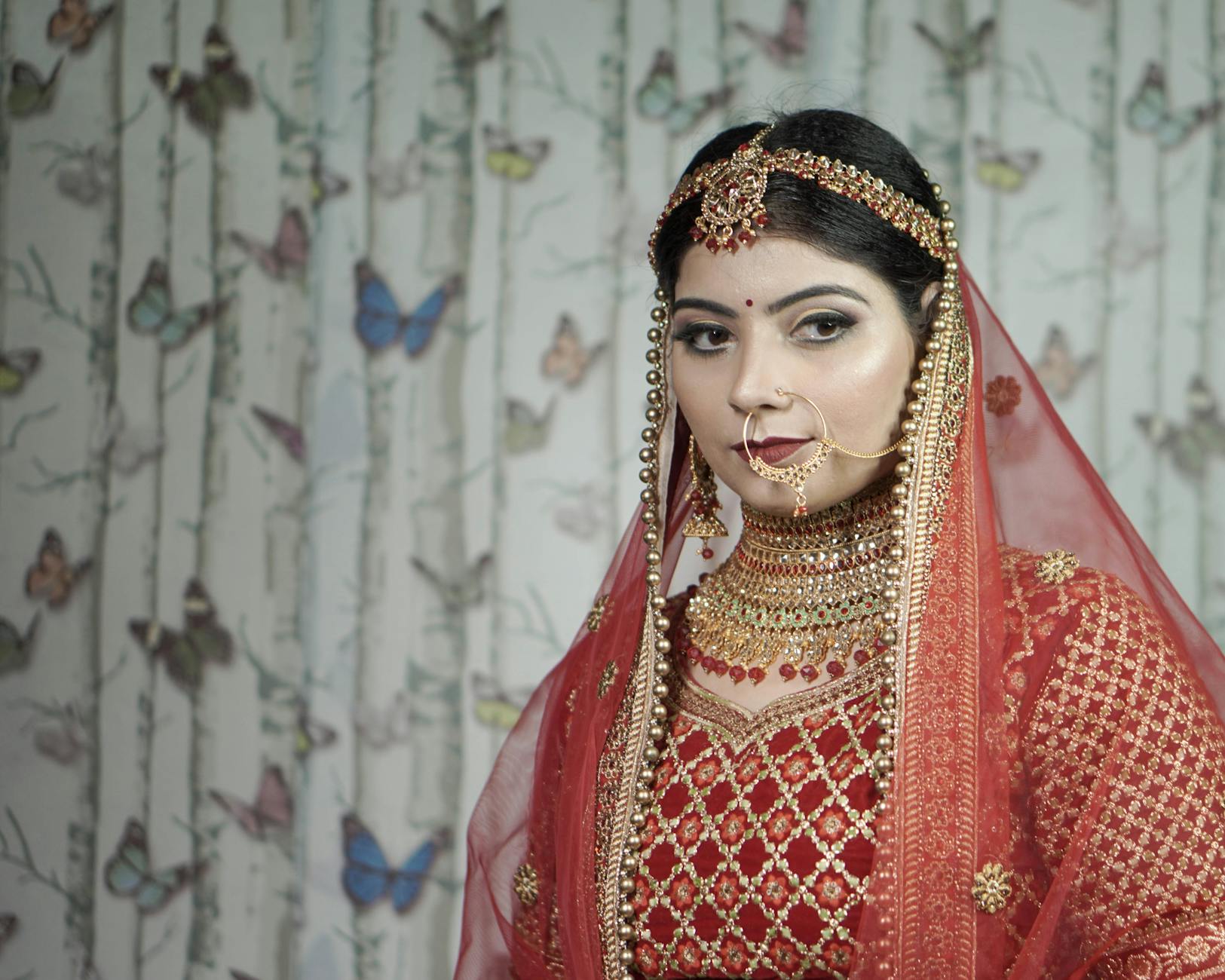
Maang Tikka is the forehead ornament placed along the centre parting of the hair. It consists of a pendant — typically gold set with Kundan, ruby, or polki — suspended from a chain or pin that anchors into the hair. The maang tikka is considered non-negotiable for most North Indian brides; it frames the face and is prominent in every wedding photograph. Traditional designs feature a central pendant (often teardrop or floral shape) with a chain running back into the hair.
Jhoomar or Passa is a side headpiece worn on the left side of the head, cascading from the hair down along the temple. It is especially associated with Punjabi and Mughal-influenced bridal traditions. The jhoomar is larger and more dramatic than the maang tikka and is often set with pearls, Kundan, or meenakari work. Not every North Indian bride wears a passa, but for Punjabi brides and those embracing Mughal-era aesthetics, it is a centrepiece accessory.
Nose and Ear Jewellery
Nath or Nathni — the bridal nose ring — is one of the most striking elements of the North Indian bridal look. Bridal naths are considerably larger than everyday nose rings, often 7–12 cm in diameter, crafted in gold and set with pearls, coral, or Kundan stones. A gold chain (often called the nath chain or latkan chain) runs from the nath up to the hair or ear, preventing it from falling. Clip-on naths are widely available for brides without a nose piercing.
Jhumkas and Kaanchain — North Indian bridal earrings range from the classic bell-shaped jhumka (beloved across UP, Bihar, Delhi, and Rajasthan) to elaborate chandelier earrings with multiple layers. Punjabi brides often prefer large, long jhumkas in 22K gold. Rajasthani brides wear thick, wide earrings called Kundal or Bali that sometimes cover the entire ear lobe and tragus area.
Necklaces
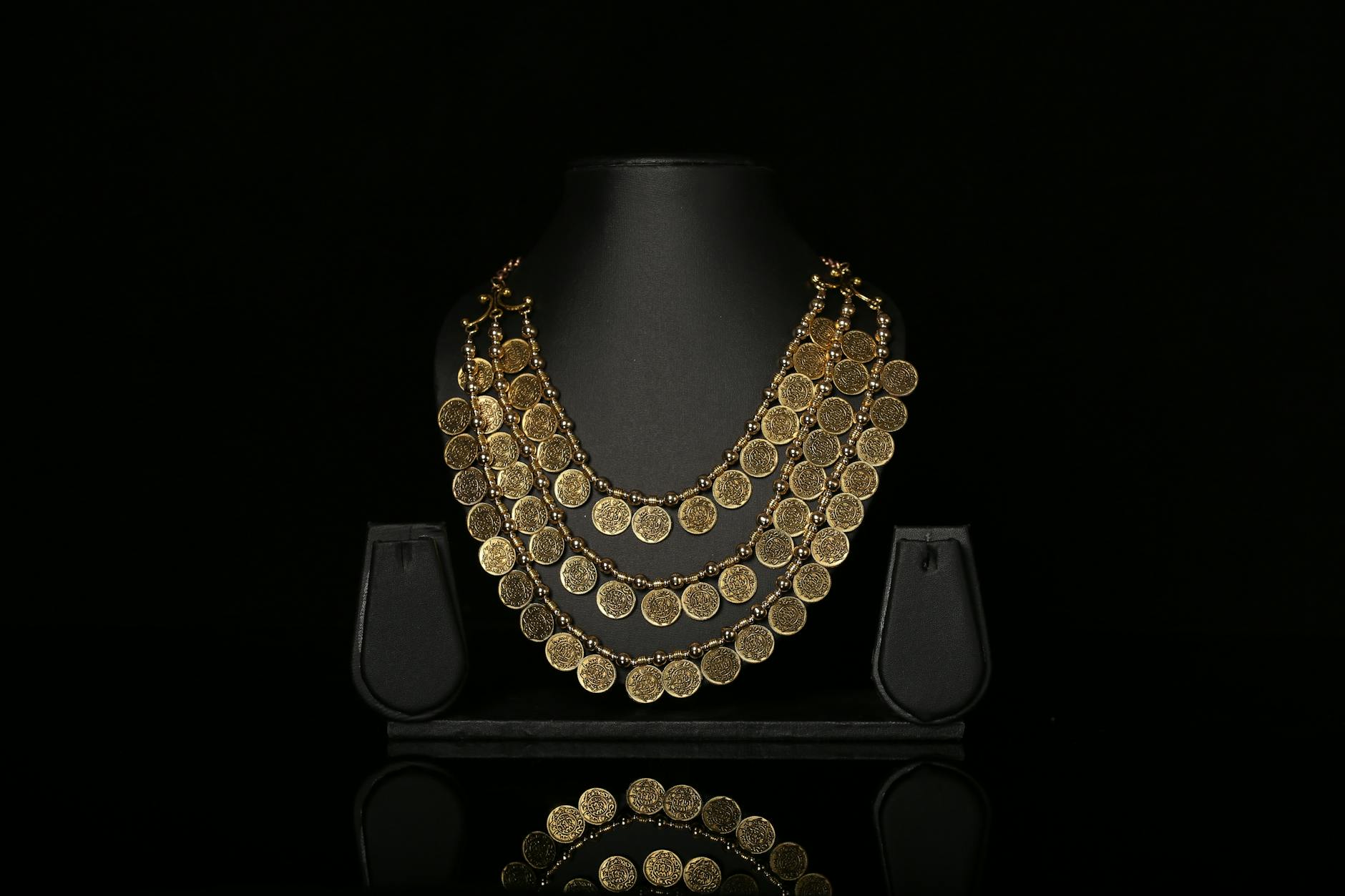
Haar (necklace layers) — North Indian bridal necklace traditions involve multiple layers worn simultaneously. A typical bridal necklace arrangement includes: a close-fitting choker or collar necklace (often Kundan set), a mid-length necklace such as a Rani Haar (literally queen's necklace, usually 20–22 inches), and a long gold chain. Affluent brides may add a fourth layer. The Rani Haar in gold with polki stones is currently one of the most sought-after North Indian bridal pieces. Total gold weight across all necklace layers can range from 50g to 150g+.
Arms and Wrists
Bajuband — the armlet or upper arm bracelet — is worn above the elbow on the upper arm. In North Indian bridal tradition, bajubands are often set with Kundan or meenakari work and are adjustable. They are particularly prominent in Rajasthani and UP bridal sets.
Chura is one of the most culturally significant elements of the Punjabi bridal look. The chura is a set of red and ivory (or red and gold) bangles — traditionally 21 pairs — given to the bride by her maternal uncle (mama) the morning before the wedding. The chura is worn on both wrists and is considered sacred; many brides wear it for 40 days to a year after the wedding before ceremonially removing it. Traditional chura is made of ivory or bone; modern versions use resin or plastic with gold work.
Kaleere are the hanging umbrella-like golden ornaments that attach to the chura bangles and cascade down from the wrists. Made of thin gold-plated metal discs, shells, and flowers, kaleere jingle with every movement. There is a tradition where the bride shakes her kaleere over unmarried guests' heads — whoever a kaleere falls on is said to be the next to marry. Kaleere are almost exclusively Punjabi in origin but have been adopted widely across North India.
Waist and Lower Body
Kamarband — the waist belt — is a wide gold belt worn around the waist over the lehenga or saree. Traditional kamarbands are heavily worked in gold with Kundan or enamel inlay; modern versions may be lighter and more flexible. A kamarband adds gravitas to the bridal silhouette and is common in Rajasthani and UP bridal traditions.
Payal (anklets) for North Indian brides are heavier and more ornate than everyday versions. Silver is traditional for anklets across India (gold near the feet is considered inauspicious in some regions), though gold or gold-plated payal is increasingly worn at weddings. Bichiya (toe rings) — typically silver, worn on the second toe of both feet — are put on during the wedding ceremony and are a symbol of married status.
Regional Variations Across North India
While the broad set remains similar, each region has defining characteristics:
| Region | Defining Piece | Style Notes |
|---|---|---|
| Punjab | Chura + Kaleere | Heavy gold, large jhumkas, passa on left side, Kundan choker |
| Rajasthan | Borla maang tikka | Extra-large nath, Aad necklace (wide choker), Bajuband, Meenakari work throughout |
| UP / Delhi | Layered gold necklaces | Kundan set, polki Rani Haar, classic jhumka, maang tikka |
| Bihar / Jharkhand | Temple jewellery influence | Heavier gold, traditional motifs, less Kundan, more pure gold designs |
How Much Gold Does a North Indian Bride Wear?
The weight of gold jewellery worn by a North Indian bride on her wedding day varies considerably by family tradition and budget, but typical ranges are:
- Modest traditional set: 80–120g of gold across all pieces
- Standard middle-class bridal set: 150–250g
- Affluent family: 300–500g+ (with Kundan and polki adding significant weight)
- Rajasthani traditional: can exceed 600g for very traditional families
⚠️ Weight and Comfort
Wearing 200g+ of gold for 8–12 hours is physically demanding. Many brides wear the full set for the ceremony and pheras, then remove heavier pieces like the passa, kamarband, and one or two necklace layers for the reception. Discuss this with your jeweller when selecting pieces — wearability on the day matters as much as how the set photographs.
Price Guide for North Indian Bridal Sets (2026)
| Budget Range | What You Get | Gold Type |
|---|---|---|
| ₹3,00,000 – ₹5,00,000 | Standard 22K set: maang tikka, jhumka, 2 necklaces, bangles, payal | 22K hallmarked |
| ₹7,00,000 – ₹15,00,000 | Kundan choker + gold necklaces, passa, bajuband, complete set | 22K gold + Kundan |
| ₹15,00,000 – ₹30,00,000 | Full Kundan/Polki bridal set, Rani Haar with polki, complete head-to-toe | 22K + Polki/Uncut diamonds |
| ₹30,00,000+ | Heirloom-grade Kundan, bespoke designs, heavy diamond pieces | 22K + certified diamonds |
Making Charges — How to Negotiate for a Bridal Set
Making charges are where jewellers have the most margin flexibility. For a complete bridal set purchased together from one jeweller, you should negotiate aggressively. The general rules:
- Individual pieces: 12–25% making charges are standard
- Complete bridal set (same visit): ask for 15–20% reduction on making charges across the set
- For Kundan and meenakari work, making charges are fixed by craftsmanship — less room to negotiate
- Always ask if making charges are calculated on the full weight or only the gold weight (stone weight should be excluded)
- Get a written estimate before confirming — prices confirmed verbally are often different at billing
💡 Pro Tip
The best cities for North Indian bridal jewellery shopping are Jaipur's Johari Bazaar (Kundan and Polki at source), Delhi's Dariba Kalan in Chandni Chowk (the oldest gold market in North India), and Karol Bagh market (modern designs, competitive pricing). Amritsar's Hall Bazaar is the premier destination for authentic Punjabi gold sets. Shopping in these markets directly, rather than at mall jewellery stores, typically saves 8–15% on the same quality.
Kundan vs Polki vs Plain Gold — Which to Choose
Plain 22K gold jewellery gives you the highest resale value — the gold content is the primary value driver, and hallmarked pieces can be exchanged or sold anywhere in India. The aesthetic is traditional and timeless.
Kundan jewellery uses refined 24K gold foil (kundankari) to set glass, quartz, or semi-precious stones into gold frames. The look is regal and Mughal-inspired. Resale value is lower than plain gold because the craftsmanship and stones are not easily recoverable.
Polki uses uncut, rough diamonds set in gold — a distinctly North Indian and Rajasthani tradition. Polki is extremely expensive but carries the prestige of real diamonds. Note that polki diamonds are uncut and their value is highly subjective — insist on a proper valuation certificate.
Frequently Asked Questions
What is the single most important piece of North Indian bridal jewellery?
Culturally, the Maang Tikka holds the most symbolic significance — it is the first piece put on the bride on the wedding morning and is considered essential across almost all North Indian communities regardless of budget. If you must prioritise, invest in a beautiful maang tikka before adding other pieces.
Can I mix Kundan and plain gold in the same bridal set?
Absolutely. Most modern North Indian brides mix — a Kundan choker with plain gold Rani Haar, or a Kundan maang tikka with plain gold jhumkas. The key is to maintain visual coherence. If your Kundan work has a dominant colour (red, green, pearls), carry that colour accent through at least one other piece. Ask your jeweller to show you complementary combinations — experienced bridal jewellers do this frequently.
Is Punjabi chura mandatory?
For Punjabi Hindu and Sikh families, the chura ceremony is deeply traditional and most families consider it essential. However, attitudes vary — some urban Punjabi brides now opt for gold bangles instead of the red chura. The decision is personal and family-driven. If you wear chura, the kaleere are typically part of the same tradition and come together.
More in Wedding & Bridal
Share this article
Our editorial team comprises jewellery industry veterans, certified gemmologists, and passionate writers with decades of combined experience across India's gold, diamond, and gemstone markets. Every article is researched, fact-checked, and written to help Indian buyers make smarter, safer jewellery decisions.
Passionate about jewellery and love to write? We'd love to hear from you.
Join us as a writer →Ready to buy? Find verified jewellers near you
Browse 10,000+ BIS hallmark certified jewellers across India. Compare ratings, check today's gold rate, and book a visit.
Keep Reading