Moissanite is having a moment in India. In 2020, it was a niche product known mainly to jewellery enthusiasts who had done their research online.
By 2026, it is a mainstream category at forward-thinking jewellers in metro cities, featured openly in social media bridal content, and discussed in wedding planning groups with the same matter-of-fact tone as lab-grown diamonds.
This guide covers what moissanite actually is, how it compares to diamond and other alternatives, who should consider it, and what to pay.
What Is Moissanite?
Moissanite is silicon carbide (SiC) — a naturally occurring mineral that was first discovered in 1893 by French chemist Henri Moissan in a meteor crater in Canyon Diablo, Arizona.
Moissan initially thought he had discovered diamonds; only later microscopic analysis confirmed it was a new mineral, subsequently named moissanite in his honour.
Natural moissanite is exceedingly rare — essentially confined to meteorites and a few isolated geological deposits, none of which produce gem-quality stones in commercial quantities.
All moissanite sold in jewellery is lab-created — grown in controlled laboratory environments using the Lely process and other proprietary synthesis methods.
The leading commercial moissanite brand globally is Charles & Colvard (US), which holds key patents and sells under the "Forever One" brand name.
Several other manufacturers now produce moissanite globally, including some in India and China.
Moissanite vs Diamond: The Key Physical Differences
Hardness
Diamond scores 10 on the Mohs hardness scale — the hardest natural substance known. Moissanite scores 9.25.
Both are significantly harder than all other gemstones (sapphire and ruby score 9; quartz scores 7).
For daily wear in a ring, the practical difference between 9.25 and 10 is negligible — both will scratch almost nothing they encounter in daily life, and almost nothing will scratch them.
Moissanite is entirely safe for a daily-wear engagement ring or wedding band.
Refractive Index and Brilliance
Here the materials diverge interestingly. Diamond has a refractive index of approximately 2.42.
Moissanite has a higher refractive index of approximately 2.65.
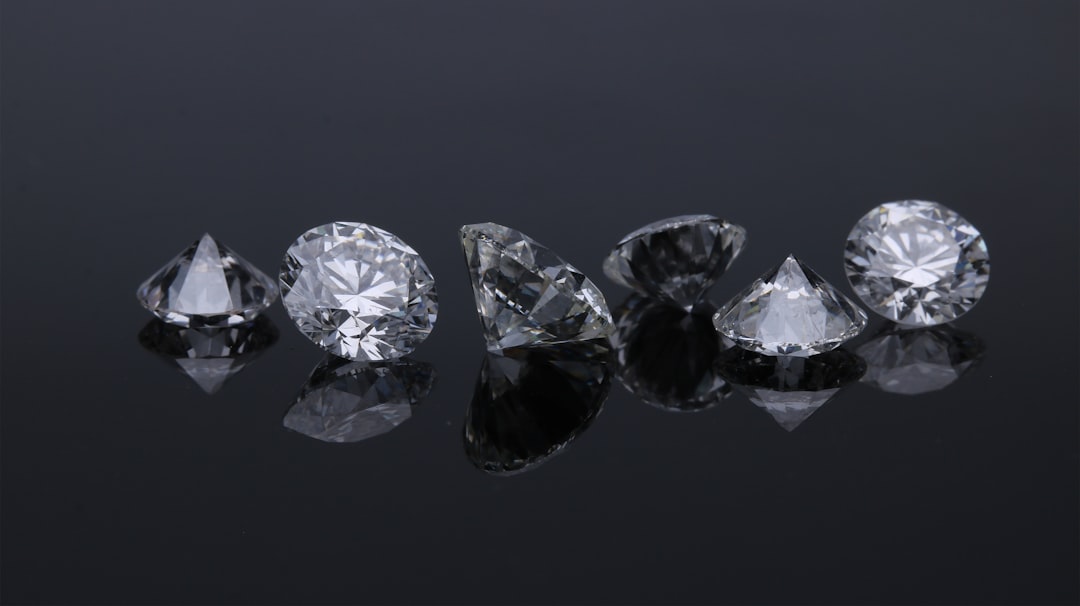
A higher refractive index means more "fire" — the rainbow spectral flashes you see when light disperses through the stone.
Moissanite produces approximately 2.4 times more fire than diamond.
This is visible to the eye and is the characteristic that trained observers (and careful owners) use to distinguish moissanite from diamond: moissanite throws more rainbow flashes, particularly in strong sunlight or under spotlights.
Some buyers love this — it is genuinely spectacular. Some buyers find it excessive.
Inspect moissanite in sunlight before purchasing to decide which camp you are in.
Thermal Conductivity
This is the property that catches many people (and many diamond testing devices) by surprise.
Diamond is famous for its high thermal conductivity — heat passes through it rapidly. This is the basis of the most common diamond tester (the "thermal probe").
The problem: moissanite also has high thermal conductivity — close to diamond's. Most standard thermal diamond testers will indicate "diamond" when tested on moissanite.
This means moissanite cannot be distinguished from diamond using the basic thermal probe that most jewellers keep behind their counter.
Proper identification of moissanite requires either a specialised moissanite tester (which distinguishes the two based on electrical conductivity, not thermal) or gemological examination under magnification (moissanite shows doubling of the back facets when viewed through the stone under a 10x loupe, due to its double-refracting crystal structure — diamond does not show this).
Price: The Dramatic Difference
This is where moissanite's appeal is most obvious:
- A 1ct round brilliant natural diamond (GIA certified, G colour, VS2 clarity, Excellent cut) in India: approximately ₹3,00,000–₹4,00,000 for the stone alone.
- A 1ct equivalent round brilliant lab-grown diamond (IGI certified, G colour, VS2 clarity): approximately ₹30,000–₹60,000.
- A 1ct equivalent round brilliant moissanite (Forever One DEF colourless): approximately ₹8,000–₹25,000 depending on brand and seller.
Moissanite's price difference from natural diamond is not 30% or 50% — it is 90–95%. This is not because moissanite is of poor quality.
It is because silicon carbide is simply far less rare and far less expensive to produce than diamond — natural or lab-grown.
A couple who might budget ₹80,000 for a 0.3ct natural diamond solitaire could instead buy a 2ct moissanite solitaire for ₹20,000 and invest the remaining ₹60,000 in a beautiful gold or platinum band setting, or toward their wedding budget. The 2ct moissanite will face up dramatically larger and more brilliant than the 0.3ct diamond — visible to every guest at the event.
Can Moissanite Be Distinguished from Diamond?
By untrained observers in social settings: No. Moissanite and diamond are visually indistinguishable to most people in casual observation.
Both are colourless, highly brilliant, and mounted in identical settings. Your guests at a dinner party cannot tell the difference.
By trained observers under magnification: Yes. The doubling of back facets in moissanite under 10x magnification is definitive.
A trained gemologist with a loupe can identify moissanite in under 30 seconds.
By standard diamond testers: Often not — thermal testers frequently show "diamond" for moissanite.
Specialised combined electrical-thermal testers (such as the Presidium Duo Tester or similar) reliably distinguish them.
At GIA or IGI laboratory: Definitively. The labs use spectroscopic analysis that identifies moissanite with certainty.
The Resale Question
Moissanite has minimal resale value — this is the honest answer.
Unlike natural diamonds (where resale is typically 30–60% of original retail purchase price) or even lab-grown diamonds (where resale has collapsed to near-zero in recent years), moissanite secondhand has essentially no organised resale market in India.
If you sell a moissanite stone, you are doing so at a small fraction of your original cost.
For buyers who understand this upfront and are not purchasing for investment — and given the low entry price, the investment case is not strong regardless — this is not a problem.
If you paid ₹15,000 for a moissanite stone and receive ₹3,000 when you sell, the financial loss is ₹12,000.
Compare this to a natural diamond where you paid ₹3,50,000 and receive ₹1,50,000 — a loss of ₹2,00,000.
In absolute terms, the moissanite owner loses far less money regardless of resale percentage.
Setting Compatibility
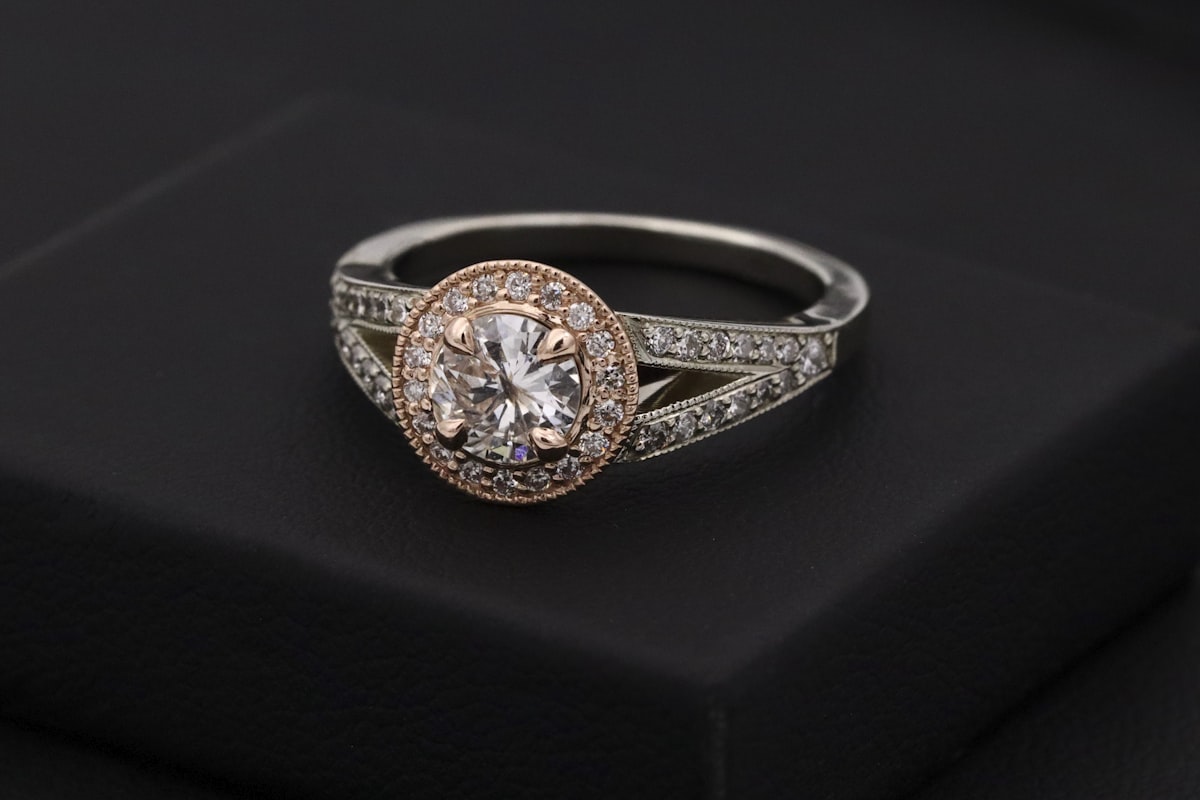
Moissanite works in any gold or platinum setting that would accommodate a diamond of the same measurements.
The stone is cut to standard diamond dimensions, so prong settings, bezel settings, halo settings, solitaire settings — all work identically.
When ordering moissanite jewellery, you can specify the setting you want (in 18K yellow gold, 18K white gold, platinum 950) independently of the stone.
Comparison Table: Moissanite vs Diamond vs Lab-Grown vs CZ
| Feature | Natural Diamond | Lab-Grown Diamond | Moissanite | Cubic Zirconia |
|---|---|---|---|---|
| Material | Carbon | Carbon | Silicon Carbide | Zirconium Oxide |
| Mohs Hardness | 10 | 10 | 9.25 | 8–8.5 |
| Refractive Index | 2.42 | 2.42 | 2.65 | 2.15 |
| 1ct equivalent price (India) | ₹3,00,000–₹4,00,000 | ₹30,000–₹60,000 | ₹8,000–₹25,000 | ₹200–₹2,000 |
| Durability for daily wear | Excellent | Excellent | Excellent | Moderate (scratches over time) |
| Fire (rainbow flashes) | Moderate | Moderate | High (2.4× diamond) | High (then dulls over time) |
| Resale value | Moderate (30–60%) | Very low (<10%) | Minimal | None |
| Recommended for fine jewellery | Yes | Yes | Yes | No |
| Certificate available | GIA / IGI | IGI / GIA | Brand guarantee (Charles & Colvard) | None meaningful |
Who Should Consider Moissanite
Moissanite is an excellent choice for buyers who:
- Want a large, brilliant stone but cannot stretch to natural or even lab-grown diamond pricing.
- Do not place emotional or cultural significance on the specific material being diamond.
- Are purchasing jewellery for wear and beauty rather than investment or future resale.
- Want to allocate their budget toward the metal setting and overall jewellery design rather than the stone.
- Are environmentally conscious and prefer lab-created stones on principle (moissanite has minimal environmental footprint compared to mined diamonds).
Moissanite is not for buyers who specifically value rarity, who see the diamond as a store of value, or who come from a family context where the material of a stone carries important cultural significance.
Both positions are equally valid — and knowing which applies to you is the foundation of a confident purchase decision.
More in Diamonds & Gemstones
Share this article
Our editorial team comprises jewellery industry veterans, certified gemmologists, and passionate writers with decades of combined experience across India's gold, diamond, and gemstone markets. Every article is researched, fact-checked, and written to help Indian buyers make smarter, safer jewellery decisions.
Passionate about jewellery and love to write? We'd love to hear from you.
Join us as a writer →Ready to buy? Find verified jewellers near you
Browse 10,000+ BIS hallmark certified jewellers across India. Compare ratings, check today's gold rate, and book a visit.
Keep Reading