India is home to the world's largest diamond cutting and polishing industry — Surat processes over 90% of the world's diamonds by volume. Yet until recently, very few Indian retail jewellery buyers understood lab-grown diamonds or could access them. That has changed significantly in the past two years. Certified lab-grown diamonds are now available at Tanishq, Malabar, CaratLane, BlueStone and hundreds of independent jewellers. If you are considering a diamond purchase in 2026, this guide gives you the complete comparison.
What are lab-grown diamonds?
Lab-grown diamonds (also called LGD, synthetic diamonds, or cultured diamonds) are diamonds created in a controlled laboratory environment using one of two processes:
- High Pressure High Temperature (HPHT): Replicates the geological conditions under which diamonds naturally form — extreme pressure (5–6 GPa) and high temperature (1300–1600°C) applied to a carbon seed. Produces diamonds in 2–4 weeks. HPHT stones often have a slight yellow or brown tint depending on nitrogen content.
- Chemical Vapour Deposition (CVD): A carbon-rich gas (typically methane) is introduced into a chamber at lower pressure. Carbon atoms deposit on a diamond seed and build up layer by layer. Produces stones in 2–4 weeks. CVD typically produces cleaner, more colourless stones but may have a slight brown tint that post-growth HPHT treatment can remove.
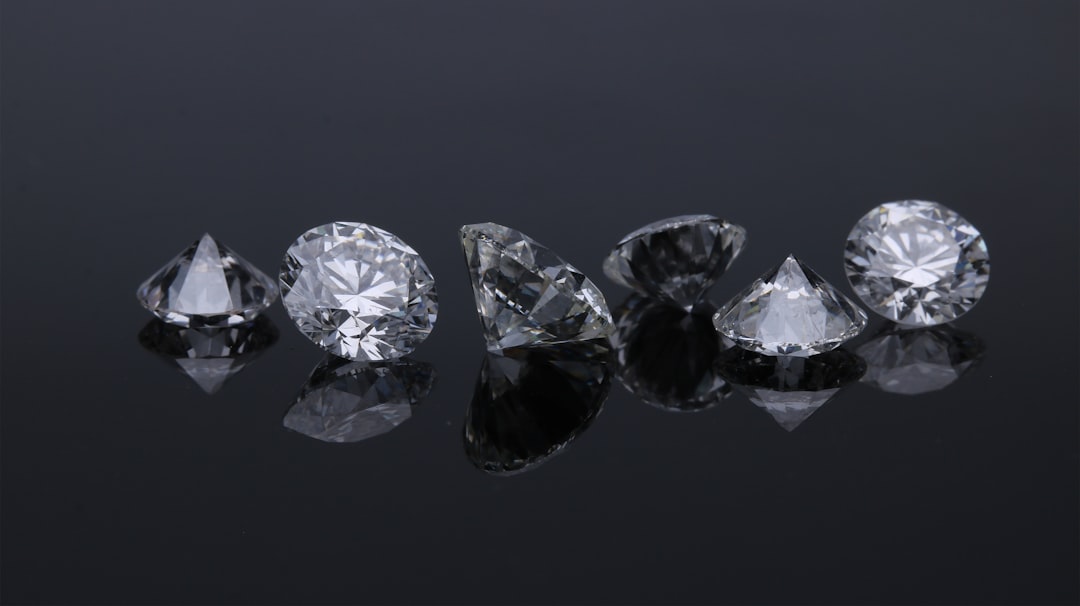
The result in both cases is a diamond — not a simulant, not a coating, not a look-alike. The same carbon atoms, the same cubic crystal structure, the same hardness (10 on Mohs), the same optical properties. Gemological instruments cannot distinguish them from mined diamonds without specialist detection equipment.
Price comparison: lab-grown vs natural in India (2026)
Lab-grown diamond prices have fallen dramatically in India over the past three years as production has scaled. In 2021, lab-grown diamonds sold at roughly 50% of natural diamond prices. By 2026, comparable quality lab-grown stones sell at 25–35% of natural diamond prices:
| Stone | Natural Diamond (retail) | Lab-Grown Diamond (retail) | Saving |
|---|---|---|---|
| 0.50 ct, G-H colour, VS2 clarity, round brilliant | ₹65,000–₹85,000 | ₹18,000–₹28,000 | ~65-70% |
| 1.00 ct, G colour, VS1 clarity, round brilliant | ₹2,50,000–₹3,50,000 | ₹70,000–₹1,00,000 | ~70-75% |
| 2.00 ct, F colour, VVS2 clarity, round brilliant | ₹12,00,000+ | ₹2,50,000–₹4,00,000 | ~70-80% |
These are retail indicative prices — actual prices vary by jeweller, current production costs and certification. The price gap is widening, not narrowing, as lab-grown production scales up globally.
Quality: grading is identical
Lab-grown diamonds are graded on exactly the same 4C system as natural diamonds:
- Carat: Weight — same as natural. No difference.
- Colour: D (colourless) through Z (light yellow). Lab-grown can achieve D-E colourless more reliably than natural at much lower cost.
- Clarity: FL (flawless) through I3 (heavily included). CVD stones can achieve VVS1-VVS2 more affordably than equivalent natural stones.
- Cut: Determined by the polishing, not the origin. Excellent cut lab-grown stones have identical light performance to excellent cut natural stones.
The International Gemological Institute (IGI), which grades the vast majority of diamonds sold in India, issues identical-format certificates for natural and lab-grown diamonds. The only difference is a line stating "Laboratory Grown" on lab-grown certificates. GIA also grades lab-grown diamonds. For any diamond above 0.30 ct, insist on an IGI or GIA certificate — no exceptions.
Resale value: the critical difference
This is where natural and lab-grown diverge most significantly. Natural diamonds, particularly higher-quality stones (above 1 ct, excellent cut, G or better colour, VS2 or better clarity), retain a meaningful portion of their value over time. In India's unorganised market, natural diamonds resell at 30–50% of original retail. Branded jewellers like Tanishq offer exchange programmes at 80–90% of current diamond value for natural stones purchased from them.
Lab-grown diamonds have poor resale value in India currently — approximately 10–20% of original purchase price. The reason: production costs are falling each year, so older lab-grown stones compete directly with cheaper newly-produced stones. A 1 ct lab-grown diamond purchased for ₹80,000 in 2023 may resell for ₹10,000–₹15,000 in 2026 because similar quality stones now retail for ₹65,000 new.
The practical implication: Buy lab-grown if you want the diamond experience at a lower price and are comfortable with low resale value. Buy natural if you want the piece to hold value over time, or if you are buying for future inheritance.
Environmental angle: is lab-grown actually greener?
The environmental credentials of lab-grown diamonds are more nuanced than marketing suggests. Lab-grown diamonds are energy-intensive to produce — a CVD or HPHT chamber requires significant electricity. If that electricity comes from coal-powered grids (as is the case for many Chinese and Indian production facilities), the carbon footprint per carat can be comparable to or even higher than certain diamond mines. Diamonds grown using renewable energy (some US and European producers) have meaningfully lower footprints. If sustainability is your motivation, ask your jeweller specifically about the production facility and its energy source — vague "eco-friendly" claims without specifics are not meaningful.
Indian market: what to look for in 2026
If you are buying lab-grown diamonds in India:
- Insist on IGI or GIA certification with the specific stone's 4C grade and the "Laboratory Grown" designation. Do not accept certificates from unknown labs.
- Understand that the gold/platinum setting is a separate cost. The diamond price is just the stone — the setting in 18K gold or platinum adds ₹15,000–₹80,000 depending on weight and design.
- Shop Surat jewellers for wholesale-adjacent pricing. Surat's wholesale lab-grown market is accessible to retail buyers if you know where to look. Many Surat-based jewellers sell directly online at prices 20–40% below national chain retail.
- Ask about buyback policy before purchasing. Lab-grown buyback rates are currently low — ask explicitly what rate the jeweller offers. Branded chains like Tanishq typically do not offer buyback on lab-grown at the same rate as natural.
- Compare total price, not diamond price alone. A ₹60,000 "diamond ring" may be a 0.3 ct lab-grown in a ₹30,000 setting — or a 0.5 ct natural in a ₹25,000 setting. Ask for the breakdown.
Use our jeweller directory to find certified diamond jewellers in your city. For engagement rings using lab-grown or natural diamonds set in gold, see our wedding jewellery buying checklist. For understanding how gold price is calculated in a diamond-set gold ring, see our gold price formula guide.
Summary: natural vs lab-grown at a glance
| Factor | Natural Diamond | Lab-Grown Diamond |
|---|---|---|
| Chemistry | Pure carbon | Pure carbon (identical) |
| Hardness | 10 (Mohs) | 10 (Mohs) |
| Price (1 ct, G-VS1) | ₹2.5–3.5L | ₹70K–₹1L |
| IGI/GIA certified | Yes | Yes |
| Resale value | 30–50% of retail | 10–20% of retail |
| Rarity | Geologically finite | Manufactured on demand |
| Best for | Investment, inheritance | Affordable luxury, engagement |
For authoritative grading standards, see igi.org (International Gemological Institute) and gia.edu (Gemological Institute of America). Both issue certifications that are recognised globally and by Indian jewellers.
More in Diamonds & Gemstones
Share this article
Our editorial team comprises jewellery industry veterans, certified gemmologists, and passionate writers with decades of combined experience across India's gold, diamond, and gemstone markets. Every article is researched, fact-checked, and written to help Indian buyers make smarter, safer jewellery decisions.
Passionate about jewellery and love to write? We'd love to hear from you.
Join us as a writer →Ready to buy? Find verified jewellers near you
Browse 10,000+ BIS hallmark certified jewellers across India. Compare ratings, check today's gold rate, and book a visit.
Keep Reading