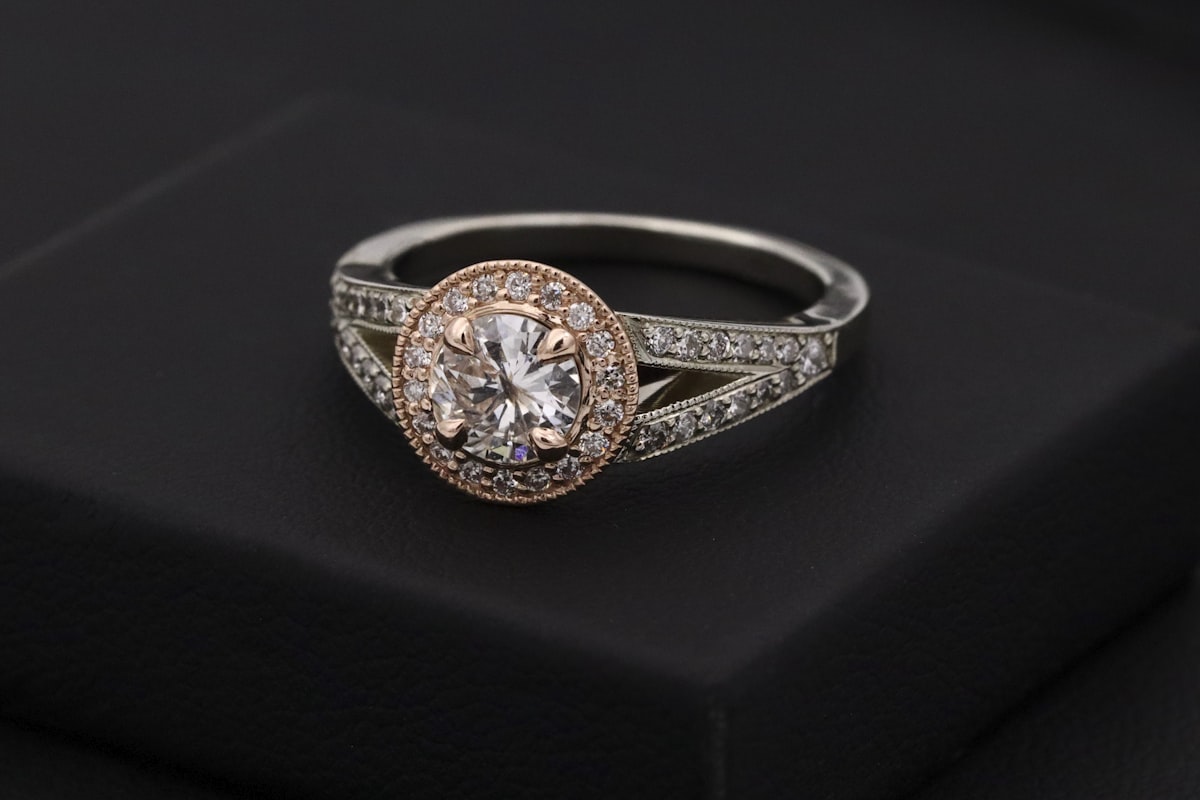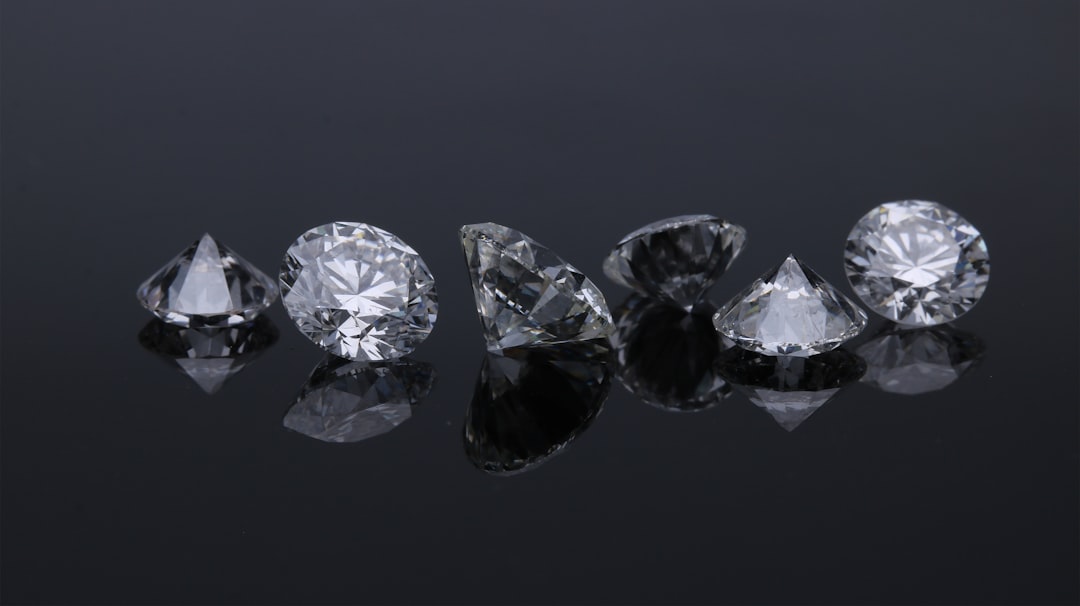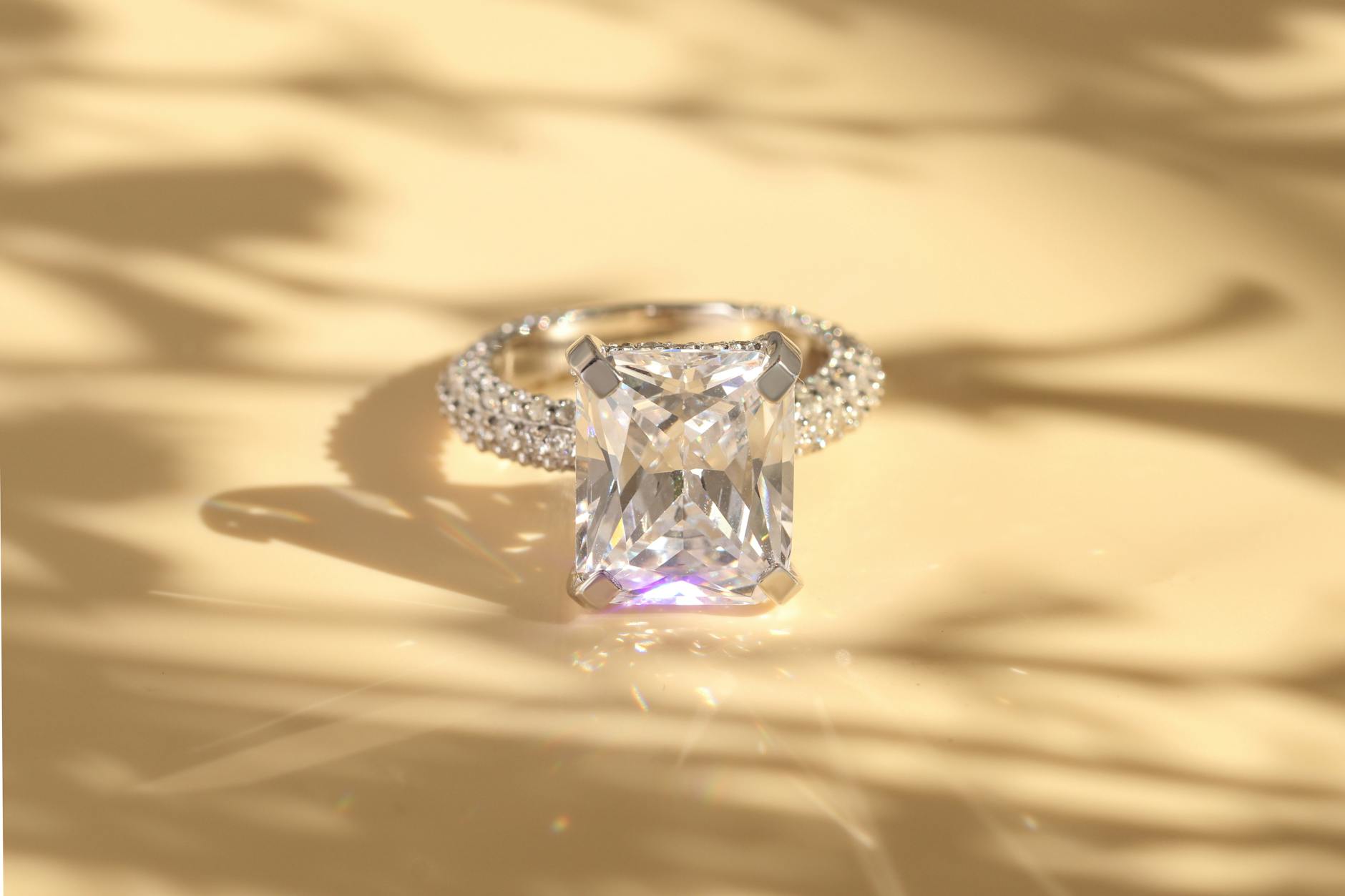
Walk into any jewellery store in Mumbai or browse Instagram and you will encounter three diamond alternatives that look remarkably similar but are worlds apart in price, durability, and purpose: Cubic Zirconia (CZ), Moissanite, and Lab-Grown Diamond. This guide breaks down every meaningful difference so you can choose with confidence — and avoid the overpriced mistake thousands of Indian buyers make every year.
Quick Properties Comparison Table
| Property | Cubic Zirconia (CZ) | Moissanite | Lab Diamond | Natural Diamond |
|---|---|---|---|---|
| Hardness (Mohs) | 8.5 | 9.25 | 10 | 10 |
| Refractive Index | 2.15–2.18 | 2.65–2.69 | 2.42 | 2.42 |
| Dispersion (Fire) | 0.058–0.066 | 0.104 | 0.044 | 0.044 |
| Chemical Composition | ZrO₂ (zirconium oxide) | SiC (silicon carbide) | Carbon (C) | Carbon (C) |
| India Price (1ct equiv.) | ₹500–₹5,000 | ₹8,000–₹60,000 | ₹25,000–₹1,50,000 | ₹2,50,000–₹8,00,000+ |
| Resale Value | Virtually zero | Very low | Low–moderate | Moderate |
| Certifiable | No standard cert | IGI/SGL report | IGI/GIA certified | GIA/IGI/SGL |
Cubic Zirconia (CZ) — Affordable Fashion, Not Forever
Cubic Zirconia is a synthetic crystalline form of zirconium dioxide. It has been used in jewellery since the 1970s and remains the world's most common diamond simulant by volume. In India, CZ is ubiquitous — it fills the showcases of every fashion jewellery shop from Chandni Chowk to Linking Road.
The key appeal is price. A CZ stone of 1 carat equivalent costs as little as ₹50–₹200 at wholesale. Set in silver or gold-plated brass, a finished CZ piece retails between ₹500 and ₹5,000 depending on the metal and craftsmanship. For festive wear, office jewellery, or gifting to teenagers, this is perfectly rational.
The critical limitation is durability. At 8.5 Mohs hardness, CZ will scratch from dust particles (which contain quartz at 7 Mohs) and from everyday handling. Within 1–3 years of regular wear, a CZ stone that once looked glassy will appear dull and cloudy. The cloudiness is permanent — no polishing brings it back.
CZ also lacks the optical properties of diamond. Its refractive index of 2.15–2.18 produces a glassy white flash without the depth and scintillation of diamond. It is immediately recognisable to a trained eye, though in social settings most people will not notice the difference.
⚠️ Fraud Alert
In many Indian tier-2 and tier-3 cities, CZ stones are still being sold set in gold mounts under terms like "American diamond," "Swiss diamond," or simply "diamond." These terms have no gemological meaning and are not regulated. If you are paying for diamond, insist on a GIA, IGI, or SGL certificate with a stone number that you can verify online yourself.
Moissanite — The Brilliant Challenger
Moissanite is silicon carbide (SiC), first discovered in 1893 by French chemist Henri Moissan in a meteorite crater. Natural moissanite is extraordinarily rare. All moissanite in jewellery today is laboratory-grown, making it both consistent in quality and ethical by default.
Moissanite's optical properties are where it genuinely surpasses diamond. Its refractive index of 2.65–2.69 is higher than diamond (2.42), and its dispersion (fire) of 0.104 is more than double that of diamond (0.044). In plain language, moissanite throws more rainbow flashes of colour, especially under direct or spot lighting. Critics call this the "disco ball effect" — under a chandelier or bright restaurant lights, a 1ct moissanite will produce noticeably more coloured sparkle than a diamond of the same size.
Whether you love or dislike this depends on personal taste. Many women find moissanite's brilliance dazzling and prefer it over the more restrained sparkle of diamond. Others find it excessive and prefer the cooler, more white-light scintillation of a diamond.
Hardness at 9.25 Mohs makes moissanite the second hardest gemstone available — significantly more durable than CZ and perfectly suited for everyday wear including engagement rings. A moissanite ring bought today will look essentially the same in 30 years.
Moissanite Brands and Prices in India
The global benchmark brand is Forever One by Charles & Colvard (USA), which produces colourless (DEF grade equivalent) moissanite. In India, prices for loose Forever One stones range from approximately ₹8,000 for 0.5ct equivalent to ₹60,000 for 2ct equivalent. Indian brands such as Solitaire by Anu and several Surat-based manufacturers offer moissanite at somewhat lower price points.
India's moissanite market has grown rapidly since 2021, driven largely by Instagram and YouTube content creators showcasing moissanite engagement rings. Surat now has multiple manufacturers cutting moissanite in-house, reducing import dependency and making prices more competitive.
💡 Pro Tip
A basic thermal conductivity diamond tester will show moissanite as "diamond" because moissanite's thermal conductivity is very close to diamond. This is why moissanite has historically been confused with diamond. To distinguish them definitively, jewellers use a dual tester (thermal + electrical conductivity) or a dedicated moissanite tester. If a jeweller tests your stone with an old-style tester and calls it diamond, request verification with a dual-mode tester.
Lab-Grown Diamond — Chemically Identical to Mined
Lab diamonds are produced by two methods: HPHT (High Pressure High Temperature) and CVD (Chemical Vapour Deposition). The resulting crystals are chemically, physically, and optically identical to mined diamonds. The same GIA and IGI graders who grade mined diamonds grade lab diamonds by the same 4C standards.
In India, the lab diamond industry is centred in Surat. India is the world's largest grower and cutter of CVD lab diamonds, accounting for a dominant share of global production. This has made India one of the most competitive markets globally for lab diamond pricing.
A 1-carat IGI-certified lab diamond (VS2, F colour, Excellent cut) in India currently costs approximately ₹35,000–₹60,000 depending on the grower and retailer. A comparable mined diamond of the same grade would cost ₹2,50,000–₹4,00,000. The price difference — typically 60–80% — is substantial and has made lab diamonds mainstream among urban Indian couples.
The optical behaviour is identical to mined diamond because the stone IS diamond. The white light scintillation, depth, and sparkle are all the same. Under any testing instrument, a lab diamond performs exactly as a mined diamond.
Lab Diamond Resale Value in India
Resale value of lab diamonds has declined significantly as production scaled up globally. In 2022, a 1ct lab diamond might have resold at 50–60% of purchase price. By 2026, secondary market prices have compressed further. For pure investment purposes, lab diamonds are not ideal. However, for milestone jewellery — engagement rings, anniversary pieces — the value equation still strongly favours lab over mined when the priority is the stone's visual and physical properties rather than investment return.
⚠️ Disclosure Requirement
Under the Jewellery and Precious Metals Marking (Hallmarking) rules and consumer protection norms in India, a jeweller is legally required to disclose whether a diamond is natural or lab-grown. If you are not told explicitly, ask the question directly and request it documented on your purchase invoice. Any reputable seller will comply without hesitation.
Moissanite Fraud in Indian Markets
A growing issue in India's tier-2 and tier-3 cities is moissanite being sold as natural diamond — exploiting the fact that basic testers cannot distinguish them. The mechanism is straightforward: a jeweller acquires moissanite stones from Surat wholesalers at ₹8,000–₹15,000 per carat equivalent and sells them set in 18K or 22K gold as "certified solitaire diamonds" at ₹80,000–₹2,00,000. The customer has no way to tell without a proper dual-tester or gemological laboratory verification.
Protection is simple: always insist on a GIA or IGI certificate with a laser inscription number on the girdle of the stone. Use the respective lab's online verification portal before you pay. Any reputable jeweller selling genuine diamonds will provide this without objection.
Which Stone Is Right for You?
Choose CZ if: You want fashion jewellery for occasional wear, you are buying for children or teenagers, or the piece will be replaced within 2–3 years anyway. Budget: under ₹5,000 for the stone.
Choose Moissanite if: You want a budget engagement or commitment ring with excellent durability and maximum sparkle, and you are comfortable with the coloured fire aesthetic. Budget: ₹15,000–₹80,000 for the complete ring.
Choose Lab Diamond if: You want something chemically and optically identical to natural diamond, you value a GIA or IGI certificate, and you want the piece to be a genuine milestone purchase. Budget: ₹40,000–₹2,00,000 for a 1ct certified ring in 18K gold.
Detection Tests Jewellers Use
- Thermal tester (single mode): Tests thermal conductivity. Moissanite passes as diamond — unreliable for distinguishing the two.
- Dual-mode tester (thermal + electrical): Moissanite is a semiconductor (SiC) and registers differently on the electrical conductivity channel. Reliable for moissanite vs diamond distinction.
- UV fluorescence: Many CVD lab diamonds show strong orange or weak blue fluorescence under UV light — patterns that suggest lab origin, though not conclusive.
- Spectroscopy (FTIR/Raman): Definitive and used by all accredited gemological labs (GIA, IGI, SGL). This is the gold standard for identifying a stone's type and origin.
- CZ identification: CZ is the easiest to identify — higher specific gravity (heavier for same size), lower hardness (scratches easily), and a trained eye can spot the glassy optical character.
Frequently Asked Questions
Q: Will moissanite look obviously fake?
A: Not to most people. In casual social settings, a well-cut moissanite in a quality setting looks stunning. Under direct bright lighting, the coloured fire is more pronounced than a diamond — some love it, some prefer the subtlety of diamond. It is not "fake-looking," it simply looks like moissanite, which is a beautiful stone in its own right.
Q: Is a lab diamond the same as a synthetic diamond?
A: Yes, in the chemical and physical sense — though the term "synthetic" has a negative connotation that is scientifically inaccurate. GIA and IGI use "laboratory-grown diamond" as the correct term. The stone is genuine diamond (carbon in cubic crystal structure) in every measurable sense.
Q: Does CZ turn yellow over time?
A: The stone itself does not turn yellow — but it develops surface scratches that scatter light and create a hazy, dull appearance. The stone may also develop surface films from skin oils and cleaning products. Once the surface is microscopically scratched, the stone cannot be restored to its original clarity.
Q: Can I get a moissanite in 22K gold?
A: Yes, though most moissanite rings are set in 14K or 18K gold because the harder alloy better secures the prongs. 22K gold is softer and prongs may bend more easily. This is a craftsmanship consideration, not a property of moissanite itself. Discuss with your jeweller.
More in Diamonds & Gemstones
Share this article
Our editorial team comprises jewellery industry veterans, certified gemmologists, and passionate writers with decades of combined experience across India's gold, diamond, and gemstone markets. Every article is researched, fact-checked, and written to help Indian buyers make smarter, safer jewellery decisions.
Passionate about jewellery and love to write? We'd love to hear from you.
Join us as a writer →Ready to buy? Find verified jewellers near you
Browse 10,000+ BIS hallmark certified jewellers across India. Compare ratings, check today's gold rate, and book a visit.
Keep Reading