Long before diamonds dominated the global jewellery conversation, the world's most precious objects were defined by colour.
The Mughal emperors traded in rubies from Burma, emeralds from Colombia, and sapphires from Kashmir.
The Crown Jewels of India that passed to the British Empire were coloured stone treasuries.
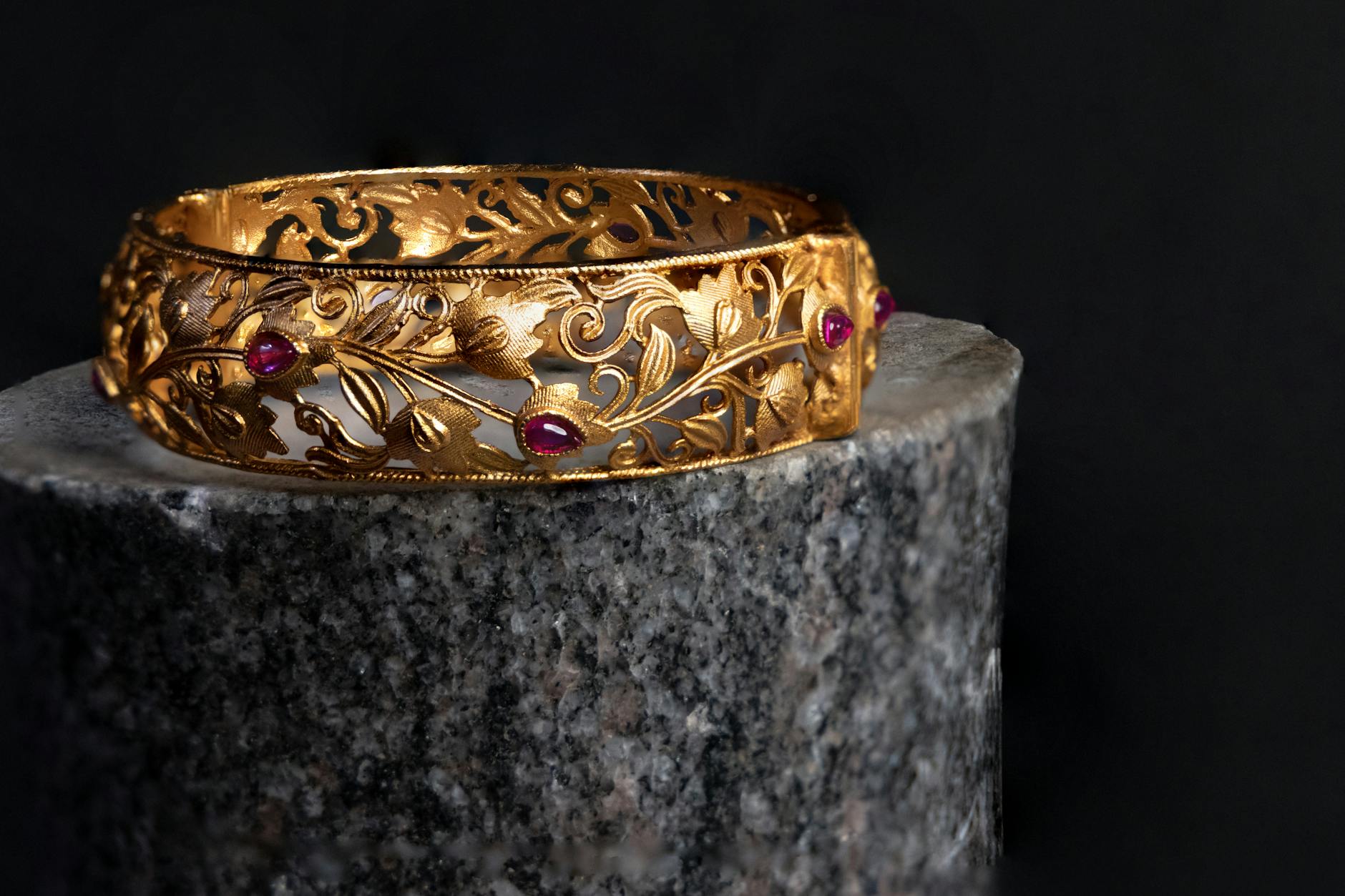
India's own tradition — from Navratna settings to Polki and Kundan work set with uncut gems — is fundamentally a coloured gemstone tradition.
Understanding how to evaluate and buy coloured stones is essential for anyone serious about Indian jewellery.
The Big Three: Ruby, Emerald, and Sapphire
Rubies, emeralds, and sapphires — along with diamonds — are the four stones historically classified as "precious." They command disproportionate prices relative to other gems, driven by rarity, historical desirability, and cultural significance.
Each has its own quality framework, quite different from the diamond 4Cs model.
Ruby: The Stone of Kings
Ruby is red corundum (aluminium oxide) — the same mineral family as sapphire. The red colour comes from trace chromium. Quality factors:
Colour — The Most Critical Factor
Ruby colour is described in terms of hue, tone, and saturation.
The most prized colour is "pigeon blood" — a vivid, pure red with a slight blue overtone, neither too dark nor too orange.
This colour is associated with the finest Burmese (Myanmar) rubies and is the benchmark against which all others are measured. In order of general desirability:
- Pigeon blood red: Deep, vivid, pure red — the summit of ruby quality. Commands extraordinary premiums.
- Rich red: Vivid red without the pigeon blood bluish overtone. Excellent quality; more affordable than pigeon blood.
- Medium red: Good colour; moderate price. Appropriate for most jewellery use.
- Dark red: Too dark — loses brilliance. Looks brownish-red or purplish; much less desirable.
- Light red / pink: Borderline with pink sapphire. Less valuable as ruby; marketable as "hot pink sapphire."
Clarity and Treatment
Unlike diamonds, inclusions in rubies are expected and accepted — even in the finest stones.
A natural ruby completely free of inclusions (called "silk" — fine rutile needles — or fingerprints or crystals) is extraordinarily rare and always suspect without laboratory verification.
The internal characteristics in a ruby are used to verify natural origin and distinguish it from synthetic rubies.
Treatment disclosure is critical:
- Heat treatment: The universal and accepted standard for rubies. Virtually all commercial rubies are heat-treated to improve colour and clarity. Heat treatment is stable, permanent, and considered an acceptable enhancement. GIA and other labs disclose "Indications of heating" on their reports — this is not a defect.
- Fracture-filling (glass filling): Lead glass is injected into fractures in low-quality rubies to improve apparent clarity. This is a significant treatment that must be disclosed. Glass-filled rubies are dramatically less valuable than untreated or simply heat-treated rubies. A GIA report will clearly indicate glass filling — never buy a "ruby" certificate that shows fracture-filling without a dramatic price reduction.
Origin Premiums
In the coloured gemstone world, geographic origin commands significant premiums because certain localities historically produced (and still produce) stones with superior colour characteristics.
For rubies:
- Burma (Myanmar) — Mogok Valley: The most coveted origin. Burma rubies, particularly from Mogok, command 2–5x premiums over comparable stones from other origins for the finest quality.
- Mozambique: Emerged as a major producer in the 2000s. Mozambique rubies can achieve excellent pigeon-blood colour; sold at lower premiums than Burma but increasingly respected by the trade.
- Thailand, Sri Lanka: Significant producing countries. Thai rubies tend toward darker, more brownish tones. Sri Lankan rubies can be excellent but lighter in colour.
Emerald: The Stone of Mercury
Emerald is green beryl — the colour coming from trace chromium and vanadium.
It is the most included of the "big three" precious stones, and its quality framework reflects this.
Colour
The ideal emerald colour is a rich, slightly bluish-green with vivid saturation.
"Too yellow" (leaning toward lighter green beryl) and "too dark" (almost black-green) are both less desirable.
Colombian emeralds historically produce the finest colour — a warm, slightly yellowish-green that is paradoxically the most coveted "pure green" in the trade.
The "Jardin" — Inclusions Are Normal
Emeralds are almost universally included.
The French word "jardin" (garden) describes the internal landscape of inclusions — needle-like crystals, two-phase inclusions (liquid and gas), and fractures that give each stone a unique internal scene.
A completely eye-clean natural emerald is exceptionally rare and always commands a significant premium.
Buyers should accept that a fine natural emerald will typically have visible internal characteristics — this is normal and does not indicate poor quality.
Oiling and Clarity Enhancement
Cedar oil (and more recently resin) filling of surface-reaching fractures is universal in the emerald trade.
Almost all natural emeralds sold commercially have been oiled to some degree. GIA and other labs grade the degree of oiling:
- None: Extremely rare; premium pricing.
- Minor: Light oiling that does not significantly affect appearance. Generally accepted.
- Moderate: Visible improvement from treatment. Significant impact on value compared to minor oiling.
- Significant: Heavy treatment; dramatically lower value. Avoid without appropriate price discount.
Oiling is stable at room temperature but can be affected by heat, steam cleaning, and ultrasonic cleaning — never use these cleaning methods on emeralds.
Sapphire: The Stone of Jupiter
Sapphire is blue corundum — the same mineral as ruby but without the chromium that produces red. The blue comes from iron and titanium. Quality factors:
Colour
Classic blue sapphires range from the finest "royal blue" or "cornflower blue" through medium blue to lighter pastel blues.
"Cornflower blue" — a vivid, medium-toned pure blue — is associated with Kashmir origin and is the global price benchmark.
Royal blue sapphires (deeper, more saturated) from Burma also command exceptional premiums.
Sri Lankan (Ceylonese) sapphires tend toward lighter, more "cornflower" hues and are widely available and well-regarded.
Origin Premiums for Sapphire
- Kashmir: The most prestigious and most expensive origin. Kashmir was a significant producer only from approximately 1880 to 1925 — the mines are now largely exhausted and Kashmir sapphires on the market are antique-era stones. A certified "Kashmir origin, no heat" sapphire commands extraordinary premiums — often 5–10x comparable Burma stones.
- Burma (Mogok): Royal blue, unheated Burmese sapphires are the most available premium stones. Significant price premiums over Sri Lanka.
- Sri Lanka (Ceylon): The largest source of fine commercial sapphires globally. Cornflower blue Sri Lankan sapphires offer excellent quality at more accessible prices than Kashmir or Burma.
- Madagascar, Tanzania, Australia: Important commercial sources. Madagascar produces stones across the colour range; Australian sapphires tend toward dark, inky blue.
Other Important Gemstones in Indian Tradition
Pearl
Pearl holds a special place in Indian jewellery — from the "Hyderabadi basra pearl" tradition to the South Sea pearls in modern sets.
Natural pearls (formed without human intervention) from the Arabian Gulf (traditionally called "Basra pearls" in Indian trade) are exceptionally rare and extremely valuable — a natural Basra pearl necklace can command lakhs to crores depending on size, lustre, and orient.
Almost all commercially available pearls today are cultured (farmed with a nucleus inserted to stimulate pearl formation).
South Sea cultured pearls (white, golden, from Australia and Southeast Asia) and Akoya cultured pearls (white/cream, smaller, Japanese-origin) are the fine jewellery standards.
Freshwater cultured pearls (Chinese origin, lower value) are the mass market.
Natural versus cultured can only be distinguished by X-ray examination at a gemological laboratory — a Basra pearl certificate from an SSEF, GIA, or Gübelin lab is essential for any pearl presented as natural.
Coral and Turquoise
Red coral (Moonga) and turquoise (Firoza) hold significant astrological significance in Indian and Islamic jewellery traditions respectively.
Both are increasingly rare in natural form.
Most coral and turquoise on the Indian market has been treated (dyed, stabilised, or resin-impregnated) to improve colour and durability.
Ask for treatment disclosure and buy from trusted sources.
Cat's Eye Chrysoberyl and Hessonite
These two stones are part of the Navratna (nine gems) system and are primarily purchased for astrological purposes in India rather than aesthetic ones.
Cat's eye (Lehsunia) — a chrysoberyl displaying chatoyancy — and hessonite garnet (Gomed) — an orange-brown variety of grossular garnet — are priced by weight, clarity, and the intensity of their characteristic optical effects.
Gemstone Certification: What to Demand
Unlike diamonds (where GIA reigns universally), the coloured gemstone world has multiple prestigious laboratories:
- GIA (Gemological Institute of America): Well-respected for coloured stones; widely available in India. Issues colour-stone reports with origin determination for significant stones.
- Gübelin Gem Lab (Switzerland): The gold standard for coloured stone origin determination. Gübelin's "Provenance Claim" certificates are the most detailed and most prestigious in the trade. Essential for Kashmir sapphires, pigeon-blood rubies, and Colombian emeralds commanding premium pricing.
- SSEF (Swiss Gemological Institute): Equally prestigious to Gübelin for origin and treatment reports. Particularly respected for natural pearl certification.
| Stone | Primary Quality Factor | Key Treatment Concern | Typical Price Range (per carat, natural) |
|---|---|---|---|
| Ruby (commercial) | Colour (pigeon blood red) | Glass filling (reject) | ₹5,000–₹80,000 |
| Ruby (fine, Burma, no heat) | Origin + colour | Any residual treatment | ₹1,00,000–₹10,00,000+ |
| Emerald (commercial) | Colour (vivid bluish-green) | Significant oiling (reduce value) | ₹3,000–₹50,000 |
| Emerald (Colombian, minor oil) | Origin + saturation | Oiling degree | ₹50,000–₹5,00,000+ |
| Blue Sapphire (Sri Lanka) | Colour (cornflower blue) | Fracture filling (uncommon) | ₹8,000–₹1,50,000 |
| Blue Sapphire (Kashmir, no heat) | Origin + colour | Any treatment disqualifies premium | ₹5,00,000–₹1,00,00,000+ |
| Natural Pearl (Basra, certified) | Lustre + orient + size | Natural vs cultured | ₹50,000–₹10,00,000+ per pearl |
| Cat's Eye Chrysoberyl | Eye sharpness and colour | Synthetic substitutes | ₹2,000–₹50,000 |
Coloured gemstones are among the most complex and rewarding objects in the jewellery world — a ruby with a known Burmese origin and no heat treatment is a piece of geological and historical rarity as much as it is jewellery.
Buying well requires patience, laboratory documentation, and a trusted dealer who operates transparently.
In India, several specialist gemstone dealers in Mumbai's Zaveri Bazaar, Jaipur's Johari Bazaar, and Delhi's Karol Bagh carry certified coloured stones across all price ranges.
Find verified gemstone specialists in your city through JewellersinCity.
More in Diamonds & Gemstones
Share this article
Our editorial team comprises jewellery industry veterans, certified gemmologists, and passionate writers with decades of combined experience across India's gold, diamond, and gemstone markets. Every article is researched, fact-checked, and written to help Indian buyers make smarter, safer jewellery decisions.
Passionate about jewellery and love to write? We'd love to hear from you.
Join us as a writer →Ready to buy? Find verified jewellers near you
Browse 10,000+ BIS hallmark certified jewellers across India. Compare ratings, check today's gold rate, and book a visit.
Keep Reading