A Bengali Hindu bride's jewellery is among the most symbolically layered in all of India. Every piece she wears on her wedding day — from the white conch bangles on her wrists to the gold crown-like mukut on her head — carries centuries of tradition, family blessing, and cultural identity. Understanding the meaning behind each ornament transforms the Bengali bridal look from beautiful to profound.
The Sacred Bengali Bridal Bangles — Shakha, Pola, and Loha
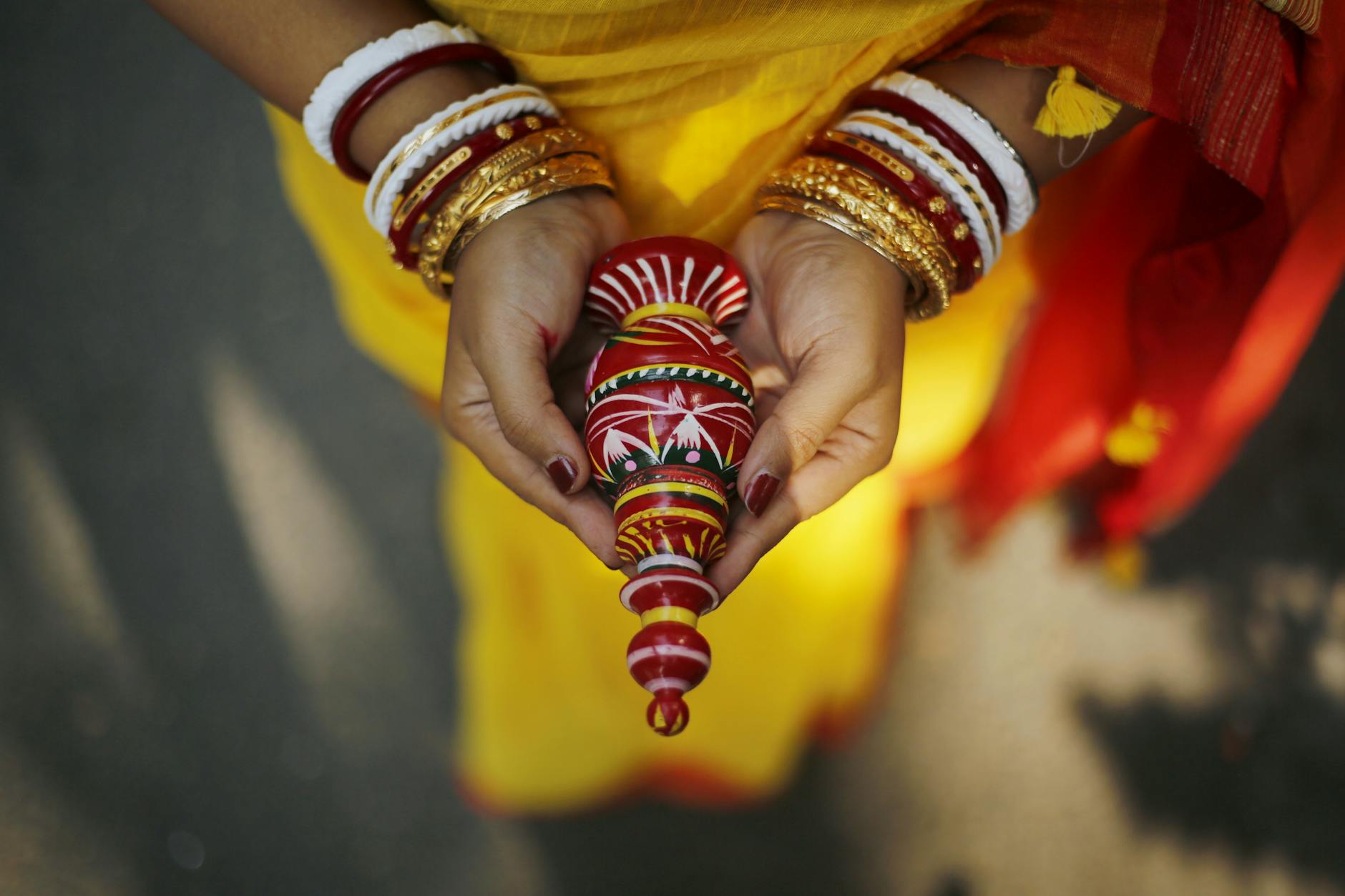
No element of Bengali bridal jewellery is more sacred or more defining than the Shakha-Pola combination. These are the bangles that mark a Hindu Bengali woman as married — she begins wearing them at her wedding and, in tradition, never removes them.
Shakha — White Conch Shell Bangles
Shakha bangles are made from the shell of the conch (shankha). They are pure white — the colour of purity and the goddess Durga in Bengali tradition. Traditionally, the finest Shakha bangles came from Dhaka (now Bangladesh) where artisans called Sankharibazar have been crafting conch shell jewellery for centuries. Dhaka-made Shakha is still considered superior, and there is active cross-border trade to meet Bengali demand in West Bengal.
Each wrist typically carries 2–4 Shakha bangles. They are designed to fit snugly — a Bengal Shakha is sized to the bride's palm (conch bangles have no opening, they are slipped over the hand at the widest point) and should not rattle around the wrist. The shell has a natural warmth and slight flex that allows this, unlike metal bangles.
The Shakha bangle is gifted to the bride by the groom's family — this is a non-negotiable tradition in Hindu Bengali weddings. It is presented formally during the sindoor daan (when the groom applies sindoor to the bride's parting) or just before, as part of the ritual.
Pola — Red Coral Bangles
Worn alongside the Shakha, Pola bangles are made from red coral (moonga). The deep red is the colour of auspiciousness, married life, and the goddess Lakshmi in Bengali tradition. Pola and Shakha are always worn together — they alternate on the wrist, creating the distinctive white-red pattern that is the visual signature of a Bengali married woman.
Natural Italian or Japanese coral is the traditional material; synthetic coral Pola is widely available and much more affordable. For a traditional wedding, natural coral Pola is preferred. The Pola is also gifted by the groom's family alongside the Shakha.
Loha — The Iron Bangle of Protection
The Loha (iron bangle) is worn on the left hand and is considered a protective talisman — iron wards off evil in Bengali tradition. It is typically worn in addition to the Shakha-Pola combination, on the opposite side, or mixed in the arrangement. The Loha is also gifted by the groom's family.
Modern brides sometimes replace the plain iron Loha with a gold-plated iron bangle (Noa) — a gold outer with an iron core — to maintain the tradition while maintaining a consistent aesthetic with the rest of the gold jewellery. This is now common and considered acceptable across most Bengali families.
| Bangle | Material | Gifted By | Symbolism | Price Range |
|---|---|---|---|---|
| Shakha | Conch shell | Groom's family | Purity, marriage | ₹2,000–₹10,000/set |
| Pola | Red coral | Groom's family | Auspiciousness, Lakshmi | ₹1,500–₹8,000/set |
| Loha | Iron | Groom's family | Protection from evil | ₹200–₹2,000 |
| Noa | Gold (over iron) | Groom's family / bride's family | Modern Loha substitute | ₹15,000–₹60,000 |
Complete Bengali Bridal Gold Set
Beyond the Shakha-Pola-Loha, a traditional Bengali bride wears an extensive gold set. Bengali preference is for deep yellow gold — 22K or 23K — with a high-polish finish. Rose gold and white gold are considered inappropriate for traditional Bengali weddings.
The Mukut — Gold Crown
The Mukut is a semi-circular gold headpiece worn at the top of the forehead, resembling a crown. It is the most visually dramatic element of the Bengali bride's look and is specific to Bengali Hindu weddings — no other Indian bridal tradition uses this exact piece. Mukuts are typically made in 22K gold with filigree work and sometimes set with gems or pearls. Price: ₹30,000–₹3,00,000.
Kan Baala — Bengali Earrings
Bengali traditional earrings (Kan Baala or Kaan Chul) are distinctive in shape — typically wider and more architectural than standard Indian earrings. The bridal Kan Baala is a large, elaborate piece with multiple pendants or drops. Traditional designs feature fish motifs (shol mach — the rohu fish is auspicious), lotus, or traditional Bengali geometrics.
Haar — Necklace
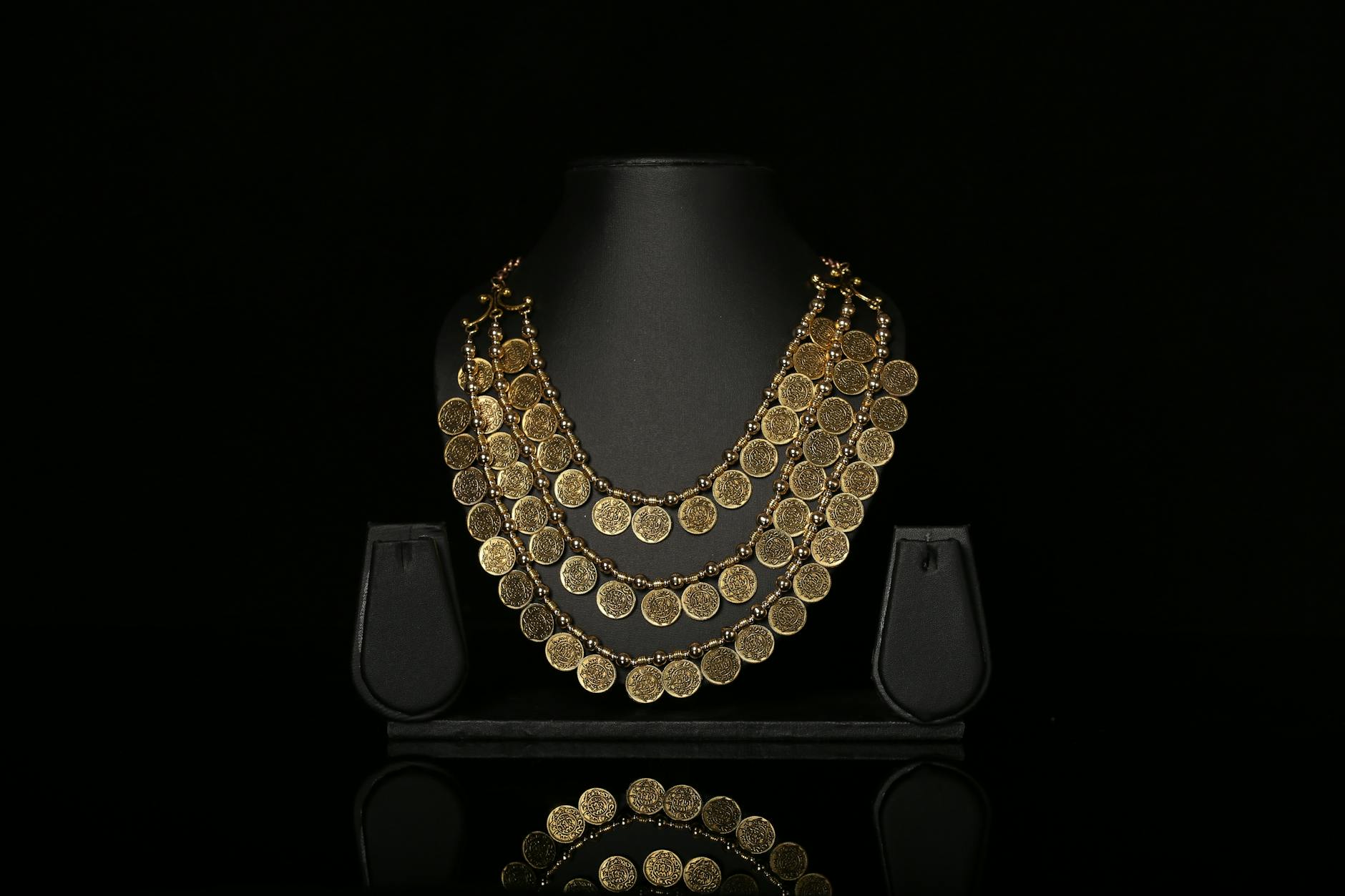
Bengali bridal necklaces are characteristically layered — typically 2–3 layers of different lengths worn simultaneously. The innermost layer is often a thin gold chain or choker; middle layer a more elaborate collar necklace; outer layer a longer statement piece. Traditional Bengali necklace types: Chik (choker), Haarbaaj (layered necklace), and long Haar necklaces with pendant drops.
Nupoor — Gold Anklets
Gold anklets are worn by Bengali brides. Traditional Bengali Nupoor have a distinctive design — heavier and more architectural than North Indian payals. The sound of anklets is considered auspicious. Silver anklets are used in some communities as silver is considered appropriate for items touching the ground, but Bengali bridal nupoor are predominantly gold.
Mathapati — Forehead Ornament
The Mathapati is a chain headpiece — thin gold chains that part at the centre of the forehead and sweep back into the hair. It is the Bengali equivalent of the maang tikka but different in design — instead of a central pendant, it is a flowing arrangement of chains and decorative elements in the hair. When worn with the Mukut, the overall headpiece effect is regal and iconic.
Special Bengali Jewellery Pieces
| Piece | Worn On | Description |
|---|---|---|
| Mukut | Head (crown) | Semi-circular gold crown — uniquely Bengali |
| Ratanchur | Hair | Hair ornament with red coral stones — ratna = gem, chur = bangle/band |
| Tikli | Forehead | Tiny decorative gold bindis arranged in a pattern |
| Chur | Wrists | Gold bangles — multiple, worn with Shakha-Pola |
| Baaju | Upper arm | Gold armlet — less common but traditional |
| Chik | Neck (choker) | Close-fitting choker necklace |
Bengali Bridal Jewellery Price Guide (2026)
A complete traditional Bengali bridal gold set (excluding Shakha-Pola-Loha) typically weighs 80–150 grams of 22K gold. At April 2026 gold rates of approximately ₹7,000/gram for 22K:
- Shakha-Pola set: ₹3,500–₹18,000 (natural coral Pola commands premium)
- Mukut: ₹30,000–₹3,00,000
- Kan Baala earrings: ₹40,000–₹2,00,000
- Bridal Haar (3-layer): ₹1,50,000–₹8,00,000
- Nupoor (anklets, pair): ₹60,000–₹3,00,000
- Chur (gold bangles): ₹80,000–₹3,00,000
- Mathapati: ₹20,000–₹80,000
- Full set total: ₹5,00,000–₹20,00,000+
Durga Puja Jewellery
For Bengali Hindus, Durga Puja is not just the most important festival — it is the time when Bengali jewellery culture is most publicly visible. During the five days of Puja (Shashthi through Dashami), Bengali women across West Bengal and the diaspora wear their finest gold. New jewellery is often bought specifically for Puja, and families plan purchases months in advance.
The Puja gold buying season (September–October) rivals the Dhanteras season in terms of jewellery sales in Kolkata. PC Chandra, Senco Gold, and regional Bengali jewellers report their highest sales volumes in this period. New Puja jewellery is considered auspicious for the year ahead — a tradition that has strong roots in prosperity symbolism tied to the goddess Durga.
Where to Buy Bengali Bridal Jewellery
The best sources for authentic Bengali bridal jewellery:
- PC Chandra Jewellers — the iconic Kolkata jewellery institution, operating since 1895; known specifically for Bengali bridal designs including traditional Mukut and Kan Baala
- Senco Gold & Diamonds — Bengal-headquartered chain with 130+ stores nationally; strong Bengali traditional collection
- Tanishq — for brides wanting Bengali designs with national brand assurance and BIS hallmarking certainty
- Kolkata's Bow Barracks and New Market area jewellers — for custom traditional work by specialist Bengali goldsmiths
⚠️ West Bengal vs Bangladeshi Bengali Bridal Styles
There are subtle but real differences between West Bengali (Kolkata) and Bangladeshi Bengali bridal jewellery traditions. Bangladeshi Bengali styles tend to be heavier and more ornate — more gold, larger pieces. West Bengali (Kolkata) contemporary brides are increasingly opting for lighter, modern interpretations of traditional pieces while retaining the Shakha-Pola-Loha. The Mukut is more commonly retained in traditional West Bengali ceremonies; some urban Kolkata brides are now choosing a simplified version or elegant maang tikka as a modern substitute while keeping all other traditional pieces.
The Modern Bengali Bride
The contemporary Bengali bride is navigating between deep tradition and personal expression. The most common approach in urban Kolkata in 2026 is a thoughtful hybrid: the Shakha-Pola-Loha is retained without compromise (this is the non-negotiable core), while other pieces are chosen for a balance of tradition and modern aesthetics.
Some modern choices within the tradition:
- Designer Mukuts with contemporary filigree work rather than traditional heavy ones
- Kundan or antique-finish versions of traditional pieces for a heritage-modern aesthetic
- Statement single necklace instead of 3-layer Haar
- Lab diamond accents on traditional gold pieces
- Lightweight Shakha bangles with intricate laser-engraved patterns
Frequently Asked Questions
Is Shakha Pola mandatory for a Bengali Hindu bride?
In traditional Hindu Bengali culture, yes — Shakha Pola is considered an essential marker of the married state. Many Bengali families consider the wedding ceremony incomplete without the bride wearing Shakha and Pola. However, modern urban Bengali women increasingly choose whether and how long to wear them after the wedding. For the wedding day itself, wearing Shakha-Pola is expected in most families, and declining may cause significant family friction. For post-wedding daily life, the decision is increasingly seen as personal.
Can non-conch shell bangles replace Shakha?
Strictly speaking, no — the tradition specifies conch shell (shankha), and the white colour and material are symbolically significant. White plastic or resin bangles are not acceptable substitutes in traditional families. However, for brides with shellfish allergies or vegan beliefs, some progressive Bengali families now accept white bone or high-quality resin substitutes with the understanding that the spirit of the tradition is preserved. This is a family conversation to have well before the wedding — surprises on wedding day are not advisable. Natural Shakha from certified conch shell (available from established Bengali jewellers) is the correct choice where possible.
What is the significance of yellow gold specifically for Bengali weddings?
Deep yellow 22K gold is culturally resonant in Bengali tradition — it is associated with the golden colour of turmeric (haldi) used in the pre-wedding ritual, with the goddess Durga, and with the prosperity symbolism of Dhanteras. White gold and rose gold, while beautiful, lack this cultural resonance and are often described as "not feeling Bengali" by traditional families. For a deeply traditional wedding, 22K yellow gold is strongly preferred for all major pieces. Lab diamond accents in 18K white gold settings are increasingly accepted as accent pieces, but the main gold jewellery is expected to be 22K yellow.
More in Wedding & Bridal
Share this article
Our editorial team comprises jewellery industry veterans, certified gemmologists, and passionate writers with decades of combined experience across India's gold, diamond, and gemstone markets. Every article is researched, fact-checked, and written to help Indian buyers make smarter, safer jewellery decisions.
Passionate about jewellery and love to write? We'd love to hear from you.
Join us as a writer →Ready to buy? Find verified jewellers near you
Browse 10,000+ BIS hallmark certified jewellers across India. Compare ratings, check today's gold rate, and book a visit.
Keep Reading