The Bengali bride carries an entire cultural universe on her body when she walks into her wedding ceremony. While the sacred Shakha and Pola bangles are the most discussed element of Bengali bridal identity, the complete gold jewellery set that frames them is equally elaborate, historically rich, and deeply connected to the Bengali identity of gold as both ornament and auspiciousness. This guide covers the full Bengali bridal gold set — every piece, its name, its significance, and how the modern Bengali bride is adapting these traditions.
The Complete Bengali Bridal Gold Jewellery Set
Mukut — The Bridal Crown
The Mukut is the most dramatic piece in the traditional Bengali bridal set — a large, elaborate gold crown or headpiece worn by the bride during the wedding ceremony. Bengali bridal Mukuts draw visual inspiration from the crowns worn by Goddess Durga in Puja pandals — high, intricate, with multiple tiers and often incorporating the fish-scale (kaan-chul-like) or leaf motifs characteristic of Bengali goldsmithing. The Mukut is increasingly worn only by more traditional brides or during the aiburo bhaat (last meal as an unmarried woman) ceremony rather than the main wedding, as younger brides often prefer lighter headwear. A traditional Mukut weighs 80–200g and is constructed in 22K gold with repoussé work.
Kaan Baala — Bengali Bridal Earrings
The classic Bengali bridal earring is the Kaan-chul or Kaan Baala — a traditional design that covers much of the ear lobe in gold, often with hanging elements (jhumka or flat drop pendants). Traditional Kaan Baalas feature elaborate granulation work, filigree, and sometimes coral or ruby inlay that is characteristic of Calcutta school goldsmithing. The large circular or crescent-shaped Balichuri earring is another traditional Bengali type, worn by brides and older women. Modern Bengali brides often substitute with large jhumkas or contemporary chandelier earrings while keeping the traditional design sensibility.
Necklaces — The Multi-Layer Tradition
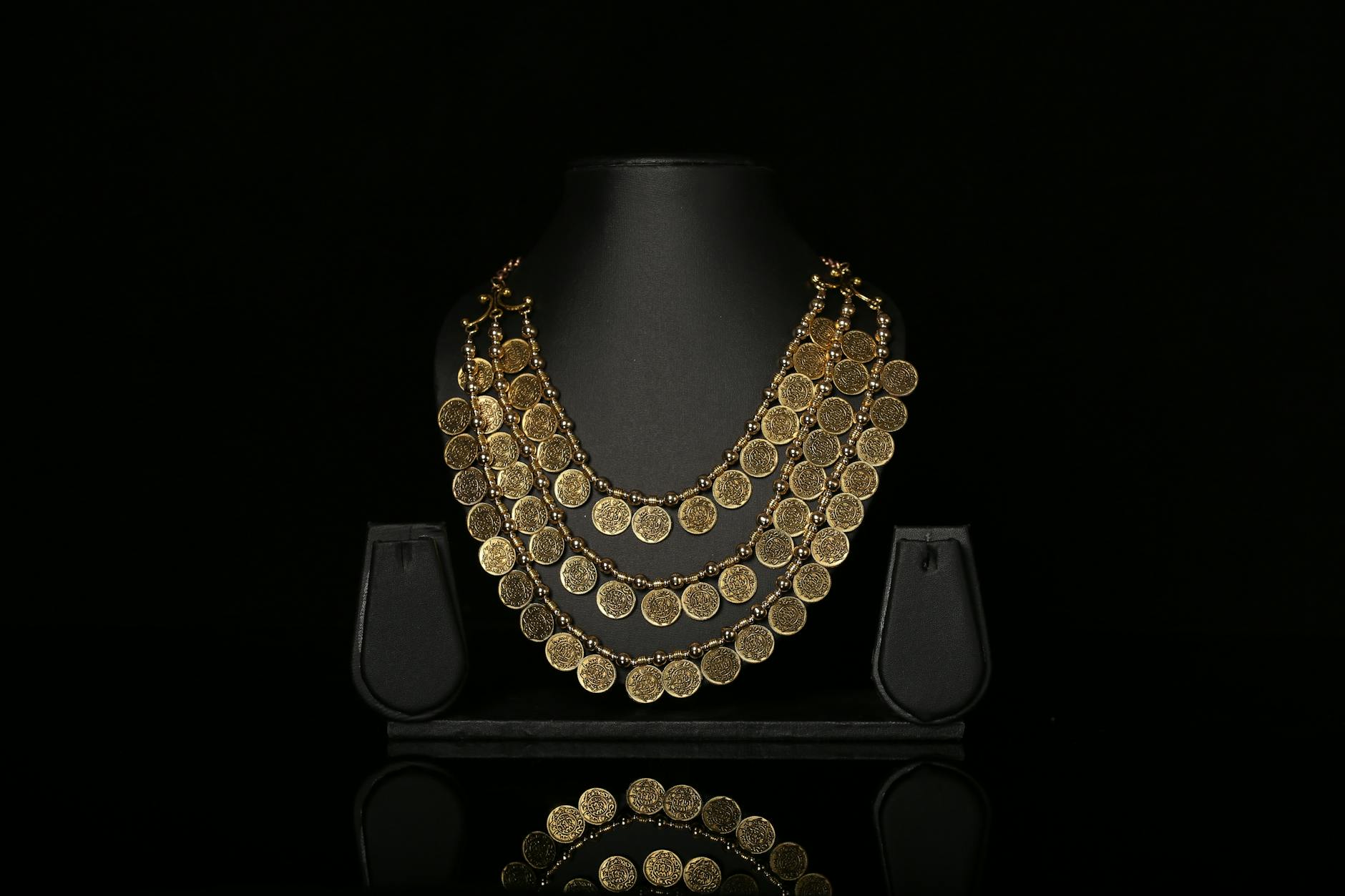
Bengali bridal necklace layering follows a specific hierarchy. The Chik is the traditional close-fitting choker — a flat, wide gold collar with fine granulation work, sitting high on the neck. Above the chik sits a slightly shorter pendant necklace, and longer Haars (long chains, typically 28–36 inches) are added below. The Ratanchur — a hair ornament incorporating deep red coral stones — is one of the most iconically Bengali pieces, sitting at the parting of the hair and cascading forward with gold chains.
Mathapati — Forehead Ornament
The Mathapati is the Bengali equivalent of the maang tikka but with a different aesthetic — it typically covers more of the central forehead, sometimes spanning the width of the brow. Traditional Mathapatis feature the same granulation and filigree work as other Bengali gold pieces, with coral or ruby accents. A simpler version called the Tikli (a small central-parting pendant) is worn by brides with more contemporary sensibilities.
Nath — The Bengali Nose Ring
The Bengali bridal Nath is typically smaller than the massive Punjabi or Rajasthani versions but still larger than everyday nose jewellery. It is most commonly a gold ring set with a central pearl, with a small pearl or coral drop hanging from the bottom. A thin gold chain attaches from the nath to a pin in the hair. The pierced nath is traditional; clip-on versions are available.
Bajuband / Vanki — Armlet
The Bajuband or Vanki is the upper arm ornament, traditionally in 22K gold, worn above the elbow. Bengali Bajubands tend to be sleeker and less elaborate than their Rajasthani counterparts — typically a single curved bar of gold with a pendant drop or granulation decoration. It is worn on the right arm by the bride.
Gold Bangles (Chur) — Alongside the Shakha Pola
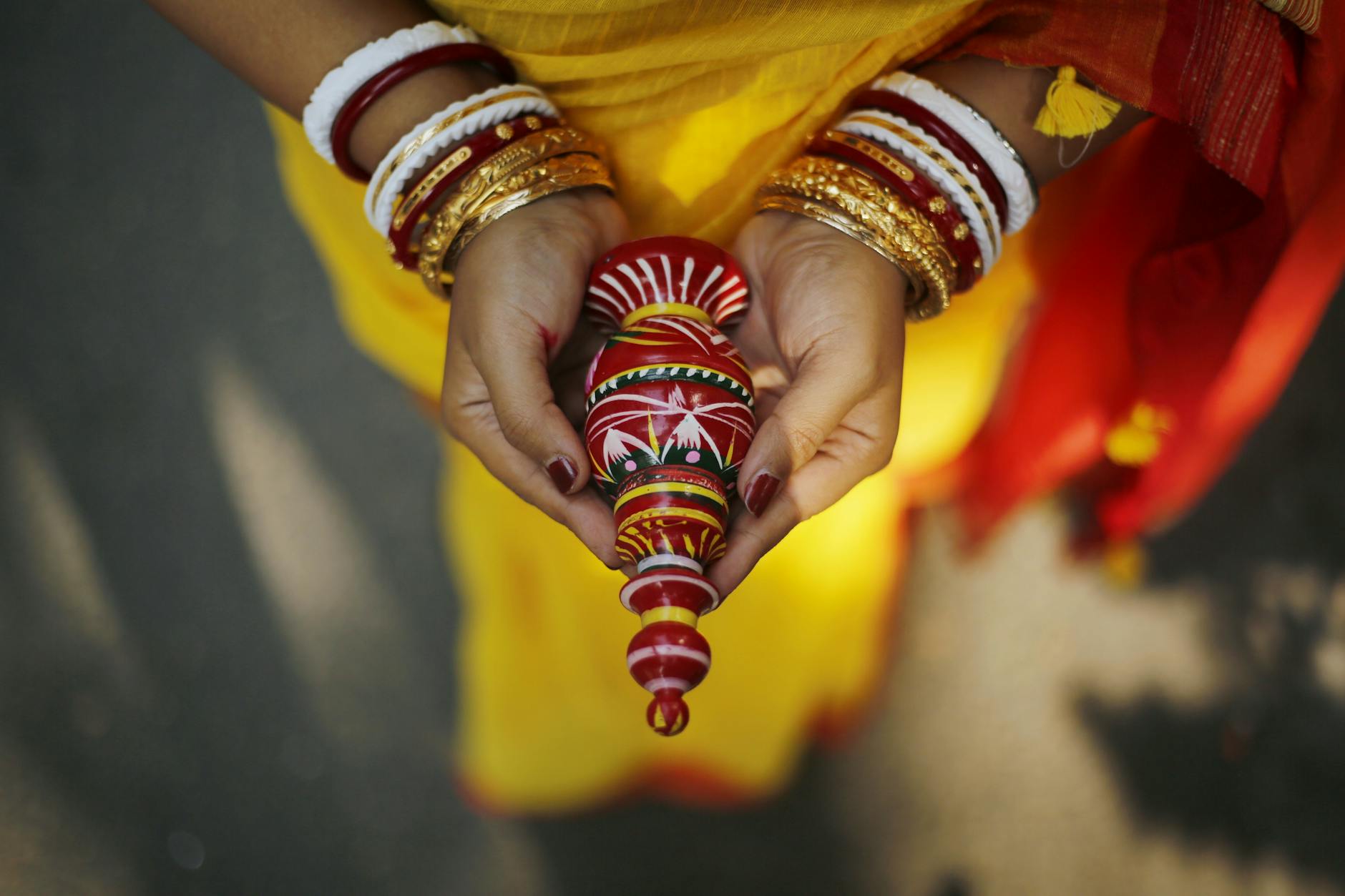
A Bengali bride wears the sacred Shakha (white conch shell bangles) and Pola (red coral bangles) on both wrists as the most fundamental bridal adornment. In addition to these, gold bangles called Chur or Baju are worn on the right hand alongside the Shakha Pola. The number varies by tradition — typically 2–4 gold bangles per hand, complementing but not replacing the sacred set.
Nupoor — Gold Anklets
Bengali bridal Nupoor (anklets) are traditionally thick, heavy gold anklets with hanging coin or bell motifs that create a distinctive sound when the bride walks. They are considerably heavier than everyday anklets and are one of the pieces where Bengali bridal tradition diverges from the North Indian practice of silver anklets — gold is used throughout in the Bengali tradition.
Ratanchur — The Iconic Bengali Bridal Hair Ornament
No piece is more distinctly Bengali in the bridal jewellery canon than the Ratanchur. This elaborate hair ornament combines gold chains with deep red coral beads (Ratna = gemstone, Chur = hair ornament), worn along the parting of the hair and draping down on either side of the face. Authentic Ratanchurs use genuine Italian red coral, which is increasingly expensive; modern versions use high-quality coral simulants or red glass beads. The contrast of the deep red against Bengali gold (which tends to be warm-toned) is visually striking and deeply traditional.
⚠️ Coral in Jewellery
Genuine Italian red coral (Corallium rubrum) is a protected species under CITES regulations and is extremely expensive in 2026 — genuine pieces add ₹30,000–1,50,000+ to a Ratanchur depending on quality and quantity. Most "coral" in commercial jewellery today is either synthetic coral, dyed bamboo coral, or glass. If you are purchasing a Ratanchur with "genuine coral," ask for a certificate or have it independently assessed. For traditional significance, the colour and appearance matter more than material authenticity to most families.
PC Chandra Jewellers vs Senco Gold — The Two Bengal Icons
When a Bengali family shops for bridal gold, two names dominate the conversation: PC Chandra Jewellers and Senco Gold. Both are decades-old Bengal institutions with specific reputations:
| Feature | PC Chandra Jewellers | Senco Gold |
|---|---|---|
| Founded | 1957 | 1994 |
| Reputation | Traditional Bengali designs, older craft techniques | Contemporary + traditional, aggressive expansion |
| Traditional pieces | Excellent Ratanchur, Mukut, Mathapati | Good traditional + strong contemporary mix |
| Pricing | Premium, consistent | Slightly more competitive |
| Pan-India presence | Primarily Bengal | Expanding nationally |
Gold Weight Expectations for a Bengali Bride
A traditionally attired Bengali bride on her wedding day wears considerable gold. Typical weight ranges for the complete set (excluding Shakha Pola, which are not gold):
- Modest set: 80–120g (Mukut, necklaces, earrings, nath, bangles, anklets)
- Standard middle-class set: 150–250g
- Affluent family: 300–500g+
💡 Pro Tip
In Bengali tradition, the groom's family (porer bari) customarily presents the bride with gold jewellery as part of the wedding — this is separate from the bride's own family jewellery. The porer bari gold is often more contemporary in design to reflect the groom's family's taste, while the bride's own family gold (nijo bari) tends toward traditional Bengali designs. Coordinating the two sets visually is worth discussing with your jeweller before the wedding day.
Jewellery Across Bengali Wedding Ceremonies
A Bengali wedding spans multiple days and ceremonies, each calling for different jewellery:
Aiburo Bhaat (the last meal as an unmarried woman): the bride wears her full traditional set including the Mukut. This is often the most photographed ceremony for traditional Bengali families.
Gaye Holud (turmeric ceremony): lighter jewellery — gold bangles, simple earrings, Ratanchur in hair. Heavy pieces like the Mukut are not typically worn.
Wedding day (Biye): the complete bridal set is worn, including Shakha Pola and all gold pieces. The Sindoor Dan (filling of the vermilion in the hair parting) and Saat Paak (seven circumambulations) happen during this ceremony.
Bou Bhaat (first meal at the groom's home, day after wedding): the bride wears her jewellery again, often slightly simplified from the full wedding day set.
Frequently Asked Questions
Price Guide for a Complete Bengali Bridal Gold Set (2026)
| Budget Range | What You Get | Notes |
|---|---|---|
| ₹2,50,000 – ₹4,00,000 | Earrings, necklace, bangles, nath, mathapati — standard 22K set | No Mukut; practical everyday-wearable set |
| ₹5,00,000 – ₹8,00,000 | Full set including Mukut, Ratanchur, Nupoor, layered necklaces | Traditional complete set at PC Chandra or Senco standard |
| ₹10,00,000 – ₹20,00,000 | Complete set with genuine coral Ratanchur, antique finish pieces | Bespoke or heirloom-quality goldsmithing |
| ₹20,00,000+ | Full set with diamond additions, certified gemstones throughout | Top-tier Calcutta school goldsmithing, diamond Kaan Baala |
The Modernising Bengali Bride
The contemporary Bengali bride navigates a spectrum between tradition and modernity. Many younger brides in Kolkata and other cities are making deliberate choices to incorporate select traditional pieces while updating others. Common patterns:
- Keeping core traditional pieces: Shakha Pola (non-negotiable for most), Ratanchur (the most distinctly Bengali piece), and Nupoor are often retained even by brides who modernise the rest of the set
- Updating earrings and necklace: Many modern Bengali brides replace the traditional Kaan Baala with contemporary designs — diamond drops, long diamond earrings — while maintaining the traditional necklace structure
- Skipping the Mukut: The heavy crown is increasingly worn only for the Aiburo Bhaat or photoshoots, not for the main ceremony, among urban brides who find the weight uncomfortable
- Adding lab-grown diamond pieces: Lab-grown diamonds at 20–30% of the cost of natural diamonds are increasingly popular for the necklace set, allowing significant visual impact at reduced cost
The Bengali gold jewellery tradition is one of the richest and most technically accomplished in India. The Calcutta school of goldsmithing — known for delicate filigree, granulation, and meenakari work — produces pieces that are genuinely distinct from other Indian regional traditions. Whether a bride chooses a fully traditional set or a modern interpretation, the Bengali aesthetic is unmistakable and deeply worth preserving.
💡 Pro Tip
If you are buying Bengali bridal jewellery outside Kolkata, seek out jewellers who specifically carry Calcutta-design inventory. The granulation and filigree techniques used in authentic Bengali pieces are craft skills concentrated in Kolkata's jewellery district around Bowbazar. Pieces labelled "Bengal design" at jewellers outside the region are often machine-manufactured approximations — visually similar but lacking the handcrafted depth. For the most significant pieces (Mukut, Kaan Baala, Ratanchur), buying from a reputable Kolkata jeweller — or having them made to order — ensures authentic craftsmanship.
How much gold does a Bengali bride typically wear?
A traditional Bengali bride wears between 150g and 350g of gold jewellery on her wedding day, excluding the Shakha Pola. This figure varies significantly by family wealth and tradition — affluent families may significantly exceed this, while contemporary brides who opt for a lighter look may wear 80–120g.
Can I wear both Shakha Pola and gold bangles on the same hand?
Yes, and this is the traditional arrangement. The Shakha Pola are worn on both wrists (right hand: Shakha on the inside, Pola on the outside; same arrangement on the left). Gold bangles (Chur) are typically worn on the right hand alongside the Shakha Pola, adding to the layers. The arrangement varies by family tradition, but wearing gold and Shakha Pola together is standard and expected in most Bengali families.
More in Wedding & Bridal
Share this article
Our editorial team comprises jewellery industry veterans, certified gemmologists, and passionate writers with decades of combined experience across India's gold, diamond, and gemstone markets. Every article is researched, fact-checked, and written to help Indian buyers make smarter, safer jewellery decisions.
Passionate about jewellery and love to write? We'd love to hear from you.
Join us as a writer →Ready to buy? Find verified jewellers near you
Browse 10,000+ BIS hallmark certified jewellers across India. Compare ratings, check today's gold rate, and book a visit.
Keep Reading