There was a time, not long ago, when the average Indian man's relationship with gold jewellery began and ended with a wedding ring. Perhaps a thin chain worn discreetly under a shirt collar, or a signet ring inherited from a grandfather. Men's gold jewellery in India was, for decades, either invisible or ceremonial — something worn at weddings and festivals, then tucked away in a locker until the next occasion.
That era is decisively over. In 2026, men's gold jewellery is experiencing a renaissance in India that cuts across age groups, professions, and cultural backgrounds. The shift is driven by converging forces: global fashion trends that celebrate masculine adornment, a younger generation of Indian men comfortable with self-expression, social media platforms where influencers and celebrities showcase bold gold accessories, and the timeless Indian appreciation for gold as both beauty and wealth.
Industry data tells the story clearly. The men's segment now accounts for approximately 12 to 15 percent of India's organised gold jewellery market, up from just 5 to 7 percent five years ago. Major retailers like Tanishq, Kalyan Jewellers, and Malabar Gold have all launched or expanded dedicated men's collections. Independent designers in Mumbai, Delhi, and Bangalore are creating contemporary pieces that blend traditional Indian metalwork with modern minimalist aesthetics.
This guide covers everything the modern Indian man needs to know about gold jewellery in 2026: what is trending, how to style it, which weights and purities to choose, what to invest in, and how to build a collection that is both fashionable and financially sound.
The Rise of Men's Gold Jewelry in India
Cultural Shift
India has a rich historical tradition of men wearing gold. Maharajas adorned themselves with elaborate necklaces, armlets, and turban ornaments. Rajput warriors wore gold kadas as symbols of valour. Even in everyday life, men across South India traditionally wore gold chains and ear studs as markers of prosperity and community identity.
The colonial and post-colonial periods saw a gradual retreat from male adornment, as Western notions of masculine restraint influenced urban Indian fashion. Gold jewellery for men became associated with specific communities (the Marwari businessman's ring, the Sikh sardar's kara) rather than being a universal expression.
The reversal began in the 2010s, accelerated by Bollywood (Ranveer Singh's unabashed love of jewellery), international hip-hop culture (gold chains as mainstream fashion), and the rise of Indian streetwear brands that incorporated gold accessories into their aesthetic.
Market Growth
| Year | Men's Share of Gold Jewelry Market | Market Value (Est.) |
|---|---|---|
| 2020 | 5 – 7% | ₹15,000 – ₹18,000 crore |
| 2022 | 8 – 9% | ₹22,000 – ₹25,000 crore |
| 2024 | 10 – 12% | ₹30,000 – ₹35,000 crore |
| 2026 (Apr) | 12 – 15% | ₹40,000 – ₹48,000 crore |
Celebrity Influence
Bollywood stars, cricketers, and social media influencers have normalised men's gold jewellery in Indian popular culture. Virat Kohli's gold chain, MS Dhoni's bracelet stack, Hardik Pandya's bold gold aesthetic, and Ranveer Singh's maximalist approach have all contributed to shifting perceptions. South Indian cinema has always been more open to male gold adornment, and this influence is now radiating nationwide through pan-Indian streaming platforms.
Popular Men's Gold Jewelry Pieces in 2026
Gold Chains
The gold chain is the cornerstone of men's gold jewellery. In 2026, three chain styles dominate the Indian market.
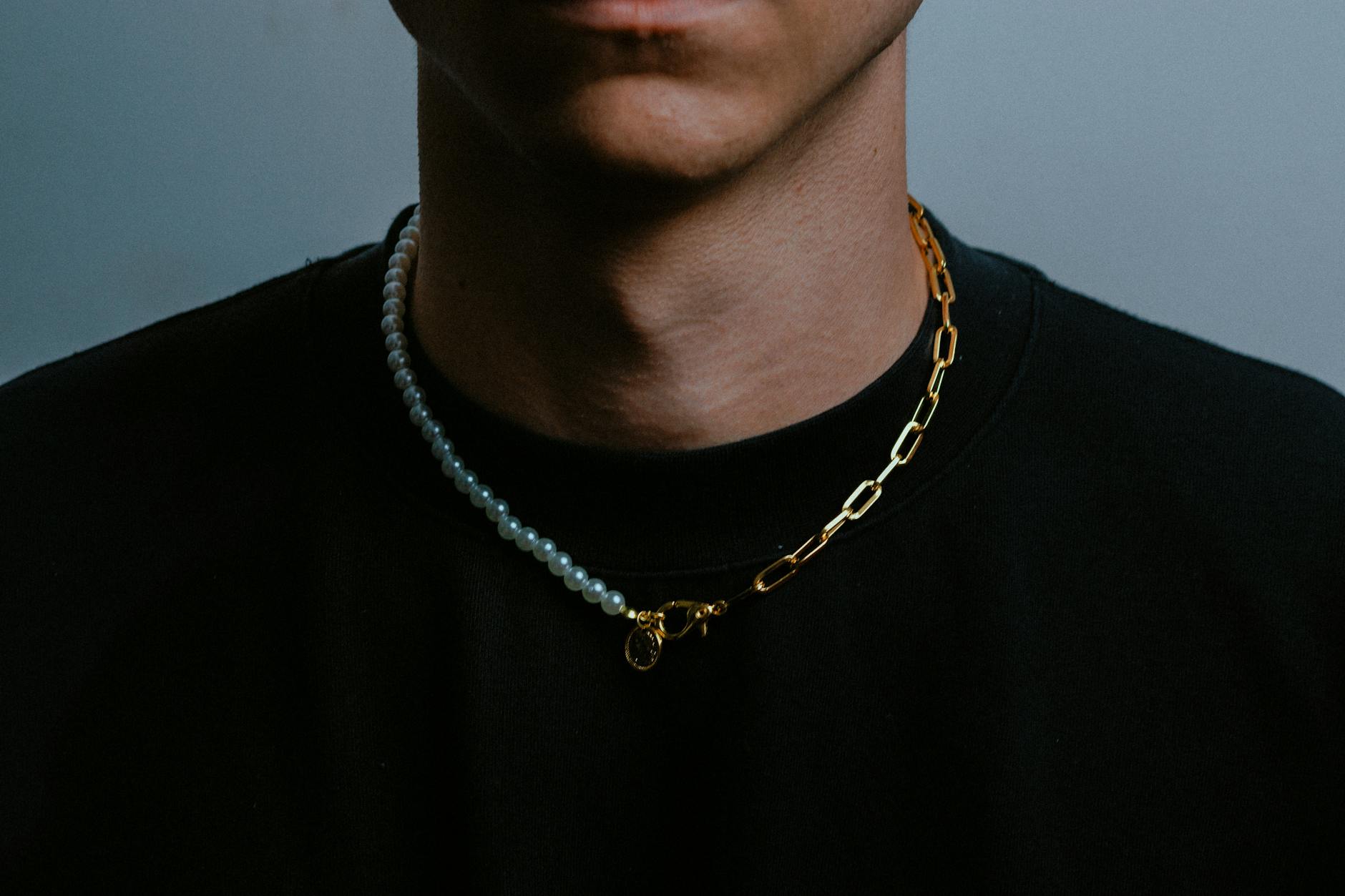
Cuban link chains feature interlocking oval links that lie flat against the chest. They have a substantial, masculine presence and are the most popular chain style among younger buyers. Typical weights range from 20 to 50 grams in 22K gold, with prices from ₹1,55,000 to ₹3,87,500 for the gold value alone, plus making charges of ₹800 to ₹1,200 per gram. Figaro chains alternate between shorter round links and longer oval links, creating a rhythmic pattern that is slightly more subtle than a Cuban link. They are popular in the 15 to 30-gram range and work well both casually and with formal attire. Box chains consist of square links that create a smooth, sleek profile. They are the most minimalist option and are favoured by professionals who want understated elegance. Lighter box chains (10 to 20 grams) are increasingly popular as everyday wear. Rope chains, with their twisted, textured appearance, remain a classic choice, particularly in South India where heavier gold chains for men have deep cultural roots.Gold Bracelets
Men's gold bracelets have seen explosive growth. The styles range from delicate link bracelets to substantial statement pieces.
Curb link bracelets — the bracelet equivalent of a Cuban link chain — are the most popular style, typically weighing 15 to 35 grams in 22K gold. At April 2026 rates, a 25-gram curb bracelet costs approximately ₹1,93,750 in gold value plus ₹20,000 to ₹30,000 in making charges. ID bracelets feature a flat plate (sometimes engraved with initials or a name) connected to a link chain. They blend personalisation with style and typically weigh 12 to 20 grams. Byzantine bracelets have an intricate, woven-look pattern that catches light beautifully. They are a step up in complexity and making charges but reward with exceptional visual impact.Gold Rings
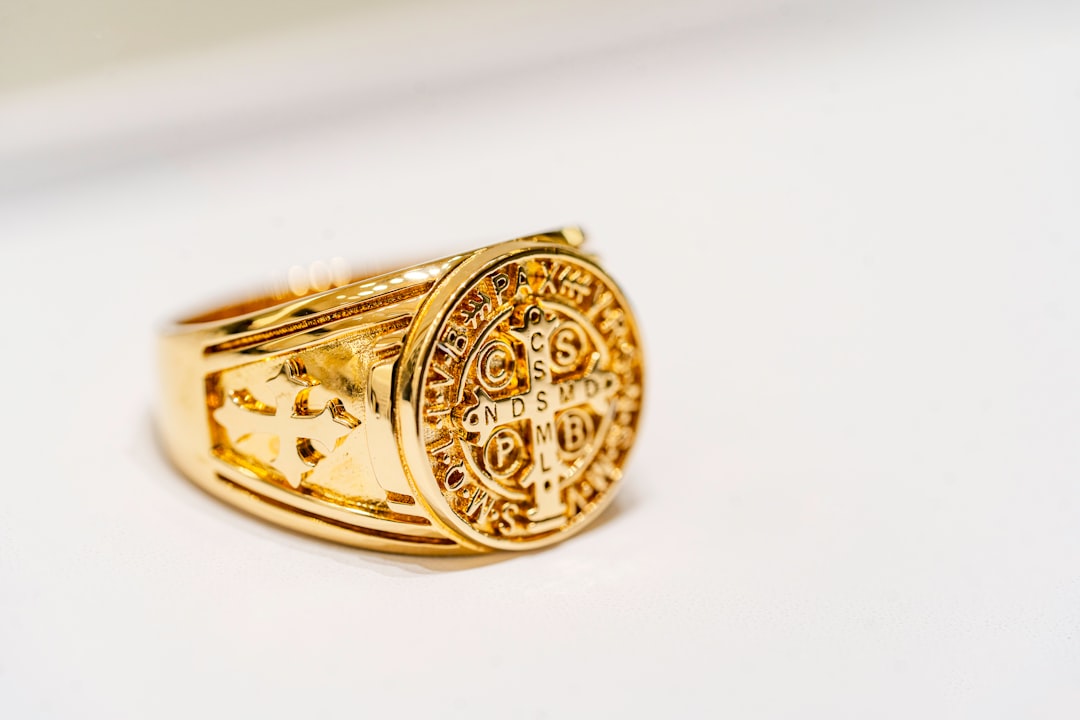
Men's gold rings in 2026 go far beyond the plain wedding band. Popular styles include signet rings (with family crests, initials, or geometric designs engraved on a flat face), textured bands (hammered, brushed, or sandblasted finishes), and statement rings with geometric designs or minimal stone settings.
The typical men's gold ring weighs 5 to 15 grams in 22K or 18K gold. Plain bands sit at the lighter end (₹38,750 to ₹77,500 at 22K rates plus making charges), while substantial signet rings can reach 15 grams or more (₹1,16,250 plus making charges).
Kadas (Bangles)
The kada has deep roots in Sikh, Rajput, and Punjabi traditions, and it has emerged as one of the most popular men's gold accessories across communities in 2026. Modern kadas are available in smooth, textured, and twisted designs, typically in 22K gold or with a combination of gold and platinum.
Kadas are heavier pieces, usually weighing 20 to 60 grams. A 30-gram 22K gold kada costs approximately ₹2,32,500 in gold value plus ₹25,000 to ₹40,000 in making charges, depending on design complexity. Many men wear a single kada on the dominant wrist as a signature piece.
Other Trending Pieces
Ear studs — small gold or diamond studs — are gaining acceptance among younger Indian men, particularly in creative industries. A single stud, typically 1 to 3 grams of 18K gold, costs ₹6,340 to ₹19,020 plus making charges. Tie pins and cufflinks in 22K gold remain relevant for professionals. Typically weighing 3 to 8 grams, they cost ₹23,250 to ₹62,000 and serve as subtle markers of taste. Pendants — religious symbols (Om, Khanda, Cross), zodiac signs, or abstract geometric designs — are worn on chains and allow personal expression. Weights range from 3 to 15 grams.Price Guide: Men's Gold Jewelry (April 2026)
| Piece | Typical Weight | Purity | Gold Value (₹) | Making Charges (₹) | Total Approx. (₹) |
|---|---|---|---|---|---|
| Minimalist chain | 10 – 15g | 22K | 77,500 – 1,16,250 | 8,000 – 18,000 | 85,500 – 1,34,250 |
| Cuban link chain | 25 – 40g | 22K | 1,93,750 – 3,10,000 | 25,000 – 48,000 | 2,18,750 – 3,58,000 |
| Heavy rope chain | 40 – 60g | 22K | 3,10,000 – 4,65,000 | 40,000 – 72,000 | 3,50,000 – 5,37,000 |
| Curb bracelet | 15 – 25g | 22K | 1,16,250 – 1,93,750 | 15,000 – 30,000 | 1,31,250 – 2,23,750 |
| Kada | 25 – 40g | 22K | 1,93,750 – 3,10,000 | 25,000 – 45,000 | 2,18,750 – 3,55,000 |
| Plain band ring | 5 – 8g | 22K | 38,750 – 62,000 | 3,000 – 8,000 | 41,750 – 70,000 |
| Signet ring | 8 – 15g | 18K | 50,720 – 95,100 | 8,000 – 18,000 | 58,720 – 1,13,100 |
| Ear stud (single) | 1 – 3g | 18K | 6,340 – 19,020 | 1,500 – 4,000 | 7,840 – 23,020 |
| Pendant | 5 – 10g | 22K | 38,750 – 77,500 | 5,000 – 15,000 | 43,750 – 92,500 |
Styling Guide for Men's Gold Jewelry
The Rule of Three
The most reliable styling principle for men's gold jewellery is the rule of three: wear no more than three gold pieces simultaneously, and ensure they are in the same metal tone. A chain, a bracelet, and a ring form a cohesive look. Adding a fourth or fifth piece risks crossing from stylish to cluttered, unless you are deliberately pursuing a maximalist aesthetic.
Casual Styling
For casual outfits — jeans and a t-shirt, kurta and jeans, or smart casual attire — a medium-weight chain (15 to 25 grams) worn outside the shirt is the anchor piece. Pair it with a link bracelet on one wrist and a simple ring. Keep the neckline open enough to show the chain. Avoid wearing gold with athletic or gym wear.
Formal and Office Styling
In professional settings, subtlety is key. A lightweight chain (10 to 15 grams) worn inside the shirt, a sleek bracelet under the cuff, and a well-made ring are appropriate for most corporate environments. Gold cufflinks and tie pins are excellent choices for formal business attire. Visible chains should be avoided in conservative workplaces (banking, law, government).
Wedding and Festival Styling
Indian weddings and festivals are the occasion to go bold. A heavy chain (30 to 50 grams), a statement kada, a signet ring, and even ear studs all work within the celebratory context. Grooms, in particular, should consider a complete gold set — chain, bracelet, ring, and brooch — coordinated with their sherwani or bandhgala.
Mixing Metals
While gold purism is the traditional Indian approach, 2026 trends embrace mixed-metal styling. A gold chain with a platinum-accented bracelet, or a rose gold ring alongside a yellow gold kada, can create visual interest. The key is intentionality — the mix should look deliberate, not accidental.
Purity Guide: Why 18K Is Gaining Ground for Men
Understanding Karat for Men's Pieces
The majority of Indian gold jewellery is 22K (91.6 percent pure), which is the traditional standard for its rich colour and cultural significance. However, 18K (75 percent pure) gold is gaining significant traction in men's jewellery for several practical reasons.
Durability is the primary factor. 22K gold is relatively soft, making it prone to scratches, dents, and deformation with daily wear. Men's jewellery — particularly rings, bracelets, and kadas — takes more physical abuse than women's pieces due to activity levels, handshakes, gym work, and general rough use. 18K gold, alloyed with a higher proportion of copper, silver, or palladium, is significantly harder and more resistant to wear. Design versatility is the second factor. The additional hardness of 18K gold allows for more intricate and detailed designs — sharp edges, fine textures, and precise engravings that would quickly soften in 22K. Cost efficiency is the third factor. At ₹6,340 per gram versus ₹7,750 per gram for 22K (April 2026), 18K gold is approximately 18 percent cheaper by weight, making heavier statement pieces more accessible.Purity Comparison for Men's Jewelry
| Purity | Gold Content | Price/gram (Apr 2026) | Best For | Durability | Colour |
|---|---|---|---|---|---|
| 24K (999) | 99.9% | ₹8,450 | Coins, bars only | Very soft | Deep yellow |
| 22K (916) | 91.6% | ₹7,750 | Traditional pieces, chains | Soft | Rich yellow |
| 18K (750) | 75.0% | ₹6,340 | Rings, bracelets, daily wear | Good | Warm yellow |
| 14K (585) | 58.5% | ₹4,950 | Fashion pieces, active wear | Very good | Lighter yellow |
The 18K Advantage for Active Men
If you work with your hands, exercise regularly, play sports, or simply prefer not to worry about babying your jewellery, 18K is the pragmatic choice. A 22K gold ring worn daily will show visible wear marks within months; an 18K ring will maintain its finish for years. For chains and bracelets that catch on clothing and objects, 18K's superior tensile strength also reduces the risk of breakage.
Investment Pieces: Gold Jewelry That Holds Value
While all gold jewellery retains the value of its metal content, certain pieces are better "investments" than others in the sense of maximising value retention and potential appreciation.
Minimising Making Charge Loss
The making charge is the portion of your purchase price that you lose immediately upon buying. When you sell or exchange gold jewellery, you receive the gold value (based on weight and purity) minus a margin, but making charges are never recovered. Therefore, investment-minded buyers should favour pieces with lower making charges relative to gold weight.
Low making charge pieces (₹300 to ₹600 per gram): plain chains, simple bangles, kadas with minimal design, plain bands. These pieces retain 85 to 95 percent of their purchase price at resale. Medium making charge pieces (₹600 to ₹1,200 per gram): moderately designed chains, textured bracelets, signet rings. These retain 75 to 85 percent. High making charge pieces (₹1,200+ per gram): heavily designed pieces, pieces with enamel work or stone settings, designer or branded pieces. These may retain only 60 to 75 percent.Best Investment Pieces for Men
| Piece | Why It's a Good Investment | Typical MC as % of Total |
|---|---|---|
| Heavy plain chain (30g+) | High gold content, low MC ratio, easy to resell | 8 – 12% |
| Simple kada (25g+) | Timeless design, heavy weight, cultural value | 10 – 14% |
| Plain gold bracelet (20g+) | Classic style, good weight, liquid market | 10 – 15% |
| Gold coin pendant (8-10g) | Near-zero MC, bullion-adjacent value | 3 – 5% |
| Wedding band (8-10g) | Simple design, low MC, always in demand | 8 – 12% |
The Dual-Purpose Approach
The most financially sound approach to men's gold jewellery is the dual-purpose strategy: buy pieces that you genuinely enjoy wearing but that also serve as portable stores of value. A 30-gram 22K gold chain worn daily is simultaneously a fashion statement and an asset worth approximately ₹2,32,500 in gold value that you can liquidate at any jeweller in India within minutes.
Building Your Men's Gold Collection
Starter Collection (₹1.5 to ₹3 Lakh Budget)
Begin with three foundational pieces. First, a versatile chain in the 15 to 20-gram range (22K) that works for both casual and semi-formal occasions — budget approximately ₹1,30,000 to ₹1,70,000. Second, a simple bracelet or kada in the 12 to 15-gram range (22K) — budget approximately ₹1,00,000 to ₹1,30,000. Third, a ring in the 5 to 8-gram range (18K or 22K) — budget approximately ₹35,000 to ₹70,000.
Intermediate Collection (₹5 to ₹8 Lakh Budget)
Add a heavier chain for occasions (25 to 35 grams, 22K), a second bracelet in a different style, a statement ring (signet or textured, 10 to 15 grams, 18K), and a pendant that reflects your personality or faith.
Premium Collection (₹10 Lakh+ Budget)
At this level, invest in a signature heavy chain (40 to 60 grams, 22K), a premium kada (30 to 40 grams), a collection of rings for different occasions, and consider commissioning custom pieces from a designer who can create unique items tailored to your style.
Care and Maintenance
Daily Care
Gold is relatively low-maintenance, but a few habits will keep your pieces looking their best. Remove gold jewellery before swimming (chlorine attacks alloy metals in 18K and below), before applying cologne or deodorant (chemicals can dull the surface), and before intense physical activity (to prevent scratches and mechanical damage).
Cleaning
Clean gold jewellery at home by soaking in warm water with a few drops of mild dish soap for 15 to 20 minutes, then gently brushing with a soft toothbrush and rinsing thoroughly. Dry with a soft cloth. For chains with intricate links, an ultrasonic cleaner (available for ₹2,000 to ₹5,000 online) is a worthwhile investment.
Professional Servicing
Have your gold jewellery professionally cleaned and inspected once a year, particularly pieces with clasps, links, or settings. Most jewellers offer this service free or for a nominal charge. This is also a good time to have any scratches buffed out and check for any weakened links or loose settings.
Frequently Asked Questions
1. Is it acceptable for Indian men to wear gold jewelry daily?
Absolutely. The cultural shift is well underway, and men's gold jewellery is mainstream in India in 2026. From Bollywood stars to corporate professionals, men across demographics wear gold chains, bracelets, rings, and kadas as everyday accessories. The key is choosing pieces appropriate to your environment and styling them with confidence.
2. What weight of gold chain is best for men?
For daily wear, a chain weighing 15 to 25 grams strikes the ideal balance between presence and practicality. Chains under 15 grams can look too delicate on a man's frame, while chains above 30 grams are better reserved for occasions. Consider your body frame — a broader-shouldered man can carry a heavier chain comfortably, while a leaner build benefits from a lighter, more streamlined piece.
3. Should men choose 22K or 18K gold?
For chains and pendants that receive relatively gentle wear, 22K is ideal — it has the rich, deep yellow colour that is quintessentially Indian. For rings, bracelets, and kadas that endure daily friction and impact, 18K is the more practical choice due to its superior hardness and scratch resistance. Many men build a mixed collection with both purities.
4. How much should I spend on my first gold piece?
There is no correct answer, but a practical guideline is to allocate the equivalent of one to two weeks' income for a first piece. This typically puts you in the ₹50,000 to ₹1,50,000 range, which is enough for a quality chain or bracelet that will serve you for years. Avoid overspending on a first purchase — you can always add to your collection over time.
5. Do men's gold chains break easily?
The durability of a chain depends on its link style, weight, and purity. Heavier chains with thicker links are naturally more robust. Cuban, curb, and box link chains are among the sturdiest. Rope chains and Figaro chains are slightly more delicate. 18K chains are stronger than 22K due to the harder alloy. Avoid pulling or tugging on chains, and remove them before any activity that might catch or snag the links.
6. Can men wear gold jewelry to office in India?
Yes, with appropriate restraint depending on your industry. In creative fields (advertising, media, design, entertainment), there are virtually no restrictions. In corporate environments (IT, consulting, finance), a subtle chain, a bracelet under the cuff, and a ring are generally acceptable. In highly conservative settings (judiciary, senior government), discretion is advisable. Read your workplace culture and adjust accordingly.
7. What is the resale value of men's gold jewelry?
Men's gold jewellery retains its gold value minus a margin, just like women's pieces. On exchange at a jeweller, you typically receive 95 to 100 percent of the prevailing gold rate for the piece's weight and purity. On outright sale, you receive 85 to 95 percent. Making charges are not recovered. Heavy, simple-design pieces retain the highest percentage of their purchase price.
8. Is a gold kada a good investment?
Kadas are among the best investment pieces in men's gold jewellery because they are typically heavy (25 to 40+ grams), have relatively simple designs (lower making charges as a percentage of total cost), and have strong cultural demand ensuring a liquid resale market. A 30-gram 22K kada at April 2026 rates holds approximately ₹2,32,500 in gold value.
9. How do I know if gold jewelry suits my skin tone?
Gold is universally flattering, but different purities and tones work slightly better with different skin tones. Warm skin tones (most South Asian complexions) look exceptional with 22K yellow gold's rich, deep colour. Cooler skin tones may prefer 18K gold's slightly lighter hue or rose gold options. The best approach is to try pieces on in-store and trust your instincts — if it looks good to you, it looks good.
10. Should I buy branded or from a local jeweller?
Both options are valid. Branded jewellers (Tanishq, Kalyan, Malabar) offer guaranteed purity, standardised designs, and exchange programmes, but at higher making charges (₹800 to ₹1,500+ per gram). Local jewellers often offer lower making charges (₹400 to ₹800 per gram), custom design capabilities, and personal relationships, but require more due diligence on purity (insist on BIS hallmarking). For detailed comparisons, see our branded vs local jeweller guide.
11. What men's gold jewelry trends will dominate late 2026?
Expect continued growth in layered chains (wearing two chains of different lengths simultaneously), textured and hammered finishes on rings and kadas, rose gold accents in combination pieces, personalised engraved pendants, and minimalist geometric designs. The maximalist trend inspired by hip-hop culture will coexist with a growing minimalist movement — men will increasingly choose a lane and commit to it rather than mixing styles.
12. Can I customize men's gold jewelry?
Yes. Most Indian jewellers, both branded and independent, offer customisation services. You can specify the link style, weight, length, purity, and finish of a chain; the design, width, and engraving of a ring; or the pattern and weight of a kada. Custom pieces typically carry a 10 to 20 percent premium in making charges over standard designs but result in a unique piece tailored to your preferences. Allow two to four weeks for custom work.
Conclusion
Men's gold jewellery in India is no longer a fringe interest or a cultural relic — it is a thriving, growing market that reflects the modern Indian man's confidence in self-expression. Whether you are drawn to the bold statement of a heavy Cuban link chain or the quiet sophistication of a brushed 18K ring, there has never been a better time to explore what gold can do for your personal style.
Start with pieces that feel authentically you, prioritise quality over quantity, and remember that every gram of gold you wear is also an asset you carry. Use our store finder to connect with jewellers specialising in men's collections near you, check the latest gold rates before purchasing, and explore our gold calculators to plan your collection budget with precision.
Published: April 2026 | Category: Men's Jewelry | Last Updated: April 9, 2026
More in Trends & Styles
Share this article
Our editorial team comprises jewellery industry veterans, certified gemmologists, and passionate writers with decades of combined experience across India's gold, diamond, and gemstone markets. Every article is researched, fact-checked, and written to help Indian buyers make smarter, safer jewellery decisions.
Passionate about jewellery and love to write? We'd love to hear from you.
Join us as a writer →Ready to buy? Find verified jewellers near you
Browse 10,000+ BIS hallmark certified jewellers across India. Compare ratings, check today's gold rate, and book a visit.
Keep Reading