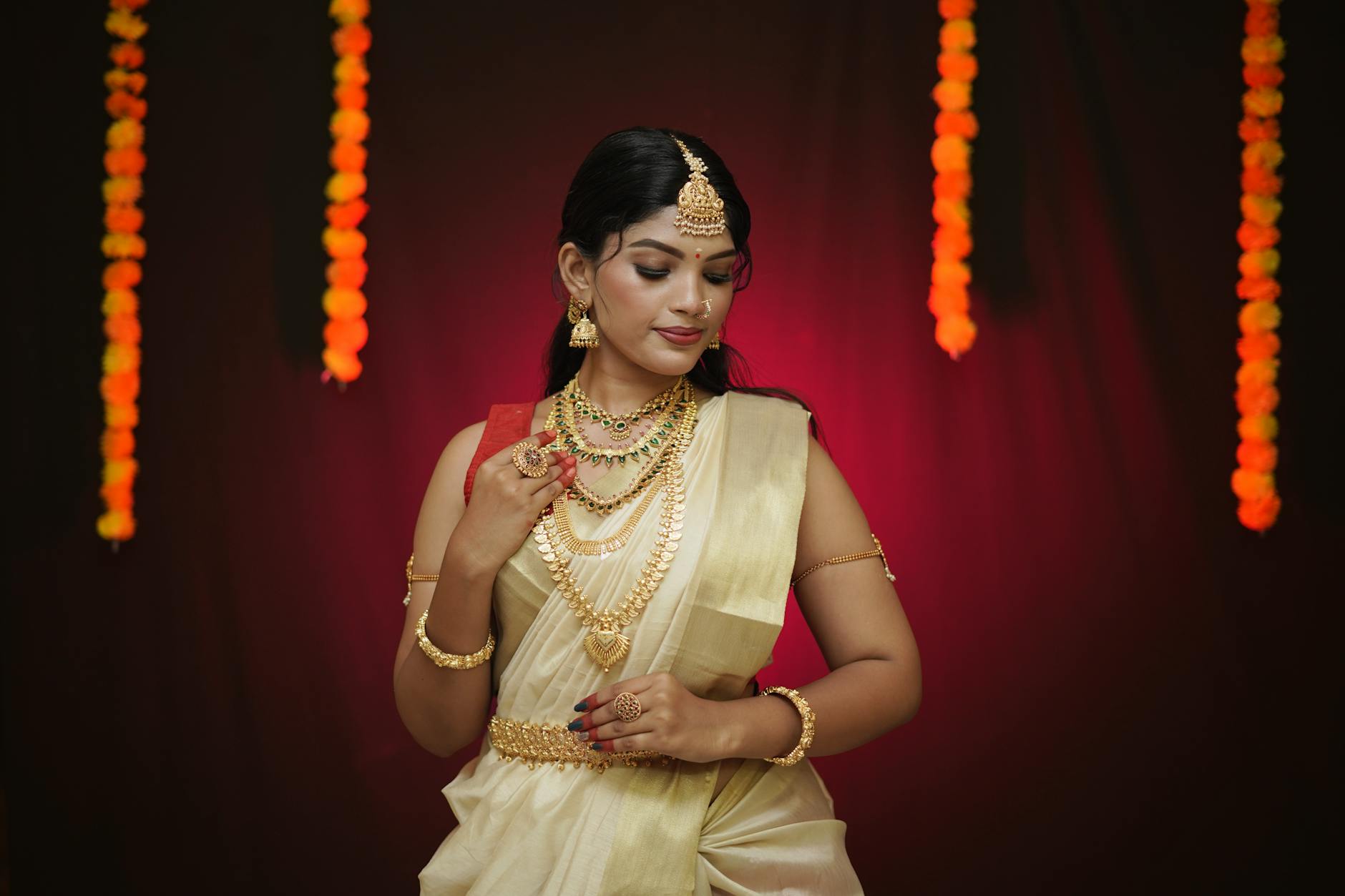
Assam's jewellery tradition is one of India's best-kept secrets. Rooted in the heritage of the Ahom kingdom — which ruled for 600 years, the longest of any dynastic house in Indian history — Assamese traditional jewellery is distinguished by its purity, craftsmanship, and profound cultural meaning. Every ornament tells a story of Bihu festivals, royal courts, and the rich natural landscapes of the Brahmaputra valley.
The Heritage of Assamese Jewellery
Unlike many Indian states where jewellery traditions were influenced by Mughal or colonial aesthetics, Assamese jewellery developed largely in isolation along the Brahmaputra, shaped by the Ahom kingdom (1228–1826 AD), indigenous tribal traditions, and the region's connection to Southeast Asian craft techniques. The result is a jewellery vocabulary unlike anything else in India.
Gold is the dominant metal — almost exclusively. Assamese traditional jewellery is rarely made in silver. The designs are distinguished by their naturalistic motifs: birds (especially the pigeon and the sarus crane), fish, lotuses, and the moon. The symbolism of Assamese jewellery is tied to the natural world of the Brahmaputra floodplains.
The primary craftsmen of Assamese gold jewellery are the Sonar community — hereditary goldsmiths who have practised these techniques for generations. The major craft centres are Hajo (near Guwahati), known for gold jewellery, and Sarthebari, known for bell metal and brass work.
The Jon Biri — Assam's Most Iconic Ornament
The Jon Biri (also written as Junbiri or Junbiri) is the crescent moon earring that is universally recognised as the emblem of Assamese jewellery. "Jon" means moon and "biri" means earring — moon earring. The crescent shape, sometimes elaborated with filigree work, dangling elements, or gemstone accents, is worn by Assamese women during Bihu, cultural performances, and festivals.
The Jon Biri is traditionally made in 22K gold. A basic pair weighs 3–8 grams; elaborate versions with filigree and gems can weigh 12–20 grams. It is the single most important piece of Assamese jewellery and is given to young women by their families as a rite of passage. Brides always wear Jon Biri on their wedding day.
Price: ₹8,000–₹35,000 for plain to moderately worked 22K pairs. Heavily filigree-worked or gem-set Jon Biris from renowned Hajo craftsmen can reach ₹80,000–₹1,50,000.
Gam Kharu — The Cylindrical Armlet
The Gam Kharu (also called Gamkharu) is a cylindrical hollow gold bangle worn on the upper arm, just above the elbow. It is one of the most architecturally distinctive pieces of Indian jewellery — no other regional tradition produces a bangle quite like it.
Traditional Gam Kharus are made by hammering 22K gold sheets into a hollow cylinder, with decorative bands around the edges. More elaborate versions feature repoussé work (raised patterns hammered from inside) and granulation. The piece is worn in pairs on both upper arms and is a mandatory part of the traditional Assamese bridal set.
The Gam Kharu represents the continuity of the Ahom goldsmithing tradition more than perhaps any other piece. Archaeological finds from Ahom burial mounds have yielded Gam Kharus from the 14th–18th centuries that are strikingly similar to those made today — a testament to the durability of the design.
Price: ₹25,000–₹1,50,000 depending on gold weight (15–50 grams is typical) and craftsmanship elaboration.
Complete Guide to Assamese Traditional Ornaments
| Ornament | Worn On | Description | Price Range |
|---|---|---|---|
| Jon Biri | Ears | Crescent moon earrings — most iconic piece | ₹8,000–₹1,50,000 |
| Gam Kharu | Upper arm | Hollow cylindrical gold armlet | ₹25,000–₹1,50,000 |
| Lokaparo | Ears | Pigeon-motif earring; loka = pigeon | ₹15,000–₹60,000 |
| Dhulbiri | Ears | Small cylindrical drum-shaped earrings | ₹6,000–₹25,000 |
| Bena | Nose | Gold nose ring, typically small and plain | ₹3,000–₹12,000 |
| Keru | Ankles | Thick gold anklets worn by brides | ₹40,000–₹2,00,000 |
| Galpetha | Neck | Large statement necklace for bridal | ₹60,000–₹5,00,000 |
| Muthikharu | Fingers | Traditional Assamese gold ring | ₹8,000–₹40,000 |
Bihu Jewellery — The Cultural Heartbeat
Rongali Bihu (Bohag Bihu), celebrated in April, is Assam's most important festival and the grand stage for Assamese jewellery. Bihu dance performers wear the full complement of traditional gold ornaments — Jon Biri, Galpetha necklace, Gam Kharu armlets, Dhulbiri earrings — paired with the traditional Mekhela Chador (a two-piece silk garment) in vibrant red and white.
The cultural significance of wearing gold during Bihu runs deep. Mothers and grandmothers pass down their gold to daughters and granddaughters specifically so that they can wear it during Bihu. The festival is, among other things, a celebration of abundance and the coming of the agricultural new year — gold worn during Bihu is believed to attract prosperity for the year ahead.
For Assamese families living outside Assam, purchasing and wearing traditional Assamese jewellery during Bihu has become an important act of cultural identity preservation.
The Bridal Assamese Jewellery Set
A complete traditional Assamese bridal set includes 8–12 pieces worn simultaneously. The total gold weight in a traditional full bridal set ranges from 100 to 300 grams, representing a significant family investment. In many families, pieces are passed down over generations and may mix heirloom items with newly purchased pieces.
Traditional set components:
- Jon Biri (earrings) — usually the most elaborate piece, often family heirloom
- Gam Kharu (pair, both upper arms)
- Galpetha (statement necklace)
- Keru (anklets, pair)
- Bena (nose ring)
- Lokaparo (everyday earrings worn at reception if Jon Biri is too heavy)
- Muthikharu (finger rings, multiple)
- Gold bangles (plain or with repoussé work)
Total bridal set investment: ₹3,00,000–₹15,00,000 depending on gold weight and craftsmanship. Heirloom pieces can skew this widely.
⚠️ Caring for Assamese Gold Jewellery
Traditional Assamese pieces — especially hollow pieces like Gam Kharu — require careful handling. Never apply force to hollow gold pieces as dents cannot be easily repaired. Clean with lukewarm water and mild soap, never ultrasonic cleaners (the vibration can deform hollow pieces). Store separately in soft cloth pouches — hollow armlets stack badly and can scratch each other. For heirloom pieces, have a professional goldsmith inspect the clasps and connections every 5 years.
Assamese Jewellery and Mekhela Chador
The cultural context of Assamese jewellery is inseparable from the Mekhela Chador — Assam's traditional two-piece silk garment worn by women. The Mekhela is the lower garment (similar to a sarong) and the Chador is the upper drape. Together they form the canvas on which Assamese jewellery is displayed.
The two most prestigious silk types paired with Assamese gold:
- Muga silk — Assam's indigenous golden silk, naturally golden-yellow in colour; the only naturally golden silk in the world; GI-protected; pairings with yellow gold create an extraordinarily harmonious aesthetic
- Pat silk — bright white-cream silk with a crisp texture; provides high contrast backdrop for gold jewellery
Where to Buy Assamese Jewellery
Finding genuine traditional Assamese jewellery outside Assam remains challenging, though the situation is improving:
- Guwahati — Pan Bazaar and Fancy Bazaar — the primary commercial jewellery districts; hundreds of goldsmiths and jewellery shops
- Hajo — the traditional goldsmithing village near Guwahati; buying directly from Hajo craftsmen ensures authenticity and competitive prices
- Assam government emporiums — Assam Emporium in Delhi's Baba Kharak Singh Marg carries a curated selection
- Crafts fairs — Surajkund Crafts Mela and IITF in Delhi typically feature Assamese artisans
- Online — a growing number of Assamese craftsmen sell on Instagram and through their own websites; look for sellers based in Hajo or Guwahati with verifiable credentials
💡 Pro Tip
When buying Assamese jewellery, ask for the gold purity certificate and the name of the goldsmith's workshop. Traditional Hajo goldsmiths take pride in their craft and are usually willing to share information about their techniques. Avoid pieces sold as "Assamese traditional" that show machine-made regularities — genuine Assamese jewellery has slight variations from hand-crafting that are a mark of authenticity, not imperfection.
Contemporary Assamese Jewellery
A new generation of designers is reinterpreting Assamese jewellery motifs for contemporary wear. Jon Biri motifs are appearing in lightweight titanium and silver versions suitable for everyday office wear. Gam Kharu proportions are being reimagined as slim cuffs. The pigeon motif of Lokaparo earrings is finding its way onto minimalist pendants.
Designers such as those associated with the Gauhati-based jewellery design community are gaining national recognition, helping bring Assamese jewellery vocabulary to a pan-Indian audience for the first time.
Assamese Jewellery and the Ahom Kingdom Legacy
To understand Assamese jewellery fully, one must understand the Ahom kingdom — the longest-reigning dynastic house in Indian subcontinent history (1228–1826 AD, almost 600 years). The Ahoms were Tai-speaking people who migrated from present-day Yunnan, China, and established a sophisticated kingdom in the Brahmaputra valley. Their patronage of local goldsmiths created a distinctly Assamese jewellery aesthetic that drew on both indigenous Assamese traditions and Southeast Asian craft influences brought by the Ahom rulers.
Unlike the Mughal empire — which had a profound homogenising effect on jewellery aesthetics across much of North India — the Ahom kingdom remained culturally independent and never fully fell under Mughal control. This independence is precisely why Assamese jewellery looks so different from Rajasthani, Mughal-influenced North Indian, or Deccan court jewellery. The Ahom patronised their own craftsmen, who developed forms rooted in the natural world of the Brahmaputra: the river, its birds, its fish, the moon over the water.
Royal Ahom women wore gold from head to toe — archaeological evidence from royal burial mounds (maidam) in Charaideo has unearthed spectacular gold ornaments including large disc earrings, hollow gold kadas, gold headbands, and elaborate gold pectorals. Many of these excavated forms are recognisable forerunners of today's Assamese jewellery pieces, speaking to the remarkable continuity of this tradition.
Silversmithing and Related Crafts of Assam
While gold dominates Assamese traditional jewellery, it is important to note that Assam has a parallel tradition of exceptional silversmithing and bell-metal work. Sarthebari, a town in Barpeta district, is the centre of Assam's bell-metal (kansa) craft — a tradition of casting complex objects in an alloy of copper and tin that is completely distinct from jewellery making but equally important in Assamese material culture.
Silver jewellery is also made in Assam, particularly for tribal communities. Bodo tribal women's silver jewellery, Rabha community ornaments, and Mishing tribal silver pieces form a parallel craft tradition alongside the dominant gold jewellery mainstream. Tribal Assamese silver pieces — especially those from the northeastern hill districts — are increasingly collected as folk art objects nationally and internationally.
Frequently Asked Questions
What makes Assamese jewellery unique compared to other Indian regional jewellery?
Three things set Assamese jewellery apart: (1) Exclusive use of gold — unlike most Indian regional traditions that use silver extensively, Assamese traditional jewellery is almost entirely gold; (2) Naturalistic motifs rooted in the Brahmaputra valley — birds, the moon, fish, lotuses — with no Mughal influence; (3) Architectural forms like the Gam Kharu (hollow cylindrical armlet) that have no parallel in any other Indian jewellery tradition.
Can I buy Assamese jewellery outside Assam?
Yes, though options are limited compared to mainstream jewellery. Government emporiums in Delhi (Assam Emporium, Cottage Industries Exposition) carry authentic pieces. Several Assamese goldsmiths now sell online via Instagram and their own websites. Major craft fairs like Surajkund (Haryana, February) and IITF (Delhi, November) typically feature Assamese artisans. In cities with large Assamese communities (Delhi, Bangalore, Mumbai), community-organised Bihu events sometimes have jewellery vendors.
Is Assamese jewellery getting a GI tag?
As of 2026, efforts to register a GI tag specifically for traditional Assamese gold jewellery forms like Jon Biri and Gam Kharu are ongoing, led by the Assam government and artisan organisations. No formal GI tag has been granted yet, though the movement has significant political and cultural backing. The GI registration for Muga silk (already obtained) has demonstrated the model for protecting Assamese craft heritage.
More in Trends & Styles
Share this article
Our editorial team comprises jewellery industry veterans, certified gemmologists, and passionate writers with decades of combined experience across India's gold, diamond, and gemstone markets. Every article is researched, fact-checked, and written to help Indian buyers make smarter, safer jewellery decisions.
Passionate about jewellery and love to write? We'd love to hear from you.
Join us as a writer →Ready to buy? Find verified jewellers near you
Browse 10,000+ BIS hallmark certified jewellers across India. Compare ratings, check today's gold rate, and book a visit.
Keep Reading