Jadau jewellery stands apart in the entire landscape of Indian craftsmanship. Originating in the royal workshops of Rajasthan and Gujarat, it represents the most labour-intensive jewellery tradition in the world — pieces that take weeks or months to complete and can command prices exceeding fifty lakh rupees for a bridal set. Understanding what Jadau is, how it is made, and how to buy it authentically is essential for anyone considering this investment.
What Is Jadau Jewellery?
Jadau (also spelled Jadav or Jado) refers to an ancient Indian jewellery-making technique in which precious and semi-precious stones are embedded into high-purity gold (22K or 24K) using lac (shellac resin) as the base material. The word "Jadau" derives from the Hindi/Rajasthani word meaning "to embed" or "to inlay."
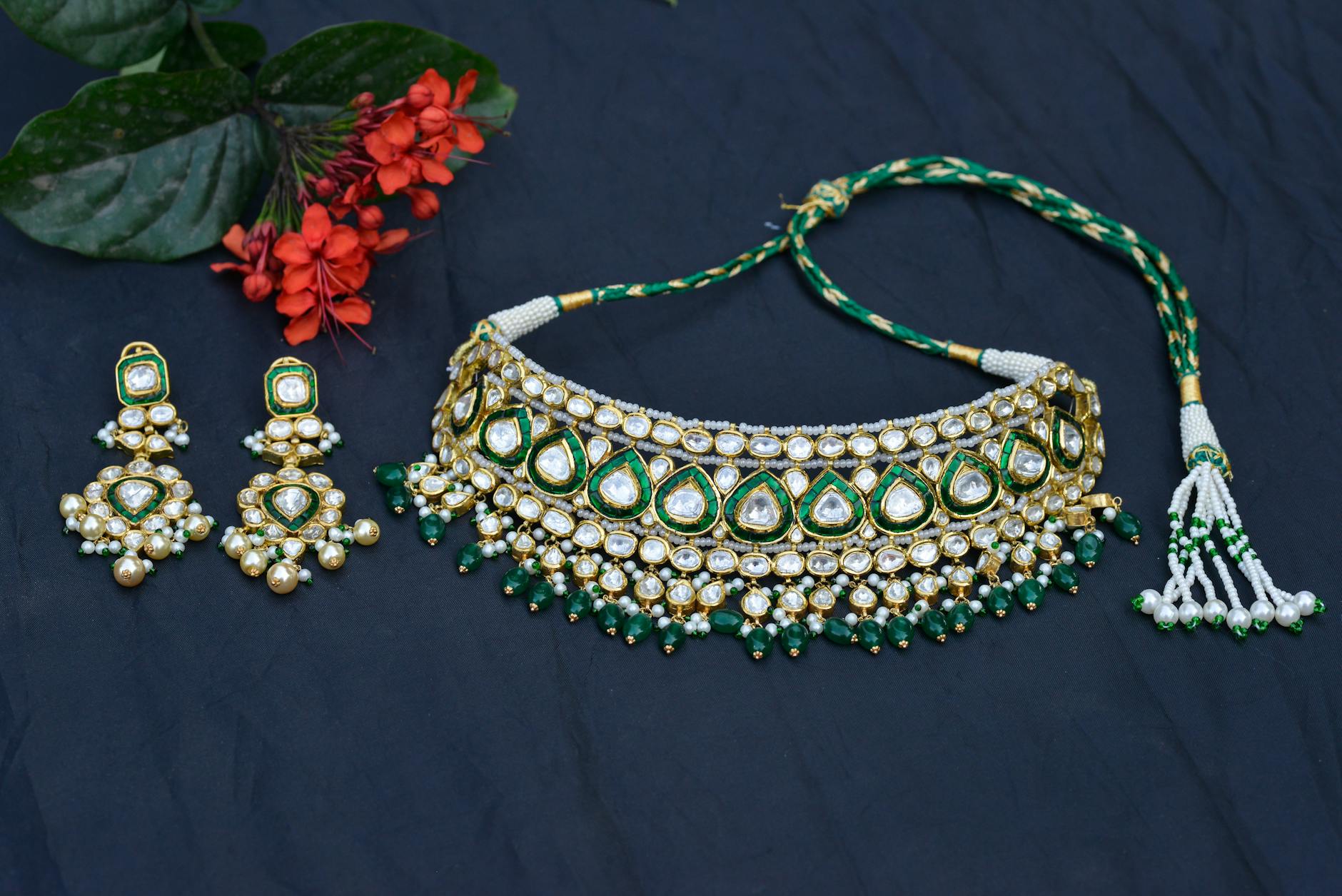
The defining feature of Jadau is the use of polki diamonds — uncut, rough natural diamonds with their natural facets intact, as they are found in the earth. Unlike faceted brilliant-cut diamonds that are graded by the 4Cs (cut, colour, clarity, carat), polki diamonds are evaluated by eye for their reflective quality, natural surface character, and visual appearance. They are almost always table-cut (flat top, natural bottom) or used in their natural form.
The Jadau Crafting Process
Jadau jewellery is made by a team of highly specialised artisans, each responsible for a specific stage of the work. Understanding the process explains why labour can account for 40–60% of the final price.
Step 1 — The Ghaat Wala (Gold Worker): Pure gold sheet (22K or higher) is hammered and shaped into the base structure of the piece — whether a necklace unit, earring back, or bracelet segment. The gold is shaped by hand with extraordinary precision.
Step 2 — The Khudai Wala (Carver): Once the gold form is established, cavities of precise shapes and depths are carved into the surface to receive each individual stone. The size, depth, and angle of each cavity must match the stone that will sit in it.
Step 3 — The Lac Filling: Molten lac (a natural resin secreted by the lac insect, widely used in traditional Indian crafts) is poured into each cavity. Lac serves as the adhesive and structural base for the stones. It creates a stable yet slightly flexible bed that holds the stones firmly while distributing pressure evenly.
Step 4 — The Kundansaz (Stone Setter): Before the lac fully hardens, each stone is placed by hand into its cavity. The kundansaz then uses fine gold foil (typically 24K pure gold) placed beneath and around each stone to amplify its reflectiveness — this gold foil is what gives Jadau its characteristic inner glow. Gold borders (kundan) are then crimped over the edges of each stone using fine tools, securing the stone without any mechanical prongs or adhesives.
Step 5 — The Minakari (Enamel Worker): The reverse side of Jadau pieces is almost always decorated with meenakari — intricate enamel artwork in vivid colours (typically red, green, and blue). This "hidden beauty" tradition reflects the philosophy that a truly fine piece is beautiful even in the parts no one sees. Meenakari work on the reverse is one of the key authentication markers of genuine Jadau.
💡 Pro Tip
When authenticating Jadau jewellery, always ask to see the reverse side. Genuine Jadau will have meenakari (enamel) work — often elaborate floral or bird patterns — on the back of each piece. Machine-made imitations or lower-quality pieces typically have plain backs or simple stamping. This reverse meenakari is your single most reliable quality indicator.
Polki Diamonds: What You Need to Know
Polki diamonds are at the heart of the finest Jadau pieces. Unlike the precisely graded diamonds in modern jewellery, polki evaluation is entirely visual and experiential — a skill passed down through generations of Jaipur and Hyderabad gem merchants.
The most valued polki have a warm, slightly yellow or champagne tint (the traditional "kasauti" or touchstone-tested polki preferred in Rajasthani tradition), a natural flat bottom (which sits securely in the lac bed), and good surface area relative to their depth. Polki with obvious fractures (called "dhabbe") or heavily included stones visible to the naked eye are lower quality. Truly exceptional polki — large, clear, and naturally brilliant — can be worth significantly more than equivalent carat weight brilliant-cut diamonds.
Synthetic polki-look diamonds (lab-created or simulants with flat cuts) are now widely used in fashion Jadau. They are perfectly acceptable for non-investment fashion pieces but should be priced accordingly.
Jadau Price Guide 2026
| Piece | Gold Weight | Stone Quality | Price Range |
|---|---|---|---|
| Simple Jadau earrings | 3–5g | Synthetic polki | ₹20,000–₹40,000 |
| Jadau earrings (genuine polki) | 4–7g | Natural polki | ₹50,000–₹1,80,000 |
| Jadau pendant necklace | 10–20g | Mixed natural gems | ₹1,50,000–₹5,00,000 |
| Jadau necklace set (premium) | 25–50g | Natural polki + emeralds | ₹4,00,000–₹15,00,000 |
| Bridal Jadau full set | 60–150g+ | Premium natural polki | ₹8,00,000–₹50,00,000+ |
Understanding the Price Components
A Jadau piece is priced on four main components: gold value (based on daily rate × weight), polki/stone value (assessed visually, highly variable), labour (called "ghaat" in Rajasthan — often ₹800–₹2,500 per gram for fine Jadau), and meenakari (enamel work, typically 10–20% of the labour cost). For a premium bridal set, labour alone can constitute 40–60% of the total invoice — this is why Jadau is so expensive relative to its gold weight and also why it does not resell at face value.
⚠️ Resale Reality
Jadau jewellery does not resell at purchase price. The labour cost — which can be 40–60% of the total — has essentially zero resale value. When reselling Jadau, you will typically recover the gold value plus a fraction of the stone value. Buy Jadau as a cultural heirloom and wearable art, not as a financial investment. The gold and stones are recoverable, but the extraordinary craftsmanship is not valued in the secondary market.
Where to Buy Authentic Jadau in India
Jaipur — Johari Bazaar: Jaipur is unquestionably India's Jadau capital. Johari Bazaar (Jewellers' Market) in the old city contains hundreds of Jadau workshops and showrooms, from small family ateliers to large exporters. Amrapali Museum and Jewellery in Jaipur is world-famous for its Jadau and antique jewellery. Gem Palace (Sanjay Kasliwal) has dressed maharajas, celebrities, and international collectors for generations.
Mumbai — Zaveri Bazaar: Tribhovandas Bhimji Zaveri (TBZ), one of India's oldest jewellery houses founded in 1864, carries extensive Jadau collections. The Zaveri Bazaar area has multiple specialists in Rajasthani Jadau brought to Mumbai's wealthy clientele.
Hyderabad: The Hyderabadi variant of Jadau — influenced by Nizami court jewellery — uses slightly different stone combinations and gold forms. The Laad Bazaar near Charminar and the jewellery showrooms on Nampally High Road carry Hyderabadi Jadau pieces.
Certification: The Rajasthan Gems and Jewellery Trade Association (RGJTA) and the Gem and Jewellery Export Promotion Council (GJEPC) are the primary trade bodies. Ask for a detailed invoice itemising gold weight, stone type, and labour separately — any reputable Jadau seller provides this.
Jadau for Weddings: Traditional Pieces
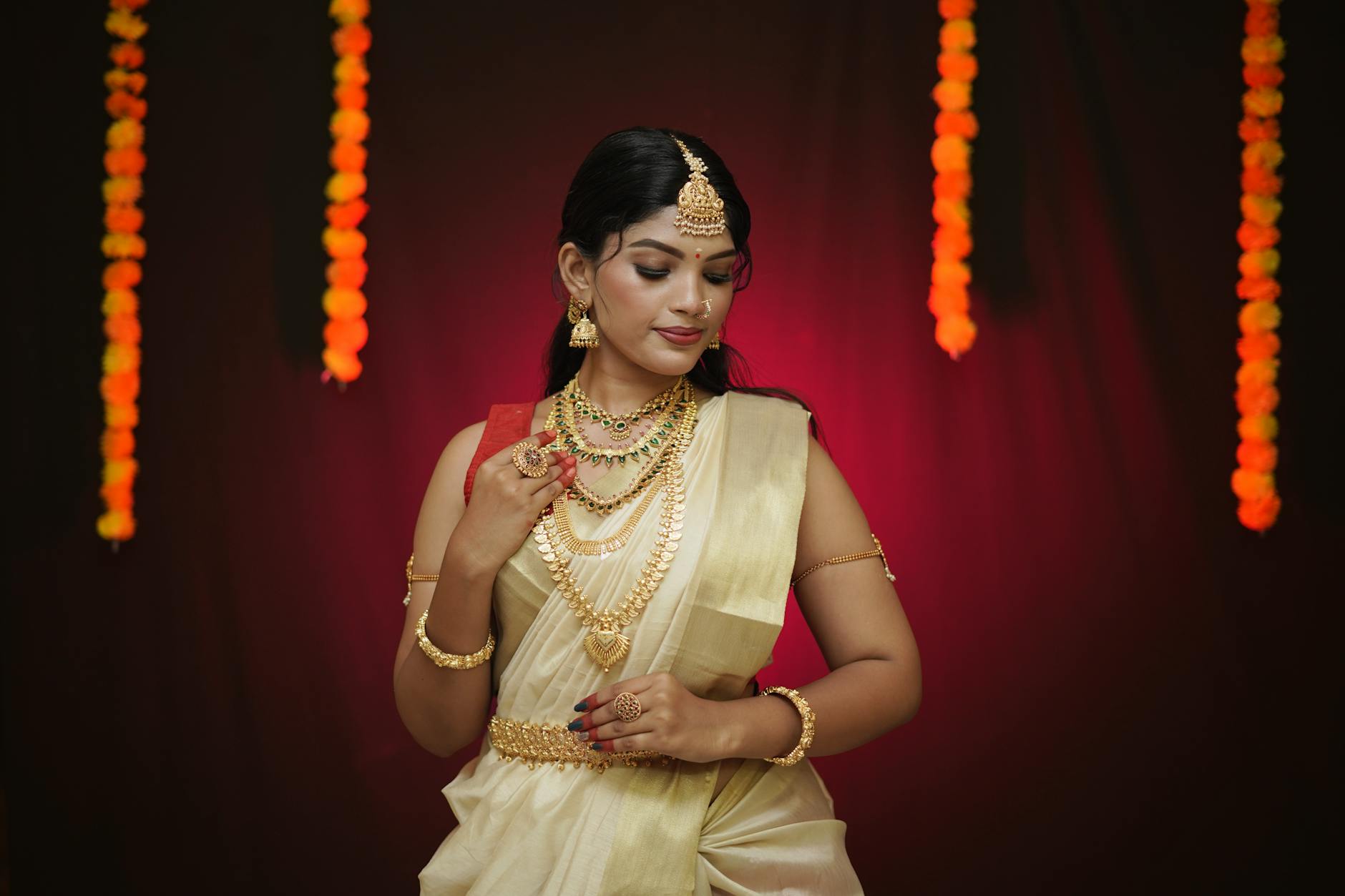
For Hindu weddings in North India, particularly in Rajasthani and Marwari communities, a complete bridal Jadau set may include: the rani haar (long necklace), choker, maang tikka, jhoomar (side headpiece), nath (nose ring with polki diamond), kaan phool (ear ornaments), haath phool (hand ornament connecting ring to bangle), bangles, and payal (anklet). The full traditional set can weigh 100–200 grams of gold and incorporate hundreds of individually set stones.
Caring for Jadau Jewellery
Jadau requires specialised care because of the lac base. Water is the primary enemy — repeated or prolonged exposure to water can soften lac, loosening stones. Avoid wearing Jadau while bathing, swimming, or doing household chores. Never put Jadau in an ultrasonic cleaner — the vibrations will shatter the lac bed and loosen stones. Clean gently with a soft dry cloth or a very slightly damp cloth. Store in individual soft pouches to prevent stones from scratching each other. If a stone comes loose, take the piece to a Jadau specialist (not a general jeweller) for re-setting — the lac base requires expertise to repair without damaging surrounding stones.
Frequently Asked Questions
Does Jadau jewellery hold resale value? Partially. The gold and stones are recoverable, but the labour cost — which can be 40–60% of purchase price — is essentially lost in resale. Treat Jadau as you would a fine painting: as cultural heritage and wearable art, not a financial instrument. Truly exceptional pieces by renowned Jaipur ateliers do appreciate in the collector market over decades.
Can Jadau pieces be resized? Resizing Jadau is technically possible but complex and expensive. The lac bed and stone settings around the resize area must be carefully dismantled, the gold adjusted, and everything reset. Only a skilled Jadau artisan should attempt this. For rings, it is often easier to have a new shank made and the original face transplanted. For necklaces, extra units can be added or removed if the design is modular.
How do I tell the difference between Jadau and kundan jewellery? The terms are often used interchangeably but technically differ: Kundan refers specifically to the gold-foil stone-setting technique. Jadau refers to the complete jewellery form incorporating kundan setting, polki diamonds, meenakari enamel reverse work, and the lac base structure. All Jadau uses kundan technique, but not all kundan jewellery is Jadau (kundan can be done without polki, without meenakari, and at lower purity gold).
The Artisans Behind Jadau: A Dying Craft
Jadau jewellery creation is the work of five distinct artisan communities (karigars), each with a hereditary specialisation: the Soni (goldsmith who shapes the base), the Khudai wala (cavity carver), the Kundansaz (stone setter), the Minakari (enamel artist), and the Ghisai wala (polisher). Each family passes its techniques to children from a young age, and the knowledge is largely oral and observational — not written in manuals or taught in schools.
The craft is under significant pressure. Younger generations in traditional Jadau families in Jaipur, Bikaner, and Nathdwara are increasingly choosing other livelihoods — the work is painstaking, eyesight-straining, and not highly paid relative to the skill required. NGOs, government craft bodies, and luxury brands have all launched programmes to support Jadau artisans, but attrition continues. The finest Jadau jewellery you buy today may represent a craft at its last generation of peak practitioners.
When you buy authentic Jadau from a reputable atelier, ask whether they work with named artisan families and whether part of the price supports fair wages for the karigars. Brands like Amrapali in Jaipur are known for their direct relationships with artisan communities and their efforts to document and preserve the Jadau tradition. Purchasing from such sources — even at a premium — is the most effective way a buyer can contribute to the survival of this extraordinary craft.
Jadau in Contemporary Indian Fashion
Bridal fashion has driven a remarkable Jadau revival since 2015. Celebrity weddings — particularly of Bollywood stars and industrialist families — that feature elaborate Jadau bridal sets have made the craft aspirational for a new generation of brides. Contemporary designers are working with Jadau artisans to create pieces that retain the authentic technique while adapting forms to modern aesthetics: smaller, lighter necklaces that can be worn outside bridal contexts; polki diamond rings as alternative engagement rings; and asymmetric Jadau earrings that mix polki with coloured sapphires beyond the traditional ruby-emerald palette.
More in Trends & Styles
Share this article
Our editorial team comprises jewellery industry veterans, certified gemmologists, and passionate writers with decades of combined experience across India's gold, diamond, and gemstone markets. Every article is researched, fact-checked, and written to help Indian buyers make smarter, safer jewellery decisions.
Passionate about jewellery and love to write? We'd love to hear from you.
Join us as a writer →Ready to buy? Find verified jewellers near you
Browse 10,000+ BIS hallmark certified jewellers across India. Compare ratings, check today's gold rate, and book a visit.
Keep Reading