India's festival calendar is among the richest in the world — a year-round rotation of celebrations, each with its own aesthetic language, colour palette, and jewellery tradition.
Wearing the right jewellery for the right festival is not mere convention. It is participation in a living cultural conversation that has been refined over centuries.
This guide covers every major Indian festival and exactly what to wear — and what to leave at home.
Diwali and Dhanteras: Gold is the Festival Itself
Diwali is India's gold-buying moment. Dhanteras — the first day of the five-day Diwali festival — is considered the most auspicious day of the year for purchasing gold.
Buying gold on Dhanteras is not merely tradition; it is so culturally embedded that India sees a significant spike in national gold demand every Dhanteras, tracked by the MCX and reported as a national economic indicator.
What to Buy on Dhanteras
Any gold purchase is considered auspicious on Dhanteras — even a small coin counts.
For jewellery purchases: a new bangle, a small gold pendant, an addition to the family's jewellery collection. The auspiciousness is in the purchase, not in the amount.
If you are planning a major jewellery purchase (a bridal set, a significant anniversary piece), timing it to Dhanteras is both culturally meaningful and — because of the volume of buyers — occasionally an opportunity for better pricing from jewellers running Dhanteras promotions.
Diwali Night Jewellery
Diwali night is India's most photographed jewellery occasion after weddings. Wear your best set — the one you save for significant occasions.
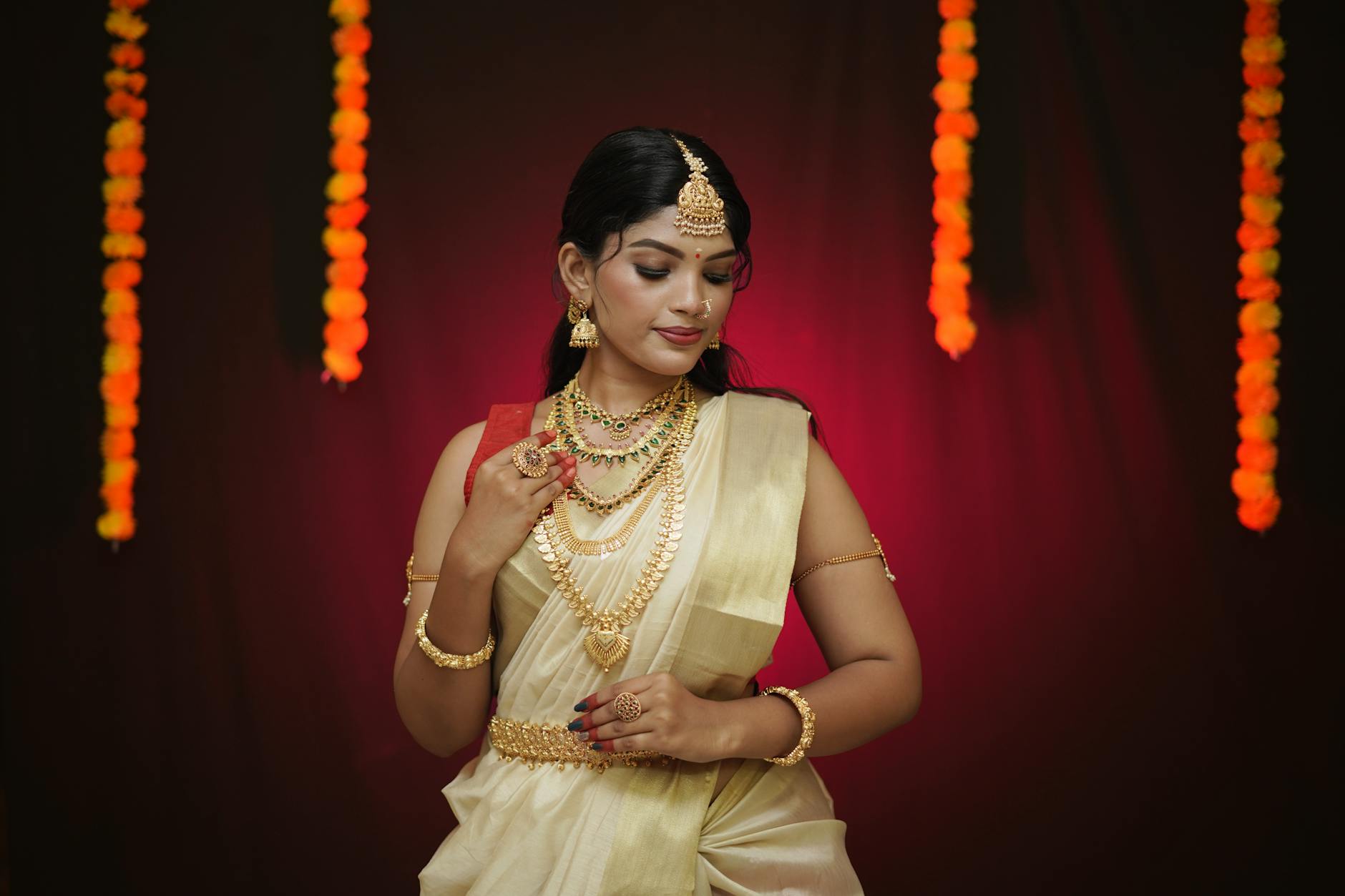
Traditional 22K gold sets in reds and yellows (the festival's colours) are the classic choice.
Kundan sets with red and green stones against deep red or emerald green outfits are quintessentially Diwali.
Navratri's Colour-Coded Jewellery Days
Navratri's nine nights each have a designated colour that devotees follow for outfit choices.
Coordinate your gemstone colours with the day: red day — ruby accents, garnet, or red coral; white day — pearls, diamonds, or moonstone; green day — emerald or green tourmaline; yellow day — yellow sapphire or citrine; blue day — blue sapphire or tanzanite.
You don't need precious stones — coloured glass and semi-precious stones in the day's colour work perfectly and cost a fraction.
Navratri and Garba: Jewellery That Dances With You
Navratri's Garba and Dandiya nights have a specific jewellery requirement that the festival calendar ignores: you will be dancing. Vigorously.
For hours. This changes everything about what you should wear.
What Works for Garba
- Bangles are essential — the sound of bangles is considered part of the music of Garba, not an accessory to it. Stack generously: glass bangles in the day's colour, with gold or silver kadas as anchors. This is one of the few occasions where a full arm of bangles is not only acceptable but traditional.
- Jhumka earrings — the gentle movement of jhumkas complements the circular dance movements of Garba. Choose medium-sized jhumkas, not extremely long dangles that might swing dangerously.
- Maang tikka — traditional and beautiful for Garba, provided it is secured properly. A tikka that slides during dancing is distracting and potentially damaging.
What to Avoid for Garba
- Long pendant necklaces — they catch on partners' clothing, swing into faces, and can break during the vigorous circular movements of Garba.
- Very large statement rings — can injure yourself or your Dandiya partner's hands during stick play. Keep rings flat and close to the finger.
- Elaborate waist belts (kamarbandhs) — too restrictive for free movement. Save these for non-dancing festival occasions.
Eid: Elegance, Pearls, and the White-Gold Tradition
Eid al-Fitr and Eid al-Adha are occasions for new clothes and, traditionally, new jewellery — or at least the wearing of the finest pieces a family owns.
The Eid jewellery aesthetic in India has a distinctive character: elaborate, traditional, and often influenced by Mughal-era sensibilities.
The Pearl and Eid Connection
Pearls have a long and deep association with Islamic jewellery traditions and therefore with Eid celebrations in India.
The Arabian Gulf was the world's natural pearl centre for centuries, and the Mughal court's love of pearls — documented in extraordinary historical jewellery pieces — has infused the cultural memory of pearl jewellery as appropriate for celebration and religious occasion.
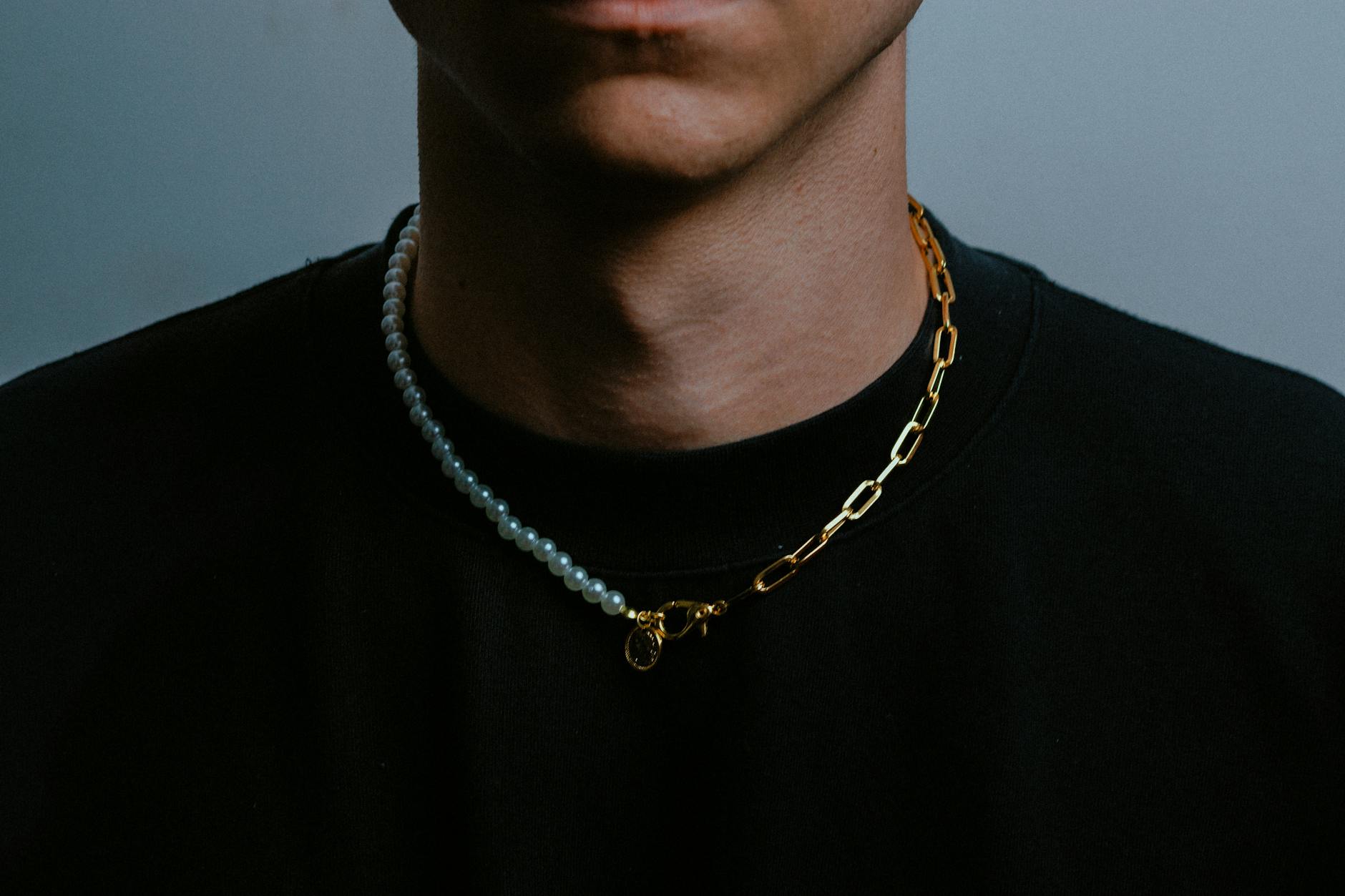
Pearl jewellery in white and gold (pearl necklace with gold clasp, pearl and gold earrings) is a classic Eid aesthetic.
Hyderabadi Eid Tradition
Hyderabad's Muslim community has one of India's most elaborate Eid jewellery traditions — the city's Nizami heritage means elaborate polki and jadau sets are worn on Eid in ways that rival bridal jewellery in other traditions.
If you are buying or wearing jewellery for an Eid celebration in Hyderabad specifically, traditional Jadau sets with pearl drops are the pinnacle of local tradition.
Contemporary Eid Jewellery
White and gold — either white diamonds in yellow gold settings, or white gold/platinum — is the modern Eid combination that photographs beautifully and works across all outfit choices.
A simple diamond necklace or a pearl choker with gold is effortlessly appropriate for Eid celebrations across all levels of formality.
Dussehra: Gold and the Colour Red
Dussehra celebrates the victory of good over evil, and red — the colour of shakti, courage, and auspiciousness — dominates the visual palette.
Gold jewellery with red stone accents (ruby, red coral, red garnet) is the traditional aesthetic.
A gold necklace set with red stone accents paired with a red or yellow-gold outfit is quintessentially Dussehra.
Holi: Leave the Fine Jewellery at Home
Holi is the one Indian festival where the answer to "what jewellery should I wear?" is simple: none. Or at least, none of the fine variety.
Holi Jewellery Warning
Holi colours — both dry powder (gulal) and wet colour — are damaging to fine jewellery.
Coloured powder particles embed in prong settings and under stone girdles, requiring professional cleaning to remove.
Chemical Holi colours can tarnish silver and cause discolouration in porous gemstones (emeralds, opals, pearls are particularly vulnerable).
Water-based celebrations add rust risk to base metal components and can loosen adhesives in glued stone settings. Leave all fine jewellery at home.
If you want to wear something festive, choose costume jewellery you don't mind potentially ruining.
Raksha Bandhan: Simple Gold as a Sister's Gift
Raksha Bandhan traditionally involves sisters gifting brothers, and brothers pledging protection.
The jewellery tradition here is specific: a sister often gifts her brother a simple gold bracelet or gold kada — a tangible, lasting symbol of affection that the brother will wear.
The piece need not be elaborate: a simple polished gold kada in 22K at 10–15 grams is the traditional gift, a meaningful and practical one that the brother can wear daily.
Christmas and New Year: Diamond Moments
India's Christian communities — concentrated in Goa, Kerala, the northeast, and significant urban populations across major cities — have a distinct Western-influenced jewellery tradition for Christmas.
Diamond jewellery, white gold, platinum, and contemporary designs are the Christmas aesthetic rather than traditional Indian gold forms.
Christmas in Goa in particular has evolved a very distinctive jewellery aesthetic: Portuguese-influenced gold filigree (a tradition from Goa's historical connection with Portugal), combined with diamonds and white gold in contemporary settings.
Goan filigree — fine twisted gold wire worked into lace-like patterns — is available in Panaji's jewellery markets and is one of India's most underrated craft jewellery forms.
New Year's Eve calls for a statement piece — the one jewellery purchase many people make specifically for this occasion.
A pair of diamond stud earrings, a contemporary diamond pendant, or a sleek bracelet in platinum or white gold is the New Year jewellery investment: a piece you buy to mark a beginning, that will photograph beautifully at midnight, and that you'll wear for years.
Festival Jewellery Calendar: Quick Reference
| Festival | Best Jewellery Choice | Traditional Metal | Avoid |
|---|---|---|---|
| Dhanteras | Any gold purchase — coin, bangle, pendant | 22K yellow gold | Buying nothing (!) — it's considered inauspicious |
| Diwali Night | Your finest traditional set; Kundan with red/green stones | 22K yellow gold | Plain minimalist pieces — this is a night for splendour |
| Navratri Garba | Bangles (stacked), jhumkas, maang tikka in day's colour | Gold + glass bangles | Long necklaces, large rings, elaborate waist belts |
| Eid | Elaborate traditional set or pearl jewellery; white and gold | 22K gold, pearls | Nothing particularly restricted — elegance is the rule |
| Dussehra | Gold with red stone accents — ruby, coral, garnet | 22K yellow gold | Pale, cool-toned stones out of keeping with the palette |
| Holi | None — or costume jewellery only | N/A | All fine jewellery — colour, water, and chemicals will damage it |
| Raksha Bandhan | Simple gold kada for brothers; simple earrings for sisters | 22K yellow gold | Overly elaborate pieces — simplicity is the spirit of this festival |
| Christmas | Diamond jewellery, white gold, contemporary designs | White gold, platinum | Heavy traditional Indian sets — the aesthetic is Western-influenced |
| New Year's Eve | One statement piece — diamond studs, a significant pendant | Any — make it count | Wearing nothing special — this night deserves a jewellery moment |
Each festival's jewellery language has been developed over centuries of celebration — the choices feel right because they are aesthetically and culturally calibrated.
Following these traditions is not about following rules; it is about participating in something larger than individual taste.
The jewellery becomes part of the festival itself.
More in Trends & Styles
Share this article
Our editorial team comprises jewellery industry veterans, certified gemmologists, and passionate writers with decades of combined experience across India's gold, diamond, and gemstone markets. Every article is researched, fact-checked, and written to help Indian buyers make smarter, safer jewellery decisions.
Passionate about jewellery and love to write? We'd love to hear from you.
Join us as a writer →Ready to buy? Find verified jewellers near you
Browse 10,000+ BIS hallmark certified jewellers across India. Compare ratings, check today's gold rate, and book a visit.
Keep Reading