Pearl Jewellery Guide — Freshwater vs Saltwater vs Imitation
Pearls hold a unique fascination in the world of gems — they are the only gemstone created by a living creature, formed without any human cutting or polishing, and yet capable of a beauty that rivals the finest diamonds. In India, pearls carry deep cultural weight: Hyderabad's pearl market (Charminar and Laad Bazaar) is one of the largest in the world, the legendary Basra pearl from the Persian Gulf was the most coveted gem in Mughal courts, and Moti — pearl — remains the gemstone of the Moon in Vedic astrology.
This guide explains everything a buyer needs to know: how different pearl types compare, how to distinguish real from imitation, what quality grades mean, and how to buy, wear, and care for pearls in the Indian context.
Types of Pearls: A Complete Overview
Natural Pearls
A natural pearl forms when an irritant (a grain of sand, a parasite, a piece of shell) enters a mollusc accidentally, and the mollusc coats it with layer upon layer of nacre (calcium carbonate in aragonite crystal form) over years or decades. The result is a pearl formed entirely by nature, without human intervention.
Natural pearls are extraordinarily rare. The wholesale pearl-fishing that once supplied world markets has been commercially exhausted — wild oyster populations in the Persian Gulf, the Red Sea, and the Indian Ocean were depleted by the early 20th century. A strand of matched natural pearls today is a museum-level piece. Individual natural pearls start at ₹50,000 for small, imperfect specimens and escalate to ₹5 lakh or more for round, well-matched, fine-lustre examples. For all practical purposes, the "real pearl" market in India today means cultured pearls — not natural pearls.
Cultured Freshwater Pearls
Produced primarily in China, and in smaller quantities in India (Andhra Pradesh has an experimental pearl culture industry), freshwater cultured pearls are made by inserting a piece of mantle tissue from a donor mollusc into a freshwater mussel. The mussel coats this tissue with nacre, forming a pearl that is essentially all-nacre — durable, lustrous, and often quite beautiful.
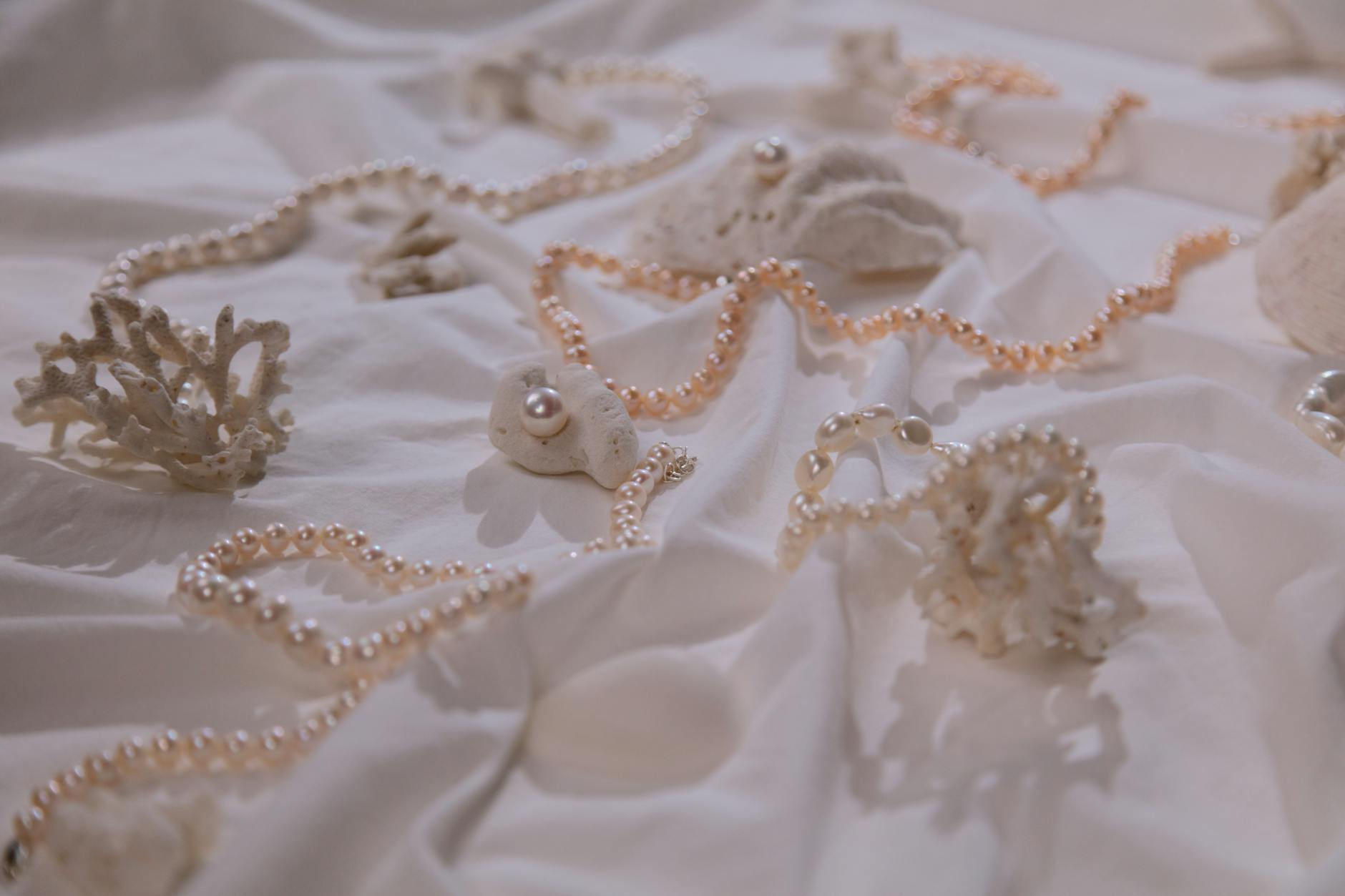
One freshwater mussel can produce multiple pearls simultaneously (up to 50 in some varieties), making freshwater pearls the most affordable cultured pearls. They are available in a huge range of shapes (round, oval, baroque, button, keshi), sizes (3mm to 14mm+), and colours (white, peach, pink, lavender, purple).
Modern Chinese freshwater pearl farming has improved dramatically — top-grade round freshwater pearls today rival Akoya quality at a fraction of the price.
Cultured Saltwater Pearls
Saltwater cultured pearls are produced by inserting a bead nucleus (typically a polished sphere of freshwater mussel shell) plus a small piece of mantle tissue into a saltwater oyster. The oyster coats this nucleus with nacre. Because the process starts with a pre-formed bead, the resulting pearl is spherical and has a nacre layer over the nucleus — thinner than freshwater pearls but extremely lustrous.
Three main varieties dominate the market:
Akoya Pearls (Japan, China): The classic cultured pearl that powered the 20th-century pearl jewellery market. Akoya pearls are produced by Pinctada fucata oysters, primarily in Japan and increasingly in China. They range from 2mm to 10mm (occasionally 11mm), and are known for exceptional roundness and high mirror-like lustre. Colours: white, cream, rose-overtone, silver. Nacre thickness: 0.35–0.8mm.
Tahitian Pearls (French Polynesia): The naturally dark pearl. Produced by the Pinctada margaritifera (black-lipped oyster), Tahitian pearls range in colour from jet black through peacock green, pistachio, aubergine, and cherry. Sizes: 8–16mm, occasionally larger. Tahitian pearls have become enormously popular globally and command significant prices for top quality.
South Sea Pearls (Australia, Philippines, Indonesia): The largest and most valuable cultured pearls. Produced by Pinctada maxima (gold or silver-lipped oyster) in the warm waters of the Indo-Pacific. South Sea pearls range from 8mm to 20mm+, in white, cream, and golden colours. Australian South Sea whites are considered the world's finest white pearls; Philippine and Indonesian golden South Sea pearls command premium prices for their rich colour.
Imitation Pearls
Glass, plastic, or resin beads coated with a simulated-nacre finish (typically fish scale essence — guanine — suspended in lacquer). Modern high-quality imitation pearls (like Majorica from Spain) can look remarkably convincing. The giveaway is in tactile tests, weight, and examination under magnification. Imitation pearls cost ₹20–₹500 for a full necklace.
Pearl Quality Grading System
The pearl industry uses several grading factors. Different retailers use different notation systems (A/AA/AAA is most common in India; Mikimoto uses A/A+/AA/AA+/AAA), but the underlying criteria are consistent:
Lustre
The most important quality factor. Lustre is the depth and intensity of light reflection from the pearl's surface — the "glow from within" that distinguishes a fine pearl from a mediocre one. A high-lustre pearl reflects light sharply, like a mirror; you should be able to see a clear reflection of a nearby light source in its surface. Low-lustre pearls look chalky or dull.
- AAA / Excellent: Mirror-like reflection, sharp and bright
- AA / Very Good: Bright reflection with minor diffusion
- A / Good: Moderate lustre, somewhat reflective
- Below A: Dull, chalky — low-grade commercial quality
Surface Quality
The percentage of the pearl's surface area that is clean (free from pits, bumps, rings, or dull spots). Top-grade pearls are "eye clean" — surface blemishes are not visible to the naked eye. Lower-grade pearls have visible pitting, irregular rings, or dull patches. Grade classifications: Flawless / Lightly Blemished / Moderately Blemished / Heavily Blemished.
Shape
Round pearls are the most valuable because they are the hardest to produce. A perfectly spherical pearl is genuinely rare. Grades: Round (deviation less than 2%), Near-Round, Oval, Button (flat on one side), Drop (pear-shaped), Baroque (irregular), Keshi (non-nucleated, all-nacre irregular). For necklaces and earrings, round is preferred. For pendants and rings, drops and baroques offer distinctive beauty at lower prices.
Size
Larger pearls are exponentially more valuable — a 10mm Akoya pearl is worth many times a 7mm Akoya of the same quality, because large oysters are rarer and the production risk higher. Size is measured in millimetres of diameter. For a matched necklace, each bead being within 0.5mm of its neighbours is considered good matching; top-grade matched strands achieve within 0.25mm.
Colour and Overtone
Pearls have a body colour (the overall colour: white, cream, pink, lavender, black, gold) and an overtone (a secondary translucent colour visible on the surface: rose, silver, green, blue). The combination of body colour and overtone defines the pearl's visual character. In the Indian market, white with rose overtone (for Akoya and freshwater) and golden (for South Sea) are the most prized. In astrology, white is the traditionally prescribed colour for Moti gemstones.
Price Guide: Indian Market (2025–2026)
| Pearl Type | Size | Quality Grade | Price per Pearl | Price per 16-inch Strand |
|---|---|---|---|---|
| Freshwater (China) | 5–6mm | AA | ₹80–200 | ₹4,000–10,000 |
| Freshwater (China) | 7–8mm | AA | ₹200–600 | ₹10,000–30,000 |
| Freshwater (China) | 9–10mm | AAA | ₹600–2,000 | ₹30,000–1 lakh |
| Akoya (Japan) | 6–6.5mm | AA | ₹1,500–4,000 | ₹75,000–2 lakh |
| Akoya (Japan) | 7–7.5mm | AAA | ₹4,000–12,000 | ₹2L–6L |
| Tahitian | 9–10mm | AA | ₹5,000–20,000 | ₹2.5L–10L |
| South Sea White | 10–11mm | AA | ₹8,000–30,000 | ₹4L–15L |
| South Sea Golden | 12–13mm | AAA | ₹30,000–1.5 lakh | ₹15L–75L |
| Natural Pearl | 5–7mm | Variable | ₹50,000–5 lakh+ | N/A (priced per piece) |
How to Identify Real Pearls vs Imitation
The Tooth Test
The most widely known identification method: gently rub the pearl against your front teeth. A genuine cultured or natural pearl feels slightly gritty or sandy — this is the micro-crystalline structure of nacre (aragonite crystals) catching against your tooth enamel. An imitation pearl (glass or plastic with smooth coating) feels completely smooth, like glass.
Caveats: this test requires some experience to interpret correctly. Very high-quality imitations can be given a slightly rough texture deliberately to pass this test. And very high-lustre pearls can feel smoother than lower-grade ones. Use in combination with other tests.
Weight Test
Cultured pearls are denser than most imitations. A 7mm cultured freshwater pearl weighs approximately 0.6–0.8 grams. A plastic imitation of the same size weighs 0.2–0.4 grams — noticeably light. Hold a strand in your hand — a genuine pearl necklace has a satisfying weight; a plastic one feels airy and insubstantial. Glass imitations pass this test — they can be as heavy as real pearls.
Surface Texture Under Magnification
Under a 10x loupe, genuine nacre shows an irregular, slightly maze-like surface texture — the overlapping platelets of aragonite crystals, like a fingerprint pattern at microscopic scale. Imitation pearl coatings show a smooth, uniform surface, sometimes with tiny bubbles or a brushed-on texture that looks mechanical rather than organic.
Temperature
Natural and cultured pearls feel cool to the touch when first picked up, warming slowly to body temperature. Plastic imitations warm quickly. Glass also feels initially cool (similar to pearl), making this test less useful for distinguishing glass imitations from real pearls.
Drilling Holes (for strands)
On a pearl necklace, examine the drill holes under magnification. In a genuine cultured pearl, the drill hole penetrates through the nacre coating (visible as a distinct layer) into the shell-bead nucleus. This layer boundary is clear. In a natural pearl, there is no nucleus — the entire cross-section is nacre. In an imitation pearl, the drill hole shows the core material (glass or plastic) directly beneath a thin coating without any visible layering.
Basra Pearls: India's Most Prized Natural Pearls
Basra pearls — sourced from the Persian Gulf, particularly from the waters around the port of Basra (modern-day Iraq) and across the Gulf to Bahrain — were the most coveted gems in the Mughal Empire and the royal courts of the Indian subcontinent for centuries. The Taj Mahal's decoration features Basra pearl inlay. Mughal miniature paintings show emperors wearing multiple strands of large Basra pearls. The Bombay pearl trade was built on Persian Gulf natural pearls.
The discovery of oil in the Gulf in the 1930s and the simultaneous development of cultured pearl farming by Mikimoto in Japan collapsed the natural pearl trade. Gulf pearl fishermen shifted to the oil industry. The wild oyster beds, exhausted by centuries of fishing, never recovered.
Today, genuine Basra pearls are extremely rare and expensive. A single verified natural Basra pearl of 5mm commands ₹50,000–₹2 lakh. A matched strand is a generational heirloom piece worth crores. The market is flooded with fake "Basra" pearls — freshwater pearls, imitation pearls, and even cultured pearls sold with false provenance claims as "original Basra."
How to Verify a Basra Pearl
The only reliable verification is through a specialist gemological laboratory. The Bahrain Institute for Pearls and Gemstones (DANAT) is the global authority on Basra pearl certification — they use X-ray diffraction and CT scanning to distinguish natural from cultured pearls and can determine Gulf origin. In India, GIA India (Mumbai) can provide natural pearl identification reports. Expect certification costs of ₹5,000–₹20,000 per pearl — worthwhile only for pieces of significant value.
India's Pearl Market: Key Locations
Hyderabad — Laad Bazaar and Charminar
Hyderabad has been India's pearl capital for centuries, originally due to its proximity to the Gulf pearl trade routes and the patronage of the Nizams of Hyderabad (who were legendary pearl collectors). Today, Laad Bazaar near the Charminar is lined with pearl jewellery shops selling freshwater cultured pearls (the majority of the market today) alongside genuine natural pieces. Hyderabad pearl artisans are skilled at knotted pearl necklaces, elaborate pearl sets, and traditional Hyderabadi jewellery designs.
Mumbai — Zaveri Bazaar
Wholesale and retail pearl trading happens in Zaveri Bazaar. Dealers here import directly from China (freshwater), Japan (Akoya), and source South Sea pearls from Australian and Filipino suppliers. For serious buyers of high-value pearl jewellery, Mumbai dealers can source matched strands to specification.
Jaipur
Jaipur's Johari Bazaar includes pearl dealers, particularly for baroque and keshi freshwater pearls used in traditional Rajasthani jewellery alongside emeralds, rubies, and meenakari enamel work.
Buying Pearls for Bridal Jewellery
Pearl jewellery is a staple of Indian bridal sets — particularly in Hyderabadi, Tamil, and Maharashtrian bridal traditions. Key considerations when buying for bridal use:
Matching
A bridal pearl set (necklace, earrings, maang tikka, sometimes bangles and payal) must be matched — same pearl type, similar lustre, matching size, and consistent colour/overtone across all pieces. For freshwater pearls, matching is relatively straightforward because many pearls are available from the same production batch. For Akoya or South Sea, matching a set requires finding an experienced dealer who works with sufficient inventory.
Stringing
Traditional pearl necklaces are strung on silk thread with a knot between each pearl — the knot prevents the pearls from rubbing against each other (which would damage the nacre surface) and means that if the thread breaks, only one or two pearls are lost rather than the entire necklace scattering. For modern wear, nylon or polyester thread is more durable but lacks the traditional feel. Premium pearl jewellers use hand-knotted silk as standard.
Clasp Choice
A gold clasp (22K or 18K hallmarked) is traditional and adds to the value of the piece. Ensure the clasp is substantial — a delicate lobster clasp on a heavy multi-strand pearl necklace is a design flaw. Box clasps and barrel clasps are more secure for heavy pieces.
Moti in Vedic Astrology
In Jyotish (Vedic astrology), Moti (pearl) is the gemstone of Chandra — the Moon. The Moon governs mind, emotions, mother, home, and fluid bodily functions. Pearl is prescribed to strengthen a weakened or afflicted Moon, or to enhance lunar qualities in the wearer's life.
Wearing Rules
- Type of pearl: Natural (Basra) pearls are considered most potent astrologically; cultured saltwater pearls (especially Akoya) are widely accepted; freshwater pearls are considered less effective by some practitioners, though others accept them.
- Minimum weight: At least 2–5 ratti (approximately 0.24–0.6 grams) for astrological effect.
- Metal: Silver is the traditional setting for Moti, as silver is also ruled by the Moon. Some practitioners accept white gold.
- Finger: Little finger (Kanishtha) of the right hand, or the ring finger — varies by tradition. Consult your astrologer.
- Day: Monday (Somvaar — Moon's day). Energise at sunrise or during the lunar hora on Monday morning.
- Mantra: "Om Som Somaya Namah" — the Moon beej mantra, 108 repetitions during energisation.
Pearl Care: The Last-On-First-Off Rule
Pearl nacre is calcium carbonate — it dissolves slowly in acid. The skin's natural perspiration is mildly acidic, but this is actually beneficial in modest amounts (it keeps nacre slightly moist and lustrous). The real enemies of pearls are concentrated acids and organic solvents found in common cosmetics:
- Perfume: Alcohol in perfume dissolves the organic conchiolin protein bonding the nacre layers. Even one-time heavy perfume contact can permanently dull a pearl's lustre. Never spray perfume on or near pearls.
- Hairspray: Similar issue. Spray your hair before putting on your pearl earrings or necklace.
- Sunscreen and moisturiser: The chemicals in these products accumulate on pearl surfaces. The last-on-first-off rule: always put on your pearls last, after all cosmetics are applied and dry.
- Household cleaners, bleach, and acids: Even brief contact can etch pearl nacre. Remove pearl jewellery before any cleaning work.
Cleaning
After wearing, wipe your pearls with a soft, clean damp cloth to remove perspiration and cosmetic residue. Dry with a dry soft cloth before storing. Once or twice a year, clean with a cloth very lightly dampened with water and a tiny amount of mild soap (no detergent, no acid-based cleaner). Rinse thoroughly with clean water and dry completely before storing.
Storage
Do not store pearls in an airtight container — unlike most gemstones, pearls are organic and benefit from slight humidity and air circulation. An airtight container causes pearls to dry out, which can result in cracking of the nacre over years. Store in a soft cloth pouch or a lined jewellery box compartment, kept away from other jewellery that could scratch the surface.
Restringing
If you wear a pearl necklace regularly (once a week or more), have it restrung on new silk thread every 2–3 years. Thread stretches and weakens over time — a knotted pearl necklace on old thread is a significant drop-and-scatter risk. Good pearl jewellers in Hyderabad, Mumbai, and Delhi offer restringing services for ₹500–₹2,000 per necklace depending on length and complexity.
Pearl Certification
For pearl purchases above ₹25,000–₹50,000:
- GIA (Gemological Institute of America) — India offices in Mumbai and Delhi: Issues Pearl Identification and Origin Reports, including distinguishing natural from cultured.
- IGI India: Issues pearl quality reports for cultured pearl strands — lustre, surface quality, shape, matching grades.
- Gübelin Gem Lab: Swiss laboratory, excellent for high-value pearl provenance identification. Used for Basra pearl verification and significant natural pearl pieces.
FAQ
Do pearls lose their lustre over time?
With proper care, pearls do not lose lustre — in fact, some pearl connoisseurs believe that pearls worn regularly against skin develop a deeper, warmer lustre over decades due to the slight moisture and oils from skin contact. The risk of lustre loss comes from improper storage (drying out), chemical exposure (cosmetics, cleaning products), and physical abrasion (scratching against harder materials in storage).
How long do pearl necklaces last?
The pearls themselves, if cared for properly, last indefinitely — there are Mughal-era natural pearl pieces in museum collections that are four centuries old and still lustrous. The silk thread on which they are strung has a lifespan — typically 3–5 years with regular wear before restringing is needed. The setting (clasps, findings) may need repair over decades. With proper restringing every few years, a quality pearl necklace is a generational heirloom.
Is a Basra pearl worth the price?
For a collector, a jewellery historian, or someone for whom provenance and rarity are paramount, yes — a certified Basra natural pearl is genuinely rare and its prices reflect the supply constraint of a resource that no longer exists at commercial scale. For someone buying for beauty or for astrological purposes, a high-quality Akoya or South Sea pearl delivers equivalent or superior visual beauty at a fraction of the price. The Basra premium is for rarity and history, not visual superiority.
Are freshwater pearls considered "real" pearls?
Yes. Freshwater cultured pearls are genuine pearls — they are produced by real molluscs with real nacre. The cultured process means they are not natural (formed without human initiation), but they are absolutely not fake or imitation. The pearl industry distinguishes between natural (no human initiation), cultured (human-initiated, mollusc-grown), and imitation (artificial material, not mollusc-grown). Cultured freshwater pearls are real pearls in every commercially and gemologically meaningful sense.
Which pearl type offers the best value in India?
For buyers seeking beauty and durability on a moderate budget, AA-grade Chinese freshwater pearls in the 7–8mm round category offer exceptional value — genuine nacre, good lustre, and price points that allow a full jewellery set for ₹15,000–₹40,000. For buyers who want the prestige of Japanese cultured pearls, Akoya in the 6.5–7mm AA grade is attainable at ₹1–2 lakh for a necklace and represents enduring quality. South Sea and Tahitian pearls are investments for buyers who understand their rarity and value them accordingly.
More in Buying Guides
Share this article
Our editorial team comprises jewellery industry veterans, certified gemmologists, and passionate writers with decades of combined experience across India's gold, diamond, and gemstone markets. Every article is researched, fact-checked, and written to help Indian buyers make smarter, safer jewellery decisions.
Passionate about jewellery and love to write? We'd love to hear from you.
Join us as a writer →Ready to buy? Find verified jewellers near you
Browse 10,000+ BIS hallmark certified jewellers across India. Compare ratings, check today's gold rate, and book a visit.
Keep Reading