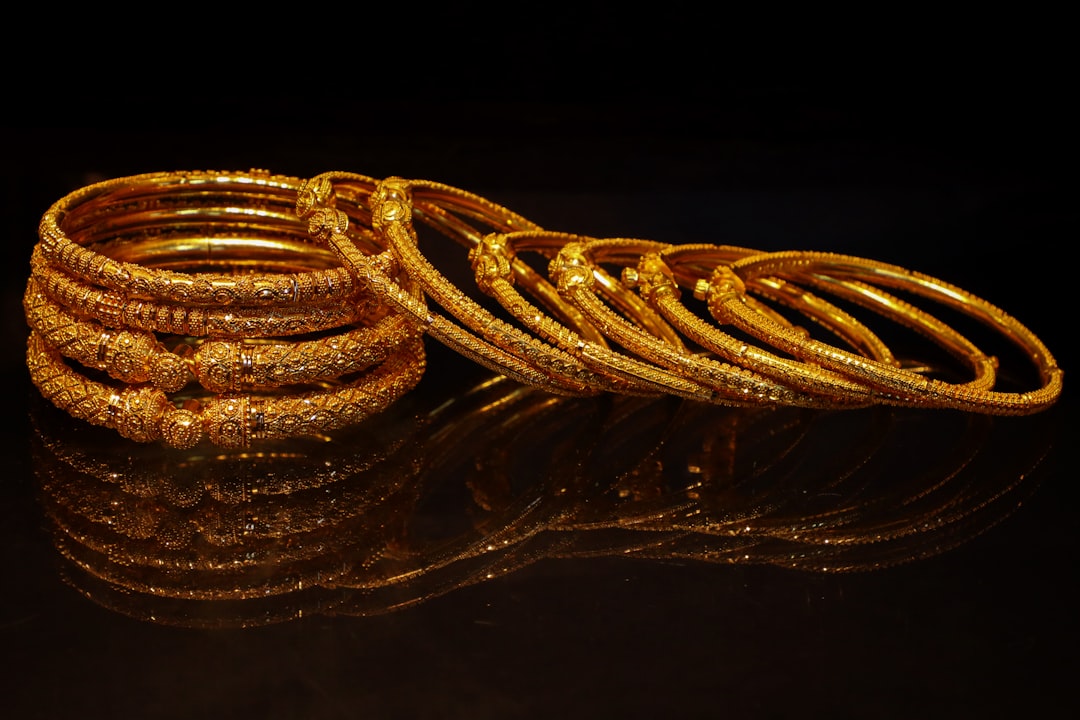
Gold jewellery scratches. This is simply the nature of wearing metal — contact with surfaces, other jewellery, keys, bags and the thousand daily small impacts all leave micro-marks. The question is not how to avoid scratches (you cannot, if you actually wear your jewellery) but how to manage them. The answer is more nuanced than most people expect: not all scratches need to be fixed, some fixes are counterproductive, and the professional services available in India are inexpensive enough that knowing when to use them is more important than any home remedy.
Understanding gold scratches: surface versus structural
Gold scratches are almost always surface scratches — the metal is displaced to the side of the scratch mark rather than removed. Under a loupe, a fresh gold scratch has raised edges. Over time these edges flatten and blend. This is why fine scratches seem to diminish: the micro-ridges round off through contact.
The visual impact of scratches depends entirely on the finish of the piece:
- High-mirror-polish pieces (plain gold rings, bangles, flat surfaces) show scratches immediately and dramatically because the contrast between the bright surface and the matte scratch line is stark.
- Satin/matte finish pieces hide scratches naturally — the finish itself is a controlled scuff pattern, so new scratches blend in.
- Textured surfaces (hammered, engraved, filigree) almost never show scratches because there is no reflective background for contrast.
This has a practical implication: if you want jewellery that shows its age gracefully, avoid high-mirror-polish plain designs. Textured and matte pieces are more forgiving of daily wear.
The case for not fixing light scratches
Before discussing how to fix scratches, it is worth considering whether you should. In the antique jewellery world, the patina of age — the soft, warm glow of gold that has been worn for decades — is actively valued. Collectors pay premiums for pieces with their original, unworn surfaces rather than pieces that have been polished and re-polished back to artificial brightness. Every time gold is polished, it becomes fractionally less old.
Many Indian women who have worn 22K gold bangles for 30 years describe the quality of the light on those well-worn pieces as uniquely beautiful — softer and warmer than new gold. This is not imagination: a surface with micro-scratches scatters light diffusely, creating the warm glow, while mirror polish reflects light specularly, creating sparkle but less warmth.
Decide consciously: do you want to restore the original finish, or do you want to let the piece develop its own history on your wrist?
Home methods: what actually works
For light surface haze and mild tarnish (not true scratches)
What appears as scratching on plain gold is sometimes a combination of very fine surface oxidation and micro-scratches that together create a hazy appearance. Cleaning often resolves this. Use mild dishwashing liquid + warm water + soft toothbrush (see our gold cleaning guide). If the piece recovers its brightness after a thorough clean, the issue was surface contamination, not scratches.
Jewellery polishing cloth (for mild surface restoration)
A jewellery polishing cloth impregnated with mild polishing compound (available at jewellery shops and online for ₹150–₹500) works on plain metal surfaces. Rub gently in the direction of any existing surface grain or in circular motions for plain surfaces. This will visually reduce fine scratches by creating a more uniform micro-texture across the piece. Limitations: only works on accessible flat surfaces; cannot reach inside settings or engraving; not suitable for enamel, Kundan, or pieces with soft stones.
When to go to a jeweller
Professional intervention is appropriate when:
- The scratch is deep enough to catch a fingernail — a surface scratch does not catch fingernails; a deep gouge does. These require physical metal removal and re-polishing by a karigar.
- A stone-set piece has a deeply scratched gold surface around the stone — the karigar can polish the metal while masking the stone.
- The piece has lost its mirror polish after years of wear and you want to restore it to original brightness.
- A bangle or ring has a deep gouge from impact — the metal may need to be re-formed before polishing.
Professional polishing services at a BIS-registered jeweller:
- Ultrasonic cleaning: removes all internal grime and surface contamination first — required before polishing.
- Buffing wheel polishing: machine polishing restores mirror finish on plain surfaces. ₹100–₹300 per piece.
- Hand polishing: for filigree and textured pieces, a karigar does targeted hand polishing. ₹300–₹1,000 per piece.
- Rhodium plating: for white gold pieces, a fresh rhodium coat restores the bright white surface and adds scratch resistance. ₹500–₹1,500 per piece.
What NOT to do
- Do not use toothpaste. Its abrasive content (silica or calcium carbonate) creates more fine scratches than it removes. Counterproductive.
- Do not use sandpaper or any abrasive paper — even very fine grit — on gold jewellery. The scratches these create are deeper than the ones you are trying to fix.
- Do not polish Meenakari or Kundan pieces at home. Enamel is easily damaged by polishing compounds; Kundan's gold foil backing is easily displaced. Professional jewellers do targeted polishing that avoids these areas.
- Do not polish more than once a year for daily-wear pieces. Each polish removes a thin layer of metal — over decades, frequent polishing thins fine work.
Find BIS-licensed jewellers offering professional cleaning and polishing near you at our India-wide jeweller directory. For storage practices that minimise scratching in the first place, see our jewellery storage guide.
More in Maintenance
Share this article
Our editorial team comprises jewellery industry veterans, certified gemmologists, and passionate writers with decades of combined experience across India's gold, diamond, and gemstone markets. Every article is researched, fact-checked, and written to help Indian buyers make smarter, safer jewellery decisions.
Passionate about jewellery and love to write? We'd love to hear from you.
Join us as a writer →Ready to buy? Find verified jewellers near you
Browse 10,000+ BIS hallmark certified jewellers across India. Compare ratings, check today's gold rate, and book a visit.
Keep Reading