Choosing an engagement ring is one of the most significant purchases of your life — not just financially, but emotionally.
The piece will be worn every day for decades, passed down through generations, and remembered in photographs forever.
This guide gives you the knowledge to make a confident, well-informed decision whether your budget is ₹30,000 or ₹3,00,000.
Step 1: Understand What the Ring Really Represents
Before diving into carats and clarity grades, consider what the ring needs to communicate.
In India, an engagement ring occupies a unique cultural space — distinct from the wedding band (which follows at the marriage ceremony) and from traditional gold jewellery.
The engagement ring is typically a Western-influenced symbol of the proposal itself.
That said, preferences vary enormously. Some couples want a solitaire diamond ring in the Western tradition.
Others prefer a ring that incorporates coloured gemstones (sapphire, ruby, or emerald have deep significance in Indian jewellery tradition).
Some want something ultra-traditional in 22K gold without a stone.
All of these are valid — the "perfect" ring is the one that reflects the wearer's personality and style, not an arbitrary convention.
If you're choosing without your partner's input, discreetly gather clues from their Pinterest boards, comments about jewellery they admire, or ask a close friend or family member.
Getting the ring right matters far more than the surprise element of the proposal.
Step 2: Set a Realistic Budget
The "two months' salary" rule is a marketing myth invented by De Beers in the 1980s. It has no basis in tradition, finance, or romance.
Set a budget based on your actual financial position — one that doesn't require going into debt or compromising emergency savings.
As a rough guide for 2026 Indian market prices:
| Budget Range | What to Expect | Best For |
|---|---|---|
| ₹20,000–₹60,000 | Gold band + small accent stones or coloured gemstone | First ring, minimalist style |
| ₹60,000–₹1,50,000 | 18K gold solitaire, 0.3–0.5ct IGI-certified diamond | Meaningful solitaire choice |
| ₹1,50,000–₹3,50,000 | 18K or platinum, 0.5–1ct GIA diamond, halo/trilogy | Most popular bridal range |
| ₹3,50,000+ | 1ct+ GIA Excellent cut, premium settings, custom work | Statement ring, collector grade |
Remember: making charges, GST (3% on jewellery), and certification fees add to the stone price. Always ask for the full itemised price before comparing stores.
Step 3: Choose the Metal
The metal choice affects durability, colour, maintenance, and overall look. Here are your primary options in India:
Gold (14K, 18K, 22K)
22 Karat (916 gold) is the traditional Indian preference — rich yellow colour, but too soft for prong settings that hold diamonds securely.
It's excellent for plain bands or bezel-set stones.
18 Karat (750 gold) is the international standard for diamond jewellery.
It's durable, available in yellow, white, and rose gold, and holds prong and pavé settings well without excessive wear.
This is the most versatile choice for an engagement ring.
14 Karat (585 gold) is more durable than 18K and significantly cheaper per gram. The colour is slightly paler than 18K yellow gold.
Excellent for active wearers who want longevity.
White Gold
White gold is yellow gold alloyed with white metals (palladium or nickel) and plated with rhodium for a bright, mirror-like finish.
It looks similar to platinum but costs significantly less.
Note that the rhodium plating wears off over 1–3 years and needs re-plating (cost: ₹500–₹1,500 at most jewellers).
It's the most popular setting metal for diamond rings in India today.
Platinum
Platinum (typically 950 — meaning 95% pure) is denser, heavier, and more durable than gold. It doesn't need rhodium plating — its colour is natural.
It's hypoallergenic, which matters for sensitive skin.
The premium over white gold is roughly 40–60% for the metal alone, though it genuinely earns it in durability and prestige.
For buyers who want a once-in-a-lifetime ring they'll never have to re-plate or refinish, platinum is worth considering.
| Metal | Purity | Colour | Maintenance | Relative Cost |
|---|---|---|---|---|
| 22K Yellow Gold | 916 | Rich yellow | None (soft — avoid prong sets) | Baseline |
| 18K Yellow Gold | 750 | Warm yellow | None | +20–25% |
| 18K White Gold | 750 | Silver-white | Re-plate rhodium every 1–3 yrs | +25–30% |
| 18K Rose Gold | 750 | Warm pink | None | +25–30% |
| Platinum 950 | 950 | Cool white | Polish every 5–7 yrs | +60–80% |
Step 4: Understand the Diamond 4Cs
If your ring will feature a diamond centre stone, the 4Cs framework — Cut, Colour, Clarity, Carat — is your essential reference. Here's what actually matters in practice:
The 4Cs: What to Prioritise (India Market)
Cut — The Most Important C
Cut is not the diamond's shape (round, oval, princess) — it's how precisely the facets are angled and polished to reflect light.
A well-cut diamond looks larger and more brilliant than a poorly-cut stone of the same carat weight.
GIA grading scale for cut (round brilliants only): Excellent, Very Good, Good, Fair, Poor.
Never buy below "Good." For maximum brilliance, aim for "Very Good" or "Excellent." An Excellent cut 0.5 carat diamond will look more impressive than a Fair cut 0.7 carat diamond at a lower price.
For other shapes (oval, cushion, pear, marquise, emerald), GIA does not formally grade cut — ask the jeweller about the table percentage, depth percentage, and length-to-width ratio for your specific stone.
Colour — The Near-Invisible Savings
GIA grades diamond colour from D (completely colourless) to Z (light yellow/brown).
Most buyers cannot see any colour difference between D–G with the naked eye under normal lighting.
The practical sweet spot for Indian buyers is G or H colour — it faces up white in a ring setting, but costs 20–35% less than a D–E stone of the same weight and clarity.
If setting in yellow gold (rather than white gold or platinum), you can go even lower — an I or J colour stone looks white against yellow gold because the metal's colour provides context.
Clarity — What You Can Actually See
Clarity grades range from FL (Flawless) at the top to I3 (heavily included) at the bottom.
The key practical question: can you see the inclusion with the naked eye at arm's length?
- FL–IF: Flawless/Internally Flawless — extremely rare, collector's territory, not worth the premium for an engagement ring
- VVS1–VVS2: Very Very Slightly Included — inclusions invisible even under 10× magnification to the untrained eye; premium without visible benefit
- VS1–VS2: Very Slightly Included — inclusions visible only under magnification; excellent value sweet spot
- SI1: Slightly Included — inclusions visible under magnification, may be visible to the naked eye in some stones. Inspect carefully before buying; many SI1 stones are "eye-clean"
- SI2 and below: Inclusions often visible to the naked eye; only acceptable if the inclusion is on the edge, obscured by a setting, or if budget is the primary constraint
Recommendation: For most buyers, VS2 or SI1 (eye-clean) with G–H colour and Very Good to Excellent cut offers the best overall value.
Carat — Weight, Not Size
Carat is a unit of weight (1 carat = 0.2 grams), not visual size.
A 1 carat round brilliant measures approximately 6.5mm in diameter; a 0.9 carat stone of the same cut measures about 6.2mm — the difference is barely visible to the eye, but the price difference can be 15–25% because of the "magic numbers" effect (0.5ct, 0.75ct, 1ct etc. command premiums).
Smart strategy: buy just below magic numbers. A 0.48ct or 0.97ct stone looks almost identical to its round-number counterpart but costs meaningfully less.
Step 5: Choose a Shape
The diamond's shape dramatically affects the ring's overall character:
- Round Brilliant: The classic. Maximum light return, most brilliance, most popular worldwide. No style risk — timeless.
- Oval: Elongates the finger, very fashionable in 2024–2026. Similar brilliance to round, often 15–20% lower price per carat.
- Cushion: Romantic, vintage-feeling, soft square with rounded corners. Popular in halo settings.
- Princess (Square): Modern and geometric. Second most popular after round. Corners can chip — look for a V-prong setting that protects them.
- Pear: Dramatic and unique. Must be worn with the point toward the fingertip for the slimming effect.
- Emerald Cut: Rectangular with stepped facets, produces a "hall of mirrors" effect rather than brilliance. Shows inclusions and colour more readily — buy higher clarity and colour for this shape.
- Marquise: Elongated with pointed ends. Very finger-flattering but tips can chip without protective prongs.
Show your partner three or four shapes and get their reaction before committing — shapes are intensely personal.
Step 6: Select a Ring Setting
The setting is the architecture of the ring — how the stone is held and surrounded by metal:
Solitaire (Prong Setting)
One stone, held by 4 or 6 prongs. The cleanest, most classic look.
Maximum light enters the stone from all angles. A 4-prong setting lets more light in and makes the stone look larger; 6 prongs offer more security.
This is the most enduring engagement ring style across cultures.
Halo Setting
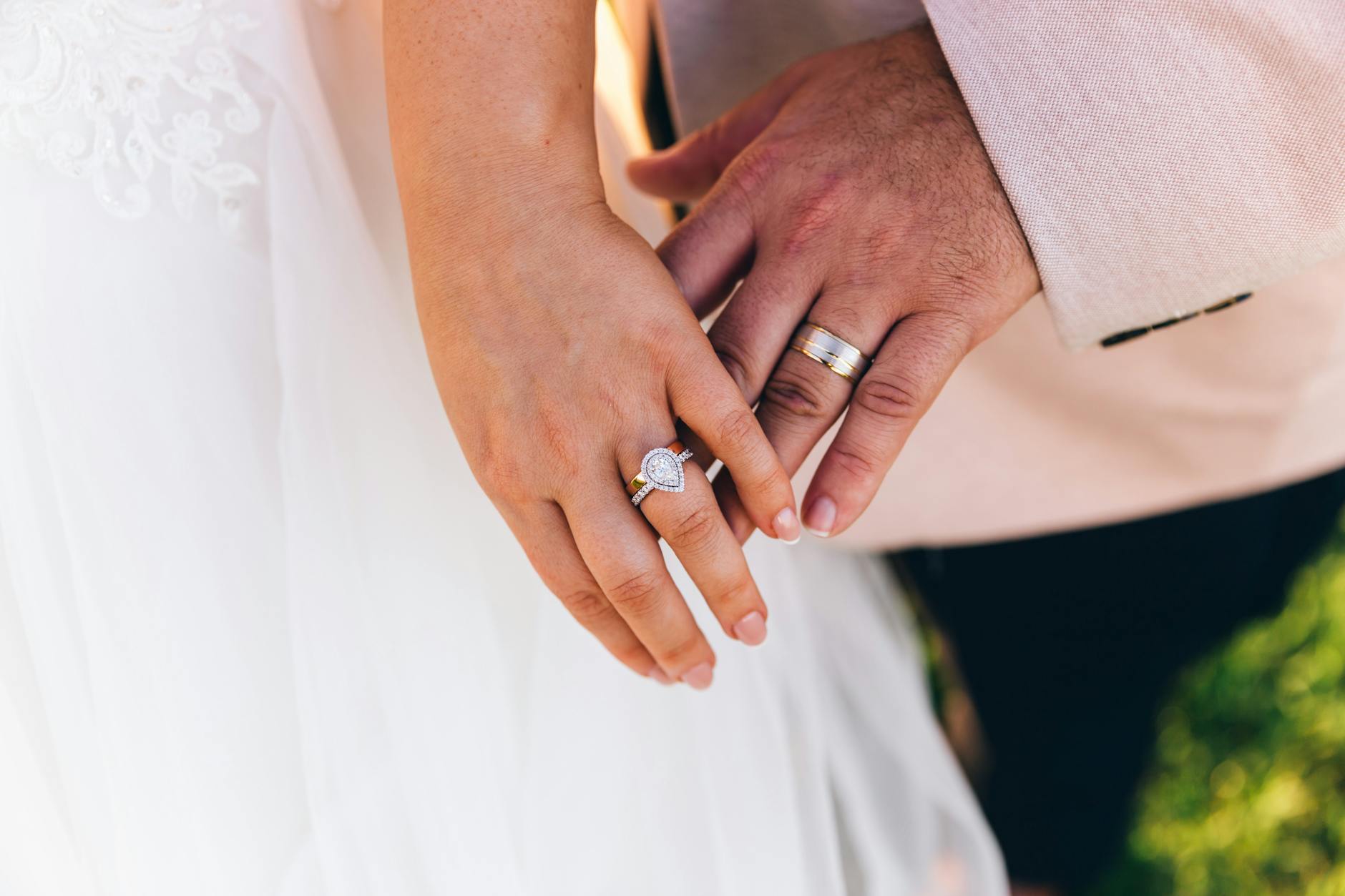
A ring of small pavé-set diamonds encircles the centre stone, making it appear larger and adding sparkle.
Very popular in India in 2024–2026, particularly with cushion and oval centres.
The halo adds approximately 0.15–0.30 carat equivalent of visual size at a fraction of the centre stone cost.
Three-Stone (Trilogy)
A centre stone flanked by two smaller stones, representing past, present, and future. Deeply romantic symbolism.
Works beautifully with round + oval side stones or round + trapezoid cuts.
Bezel Setting
Metal wraps around the entire perimeter of the stone, protecting it fully. Excellent for active lifestyles — no prongs to catch on fabric or scratch.
The setting slightly reduces light entry but offers superior protection, making it ideal for square or princess cuts.
Pavé and Channel Setting (For Band Detail)
Small diamonds set closely together along the band add sparkle without increasing the centre stone cost.
Pavé (tiny beads of metal hold each stone) looks like a continuous glittering surface.
Channel setting embeds stones flush between two rails — very secure, great for active wearers.
Step 7: Always Demand Certification
Never buy a diamond without a certificate from a recognised laboratory. In India, the most credible certificates for consumer purchases are:
- GIA (Gemological Institute of America): The global gold standard. Non-negotiable for high-value purchases. GIA certifies natural diamonds and, increasingly, lab-grown diamonds.
- IGI (International Gemological Institute): Well-respected, particularly for lab-grown diamonds and mid-range purchases. IGI-certified diamonds are widely available in India at competitive prices.
- HRD Antwerp: Belgian laboratory, highly respected for natural diamonds above 0.5 carat.
Avoid: SGL, IGL (Indian Gemological Laboratory), and in-house store certificates. These are either inconsistent or directly conflicted in their grading.
A stone graded G/VS2 by SGL might be H/SI2 by GIA — representing a real price and quality difference.
Always verify that the laser-inscribed certificate number on the stone's girdle matches the number on the paper/digital certificate.
Ask to see this verification under a loupe before purchase.
Step 8: Consider Lab-Grown Diamonds
Lab-grown diamonds are real diamonds — chemically, optically, and physically identical to mined stones.
They're grown in controlled environments using HPHT (High Pressure High Temperature) or CVD (Chemical Vapor Deposition) processes.
They carry GIA and IGI certifications just like natural diamonds.
The price difference is striking: a GIA-certified 1 carat G/VS2 natural diamond may retail for ₹2,50,000–₹3,50,000 in India in 2026.
The equivalent lab-grown stone costs ₹40,000–₹70,000. That's the same visual result for 75–85% less money.
The trade-off: lab-grown diamonds have depreciated rapidly in resale markets as production scales up. If investment value matters to you, choose natural.
If you want maximum visual impact for your budget, lab-grown is a rational choice that more Indian couples are making in 2026.
Step 9: Find the Right Jeweller
The jeweller matters as much as the ring. Look for:
- BIS-registered store — verifiable on the BIS portal or the BIS Care app
- Transparent pricing — itemised bill separating gold weight, stone weight, making charges, and GST
- Lifetime buyback/exchange policy — ask for this in writing
- Return policy — minimum 7 days for manufacturing defects
- Willingness to let you verify certificates and hallmarks
Use JewellersinCity to find verified jewellers in your city who stock certified diamond rings.
Filter by category, read reviews from other buyers, and compare gold rates before you visit.
Step 10: Getting the Size Right
Ring sizing is easily overlooked until it's wrong.
Ring sizes in India are typically measured on a numeric scale (ring size 12–22 is common for women, 16–26 for men on some Indian scales, or UK/US letter/number scales depending on the jeweller).
Ask the jeweller which scale they use.
Tips for surprising your partner:
- Borrow one of their rings (from the correct finger, right or left hand as relevant) and trace it on paper for the jeweller
- Note that fingers are slightly larger in the evening due to warmth and activity — size to evening measurement
- Most jewellers offer one free resizing within a certain period — ask before purchasing
Quick Reference: Engagement Ring Decision Checklist
- ☐ Budget confirmed (including GST, making charges, certificate fees)
- ☐ Metal type decided (18K gold, white gold, platinum)
- ☐ Diamond shape shortlisted
- ☐ 4C priorities clear (Cut > Colour > Clarity > Carat)
- ☐ GIA or IGI certification requested
- ☐ Hallmark verified via BIS Care app (for the metal)
- ☐ Certificate number matches laser inscription on stone
- ☐ Ring size confirmed
- ☐ Buyback/exchange policy obtained in writing
- ☐ Itemised receipt received
An engagement ring isn't just a purchase — it's a promise.
Take the time to understand what you're buying, ask every question you have, and work with a jeweller who earns your trust through transparency.
The right ring found through the right process will feel exactly as meaningful as it should.
More in Buying Guides
Share this article
Our editorial team comprises jewellery industry veterans, certified gemmologists, and passionate writers with decades of combined experience across India's gold, diamond, and gemstone markets. Every article is researched, fact-checked, and written to help Indian buyers make smarter, safer jewellery decisions.
Passionate about jewellery and love to write? We'd love to hear from you.
Join us as a writer →Ready to buy? Find verified jewellers near you
Browse 10,000+ BIS hallmark certified jewellers across India. Compare ratings, check today's gold rate, and book a visit.
Keep Reading