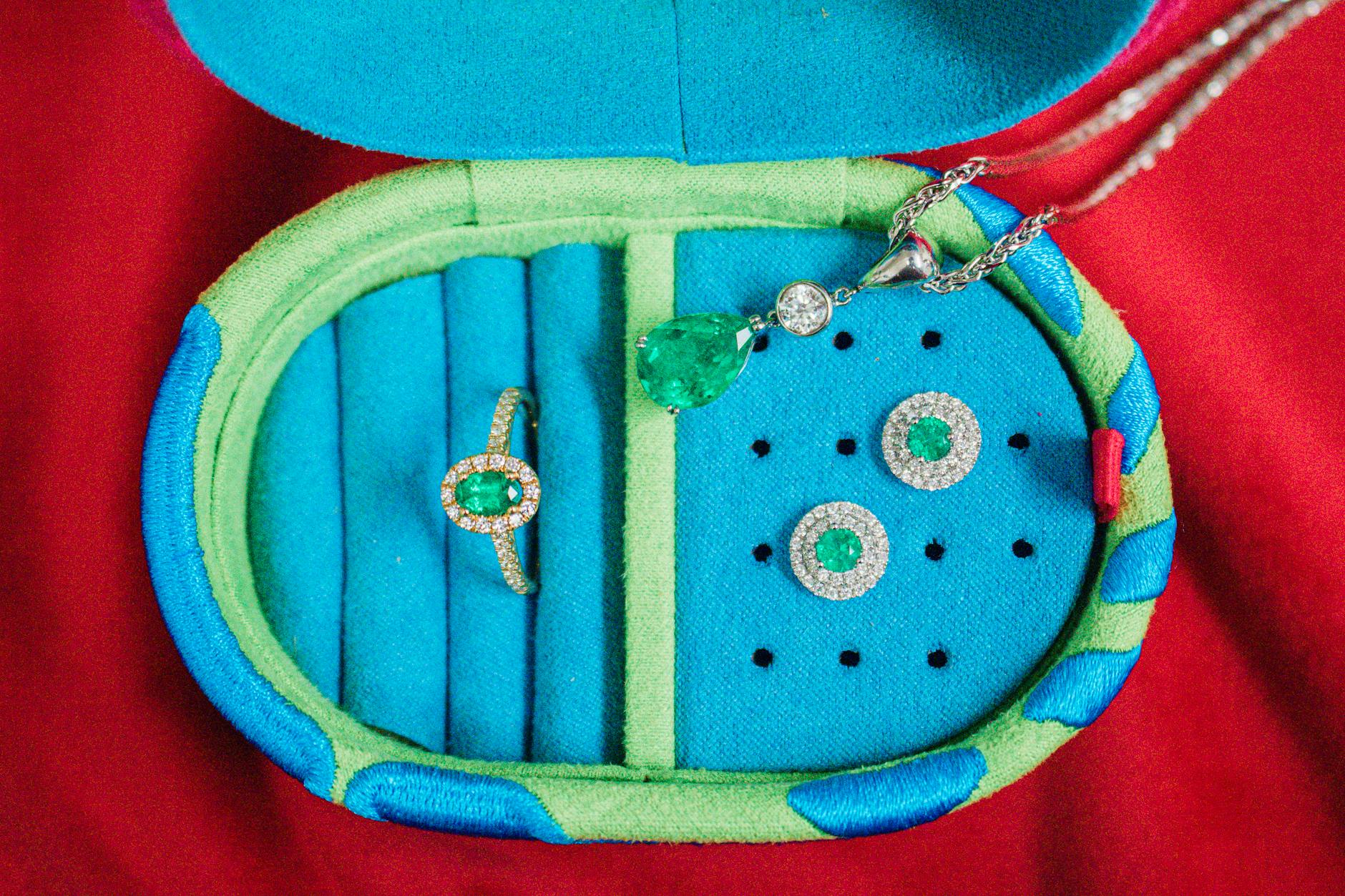
India is one of the world's largest emerald consuming nations — driven by the powerful combination of Vedic astrology (where Panna is prescribed for Mercury/Budh), a rich tradition of emerald-set Mughal and royal jewellery, and a contemporary fine jewellery market that has embraced Colombian and Zambian emeralds for modern bridal and fashion collections. Yet India is also one of the markets where emerald buyers face the highest risk of misrepresentation — from glass-filled stones marketed as natural Colombian gems to synthetic emeralds passed off as astrological-grade Panna. This complete buyer's guide covers where to buy, how much to pay, what every certificate should say, and how to protect yourself at every step from initial inquiry through long-term care.
Where to Buy Emeralds in India: A City-by-City Guide
India's emerald trade is geographically concentrated in specific markets with specific characteristics. Knowing where to go — and crucially, where to be cautious — is the foundation of a safe purchase.
Jaipur — India's and the World's Emerald Capital: No other city in the world processes as many emeralds as Jaipur. An estimated 80–85% of global emerald rough passes through Jaipur's cutting workshops on its journey from mine to finished market. The city's gem cutting tradition spans centuries, and its Johari Bazaar (specifically the lanes around Gopalji Ka Rasta, Indra Bazaar, and the lanes behind Tripolia Bazaar) hosts the world's most concentrated collection of emerald dealers. This concentration creates both opportunity and risk: the best prices on certified material are available in Jaipur, and some of the most sophisticated misrepresentations exist here too. GJEPC (Gem and Jewellery Export Promotion Council) member firms are your best starting point — the Council maintains a directory of registered members who have signed up to disclosure standards.
Mumbai's Zaveri Bazaar: Asia's largest jewellery market by transaction volume hosts several world-class emerald dealers, particularly concentrated in the upper-floor establishments accessed by appointment or referral in the Sheikh Memon Street / Dhanji Street area. For retail buyers, the street-facing small shops present higher risk of misrepresentation. The best approach: seek referrals from the Bombay Jewellers Association or the GIA Mumbai alumni network for certified material above ₹50,000.
Delhi's Dariba Kalan (Chandni Chowk area): Delhi's historic gem market has a strong astrological stone orientation — dealers here understand ratti weights, astrologer specifications, and the Jyotish buyer's requirements. Good source for certified natural Zambian commercial-grade Panna in the ₹20,000–60,000 range. Documentation and certification standards are variable — always verify certificates independently, as described below.
Hyderabad's Laad Bazaar: Laad Bazaar is famous for bangles but also has emerald dealers serving the traditional Hyderabadi jewellery tradition (which historically featured significant emerald ornamentation). For significant purchases, Hyderabad's certification access via GIA's presence in the city (check the GIA website for current authorised service centres) is useful. Quality verification is essential before finalising prices here.
Online platforms for certified emeralds: For buyers who prefer documented, verifiable transactions from their home city, certified emerald jewellery is available from CaratLane, BlueStone, and Hazoorilal. For loose certified stones specifically (important for astrological Panna rings where setting is done locally), platforms like GemPundit and Brahmagems provide per-stone IGI/GIA certificates. The critical requirement for any online emerald purchase: each stone must have its own unique certificate number that you can verify on the lab's website before committing to purchase. Generic "certified natural emerald" claims without per-stone verifiable certificates are not acceptable assurance for any purchase above ₹8,000.
Budget Planning: Astrological vs Jewellery vs Investment Emeralds
Your approach to budget should differ based on your purchasing purpose. These three categories have different quality requirements, certification needs, and price realities:
| Purchase Purpose | Min. Weight Needed | Certification Required | Realistic Budget (Stone Only) | Top Priority |
|---|---|---|---|---|
| Jyotish astrology | 3 ratti (2.73ct) minimum | IGI or GRS mandatory | ₹18,000–80,000 | Natural origin, minimal treatment |
| Fashion/everyday jewellery | Any | Preferred for >₹10,000 | ₹3,000–40,000 | Visual appeal, durability |
| Fine jewellery/gifting | 1+ ct per centre stone | IGI/GIA required | ₹30,000–3,00,000 | Colour, clarity, origin certificate |
| Investment / heirloom | 3+ ct, Colombian preferred | GRS or Gübelin essential | ₹2,00,000–1,00,00,000+ | Origin, no/minor treatment, GRS cert |
For astrological buyers who have received an astrologer's recommendation: the minimum effective investment for a genuine, certifiable Panna ring (3 ratti Zambian natural emerald with IGI certificate, mounted in 22K gold) is ₹25,000–55,000 total. Any offer below ₹18,000 total for a "certified natural Panna ring at 3+ ratti" should be treated with extreme scepticism — the certification, the stone's natural status, or the gold purity is almost certainly misrepresented. The logic is simple: a 3-ratti (2.73-carat) Zambian natural emerald alone in commercial quality costs ₹15,000–30,000 from reputable dealers; add 22K gold ring at ₹5,000–12,000, and the floor cost is clear.
⚠️ Watch Out: The Astrologer-Dealer Referral Network
A widespread fraud in India's astrological stone market involves astrologers receiving commissions (10–30% of sale price) from specific gem dealers to whom they refer clients. The client, motivated by astrological urgency and trusting the astrologer's overall guidance, is less likely to compare prices or verify the stone independently. The referred dealer may then sell an overpriced, misrepresented, or low-quality stone. Protect yourself: always purchase astrological stones independently from the astrologer's commercial referral. Your astrologer's role is interpretation of your horoscope, not commission-driven retail referral. A genuinely ethical astrologer will never object to you sourcing the stone independently from a certified dealer of your own choosing.
The Complete Pre-Purchase Certification Checklist
For any emerald purchase above ₹10,000, work through this full checklist before agreeing to any price or making any payment:
- Identify the certification lab and accept only the top tier: Accept GRS (Gem Research Swisslab), Gübelin, SSEF, GIA, or IGI certificates. In-house certificates from the dealer or their own "lab" carry zero third-party validity and should not influence your decision.
- Verify the certificate number in real time, right in front of the dealer: Every major lab provides an online certificate lookup. Open the appropriate website on your phone: gia.edu/report-check for GIA, igiworldwide.com for IGI, gemresearch.ch for GRS. Enter the certificate number shown on the document and confirm that (a) the number exists in their database, (b) the stone's description matches what you are being shown, and (c) the photo on the certificate (when provided) corresponds to the stone in front of you.
- Read the treatment disclosure line explicitly: Find the "enhancement" or "clarity treatment" section on the certificate. "No indications of clarity enhancement" = untreated or untestably minor treatment (premium category). "Minor" = F1 cedar oil (acceptable standard). "Moderate" = F2 heavy resin (significant discount warranted). "Significant" or "Extensive" = F3/glass fill (should trade at ₹500–2,000/carat maximum regardless of appearance).
- Confirm geographic origin determination: For astrological and investment purchases, origin must be explicitly stated: Colombia, Zambia, Brazil, India. If the certificate says "origin not determined" or has no origin field, the stone's geographic source is unknown — factor this into your valuation (unknown-origin stones trade at 20–40% below equivalent confirmed-origin stones).
- Check the certificate photo against the stone: GRS and GIA certificates typically include a photographic image of the stone. Compare the stone's shape, primary inclusion pattern, and cut proportions against the certificate image. They should correspond closely — if they look materially different, the certificate may belong to a different stone.
- For purchases above ₹50,000: Request to have the stone submitted for independent lab testing before finalising. Any dealer confident in their merchandise will allow a 24–48 hour hold while you submit the stone to IGI Jaipur or another accessible lab for confirmation testing. Refusal of this request is a significant red flag.
Detecting Glass-Filled Emeralds: Field Tests
The detailed detection methodology for glass-filled emeralds is covered in our companion article on Ruby Natural vs Glass-Filled — the same flash effect, gas bubble, and surface flow tests apply identically to glass-filled emeralds. Here are emerald-specific considerations and additional tests:
The unnaturally perfect eye-clean appearance: This is the most immediately suspicious sign for emeralds specifically. All natural emeralds in any commercial price range have visible inclusions — this is a near-universal rule of the species. An "eye-clean" emerald (no inclusions visible to the naked eye at arm's length) in the price range below ₹30,000 per carat is an immediate red flag. Genuine eye-clean natural emeralds are extraordinary rarities commanding premiums above ₹80,000 per carat for even modest quality. Any affordable emerald that appears perfectly transparent should be examined under magnification and tested with the flash effect before any purchase consideration.
The immersion test: Place the stone in a small glass of water or mineral oil. The contrast between natural corundum-density material and glass-filled areas often becomes more visible as the refractive index differences are less masked by air. Look for irregular optical zones within the stone that don't correspond to natural inclusion patterns.
Temperature testing (careful, not for set stones): Natural corundum and lead glass have different thermal conductivities. A briefly chilled stone will warm noticeably differently in glass-filled versus natural areas when tested with a thermal probe — but this requires specialist equipment. Not a practical field test, mentioned only for completeness.
Checking fracture planes: Glass-filled emeralds often show networks of fracture planes visible from the table facet. In natural emeralds, fractures that have been lightly oiled (F1) are present but subtle — visible under magnification as fine internal planes, not as visible relief changes. Heavily glass-filled material shows fracture networks as more prominent internal features, sometimes with the glass filling creating slight "glinting" along fracture planes under direct lighting.
Negotiating in the Emerald Market: Techniques and Realistic Expectations
The Jaipur and Indian emerald market is a negotiating market. First-offered prices for buyers perceived as tourists or uninformed retail buyers are routinely 40–70% above the actual transaction price. Here is how to negotiate intelligently:
Establish the price floor through research before entering any shop. Use the price guide tables in this article and our companion Emerald Price Guide article to establish price ranges for the quality category you seek. Cross-reference with recent certified stone auction results on Sotheby's, Bonhams, or Rapaport for high-value stones. Walk in knowing what ₹X should buy you in certified, documented material.
Signalling knowledge is the single most effective negotiating tool. Asking intelligent, specific questions — "What is the GRS treatment rating on this stone?", "Is this Colombian or Zambian?", "May I verify the certificate number right now?", "What is the tested carat weight to 0.01 carat precision?" — immediately signals that you are an informed buyer who will not accept misrepresentation. Dealers adjust their approach and often their pricing when they recognise a knowledgeable buyer.
Use multi-dealer comparison explicitly. Visit 3–5 dealers for comparable quality categories before buying. Telling each dealer "I am comparing several options before deciding" is expected and appropriate. The competition between dealers drives prices toward fair market value. In Jaipur's concentrated gem market, dealers know that competing dealers are a short walk away.
Never negotiate on certification. If a dealer offers "I can give you a better price if you don't need the certificate," their implicit message is that the stone will not survive independent certification at the quality they are representing. This is not a negotiating position to engage with — it is a disqualifying statement. The certification cost (₹2,000–6,000) is trivial relative to the purchase and your protection against misrepresentation.
Use the "walk away" technique with confidence. In Jaipur's dealer culture, a buyer who says "thank you, let me think about it" and actually starts to leave will frequently be called back with a revised offer within 2–5 minutes. This works because losing a confirmed sale is worse than reducing margin slightly. Do not deploy this cynically — use it when you have genuinely found a fair price elsewhere and are giving the current dealer a final opportunity to match it.
Panna for Jyotish: Setting, Wearing, and Ritual Requirements
For buyers acquiring emerald specifically for Vedic astrological purposes, the following practical guidance covers the complete process from stone selection through activation:
Stone requirements summary: Natural emerald (not synthetic, not glass-filled), preferably Colombian or Zambian origin, minimum 3 ratti (2.73 carats), minor or no treatment preferred, certified by IGI, GIA, or GRS. Vivid green colour is traditionally preferred but saturation requirements vary by tradition — some astrologers specify "medium green with good transparency" rather than the finest jewellery-grade colour.
Setting: The traditional prescription for Panna (Mercury/Budh) is yellow gold — 22K is the standard. The stone should be in an open-back setting that allows the stone to touch the wearer's skin (the contact point is considered important in Jyotish). Closed-back settings that prevent skin contact are avoided. Simple bezel or four-prong open-back settings in 22K gold are the traditional choice. Panchdhatu (five-metal alloy) settings are a less expensive alternative specified in some regional traditions.
Finger: Little finger (Mercury's finger) of the right hand is standard across most North Indian Jyotish traditions. Some South Indian traditions specify the middle finger. Follow your specific astrologer's guidance on this.
Prana Pratishtha (energetic activation): Most Jyotish traditions specify a ritual activation process before first wearing — typically performed on a Wednesday morning (Mercury's day) during the Shukla Paksha (waxing moon phase), involving washing the ring with Panchagavya (five sacred products) or Gangajal (Ganges water), then wearing with specific mantras. Your astrologer will specify the exact requirements for your tradition.
Astrological vs jewellery grade — when quality matters: The highest-quality astrological Panna is believed by some traditions to be more effective — specifically, vivid colour, high transparency, and Colombian origin. Other traditions specify "natural and untreated" as the only requirements, with quality otherwise not specified. If your astrologer has specified quality requirements beyond natural origin, follow those specifications. If not, a commercial-quality certified natural emerald is entirely appropriate for astrological purposes.
Famous Indian Emerald Jewellery Traditions
Understanding India's emerald jewellery heritage gives context to the designs you encounter and helps you assess authenticity and fair pricing for different style categories.
Mughal emerald jewellery: The Mughals were perhaps history's greatest patrons of emerald jewellery — their preference for large, flat-cut (table-cut) emeralds in elaborate gold settings, combined with Persian enamel (meenakari) work, created a signature aesthetic that defined Indian jewellery for centuries. Mughal-era pieces — particularly those with carved Persian inscriptions or floral motifs on the stone itself — are among the most valuable antique objects in the world. The "La Peregrina" emerald, the "Bahia" emerald, and the astonishing emerald pieces at auction houses regularly exceed USD 1 million per piece for historically significant Mughal items. Contemporary "Mughal revival" jewellery draws on this aesthetic at widely varying quality levels.
Jadau (Kundan setting with emeralds): Jadau is a cold-setting technique from Rajasthan (primarily Jaipur) where uncut, table-cut, or cabochon emeralds are embedded in 22K gold foil (called "pitha" gold) without any heat. The setting creates a distinctive texture where the gold seems to wrap organically around the stones. Jadau emerald bridal sets — necklace, earrings, maang tikka, and bangles — represent some of India's most valuable traditional jewellery, with complete fine bridal sets reaching ₹30 lakh–2 crore depending on emerald quality and gold weight.
Temple jewellery: South Indian temple-style jewellery (Kerala, Tamil Nadu) frequently features cabochon emeralds — both natural and synthetic — in elaborate gold settings depicting deities, lotus motifs, and peacock designs. In this tradition, the gold and gold work carries the primary aesthetic value; the emeralds are colour elements in a larger composition. Synthetic and treated emeralds are frequently used (and entirely acceptable) in temple jewellery, where vivid colour rather than natural origin is the priority.
Contemporary fine jewellery: India's emerging fine jewellery designers — Nirav Modi (before his legal troubles), Viren Bhagat, Sabyasachi Jewellery — have built international reputations working with certified Colombian and Zambian emeralds in settings that bridge Mughal heritage and contemporary international aesthetics. These pieces are sold with full certification and provenance documentation and represent India's entry point into the international art jewellery market.
Caring for Emerald Jewellery: A Detailed Guide
Emeralds require the most specific care of any common jewellery gemstone. The fracture-filling treatments that most emeralds carry are reversible — improper care can strip the filler and transform a clear stone into a visibly included one with a single cleaning mishap.
Daily wear habits: Remove emerald jewellery before: washing hands with soap (mild acids over time); doing dishes (detergent); applying skincare, sunscreen, or hairspray (apply products first, then put on jewellery); exercising (sweat is mildly acidic, impact risk); gardening or any outdoor work; swimming (chlorine and salt both aggressive to fillers).
Weekly cleaning: Lukewarm (not hot) water with one drop of mild, pH-neutral dish soap. Dip the piece briefly (5–10 seconds maximum), gently wipe accessible surfaces with a soft cloth or very soft brush, rinse immediately under running lukewarm water, pat dry with a lint-free cloth, air dry completely before storing.
Professional cleaning: Advise your jeweller that the piece contains emerald before any professional cleaning. Ultrasonic cleaning is absolutely prohibited — the vibration expels oil/resin from fractures. Steam cleaning is prohibited — thermal shock can cause fractures. Professional cleaning of emerald jewellery should be done only by hand with appropriate solutions at room temperature.
Re-oiling service: Over 10–20 years of regular wear, cedar oil or resin fillers gradually migrate out of fractures through normal wear and washing. A professional re-oiling service (available at reputable gem labs including IGI Jaipur, Deval Gems in Mumbai, and other specialist gem services) refreshes the filler and can noticeably restore a clouded, dulled emerald's original clarity. Cost: ₹800–3,000 per stone. This is routine, legitimate maintenance — it does not compromise the stone's natural status or certification validity, and the restored clarity can be dramatic.
Storage: Store emerald jewellery in individual soft pouches (velvet or microfibre) and keep separate from diamonds, sapphires, and rubies (all harder than emerald — they can scratch emerald facets in contact). Avoid storing in airtight containers for extended periods — some air circulation helps prevent the organic components of oil fillers from degrading.
Frequently Asked Questions
What is the minimum genuine budget for a certified astrological Panna ring?
For a 3-ratti (2.73 carat) natural Zambian emerald with IGI India certificate ("natural emerald, minor treatment" or "no enhancement") in commercial quality (medium-green, moderate inclusions) mounted in a 22K gold open-back ring: approximately ₹25,000–55,000 total. Colombian origin at equivalent quality adds 30–60% premium. Any "certified natural Panna ring, 3+ ratti" offered below ₹18,000 total is almost certainly misrepresented in one or more critical aspects.
How do I know if an emerald is genuine natural or synthetic?
Natural emeralds always show inclusions under 10x magnification. Synthetic emeralds (hydrothermal or flux-grown) appear dramatically cleaner and may show characteristic chevron or wispy veil inclusions specific to their growth process. However, reliable identification requires professional gemmological equipment (spectroscope, EDXRF, UV-Vis spectrophotometry). The only consumer-accessible reliable method is independent certification from IGI, GIA, or GRS — which explicitly states "natural emerald" (versus "synthetic emerald") on the certificate. No visual inspection, however skilled, can definitively separate all natural from all synthetic emeralds without lab analysis.
What do weight units "ratti" and "carat" mean and how do I convert?
1 ratti = 0.91 carats (traditional Indian measurement unit). Conversion: ratti × 0.91 = carats. Carats × 1.099 = ratti (approximate). Certification labs always work in carats — when your astrologer specifies "5 ratti Panna," you need a stone of approximately 4.55 carats for certification purposes. Some dealers use ratti and carat loosely or interchangeably to confuse comparison — always ask for the weight in carats explicitly and verify it on a calibrated scale. Weight on the certificate is authoritative for carat claims.
Is Zambian emerald as effective as Colombian for astrological use?
Most contemporary Jyotish practitioners accept Zambian natural emerald as astrologically effective — the determining factor in traditional texts is the stone's natural origin and purity, not its geographic source. The Colombian origin premium is primarily a gemmological and investment value driver, not an astrologically established superiority. Zambian natural certified emerald at 40–60% of Colombian prices for comparable quality is an excellent choice for astrological use while maintaining full natural certification. Discuss with your astrologer if they have a specific origin preference — most will accept Zambian certified natural emerald.
Can I resell or exchange emeralds in India?
Certified emeralds (GRS, GIA, IGI) are resaleable through gem dealers and auction platforms. GRS-certified fine Colombian emeralds have shown strong appreciation in the 2015–2024 period. Commercial-grade certified Zambian emeralds typically resell at 55–75% of original purchase price through reputable dealers. Uncertified and glass-filled stones resell at 10–30% of original purchase price at best. Certification is not just purchase protection — it is the primary driver of any resale value a coloured stone has. Never buy a significant emerald without certification if resale value matters to you.
What questions should I ask an emerald dealer before purchasing?
Ask: (1) What is the geographic origin of this stone, and what laboratory confirms it? (2) What treatment has this stone received — none, minor, moderate, or significant? (3) May I verify the certificate number online right now? (4) What is the exact carat weight to 0.01 carats? (5) Can you hold this stone for 24 hours while I send it for independent IGI testing before committing to purchase? (6) What is your return policy if independent testing reveals misrepresentation? A reputable dealer will answer all of these questions promptly, confidently, and without irritation. Evasion or resistance on any of these points is itself valuable information about whether you should proceed with this particular seller.
More in Buying Guides
Share this article
Our editorial team comprises jewellery industry veterans, certified gemmologists, and passionate writers with decades of combined experience across India's gold, diamond, and gemstone markets. Every article is researched, fact-checked, and written to help Indian buyers make smarter, safer jewellery decisions.
Passionate about jewellery and love to write? We'd love to hear from you.
Join us as a writer →Ready to buy? Find verified jewellers near you
Browse 10,000+ BIS hallmark certified jewellers across India. Compare ratings, check today's gold rate, and book a visit.
Keep Reading