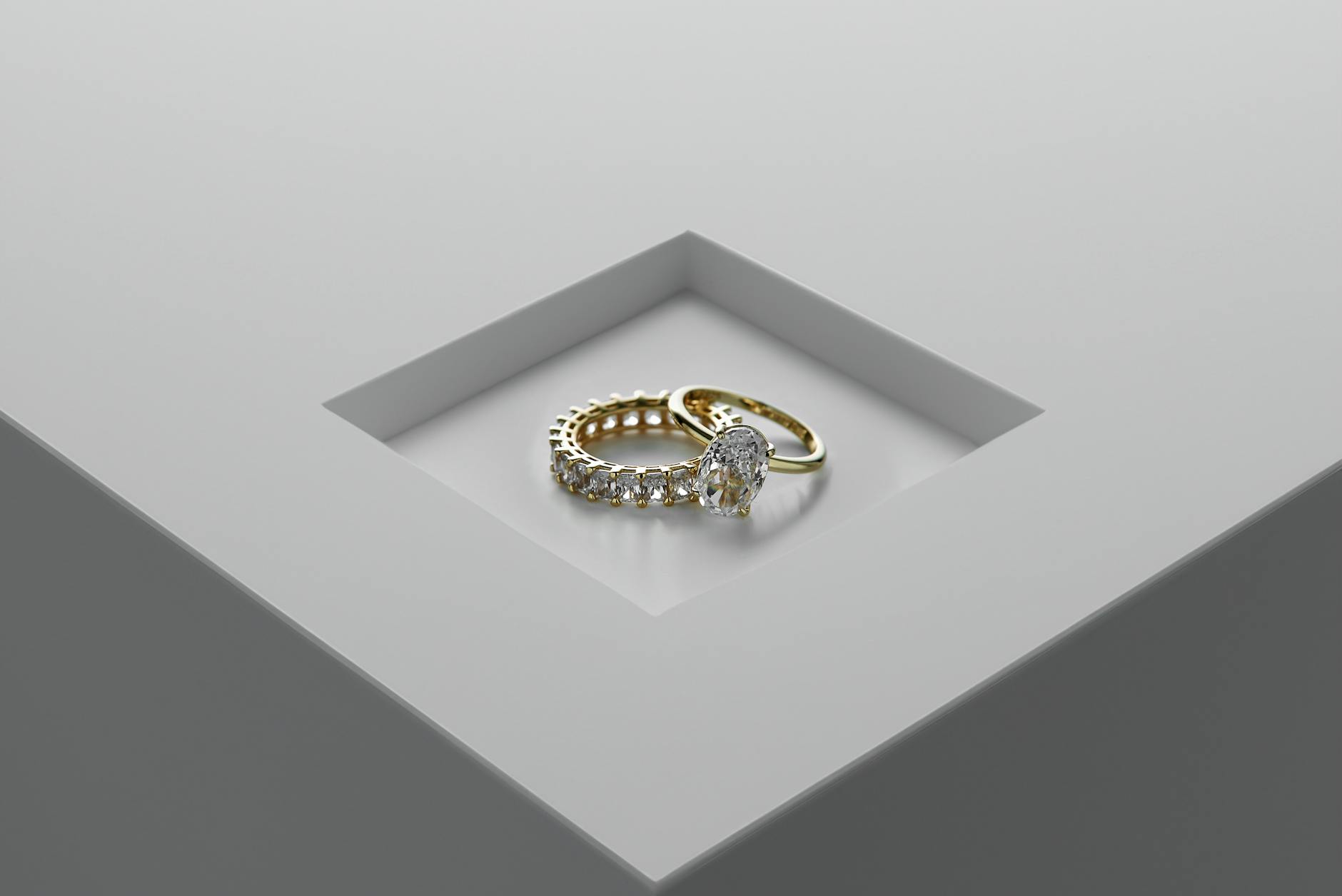
When you buy studded jewellery — whether a diamond ring, an emerald necklace, or a ruby bangle — you are paying for gold by the gram. But the gemstones set into that gold also add weight to the piece. How a jeweller accounts for (or ignores) that stone weight has a direct impact on how much you actually pay for your gold. This guide explains everything you need to know about stone weight deduction and how to verify you are getting a fair deal.
Why Stone Weight Matters — A Concrete Example
Suppose you are buying a 22K gold diamond necklace. The piece weighs 22 grams on the scale (gross weight). If the current 22K gold rate is ₹7,000 per gram, and the jeweller charges you for the full 22 grams at the gold rate, you would pay ₹1,54,000 in metal value alone.
But suppose the diamonds set in that necklace weigh 2.5 grams in total. The actual gold content (net gold weight) is 22 – 2.5 = 19.5 grams. You should be charged for 19.5 grams of gold (₹1,36,500) plus the value of the diamonds (priced separately based on the diamond's quality). If the jeweller ignores the stone weight deduction and charges the gold rate on all 22 grams, you are overpaying by ₹17,500 in gold charges alone — for stones that add no gold value to your purchase.
⚠️ The Stone Weight Trap
The most common overcharging practice: a jeweller quotes a "per gram rate" on the full gross weight of a heavily studded necklace without mentioning any stone deduction. At current gold prices, this can mean paying ₹15,000–₹40,000 more than you should on a single piece. Always ask: "What is the net gold weight, and what stone deduction is being applied?" before agreeing to any price.
The Three Methods of Stone Weight Deduction
Method 1: Actual Weighing of Removed Stones
The most accurate method. The jeweller physically removes the stones from the setting, weighs them on a precision scale, and deducts that weight from the gross weight to arrive at the net gold weight. This is practical for large stones (solitaire diamonds, large rubies, emeralds, sapphires) where stones have significant individual weight.
When used: High-value solitaire diamond jewellery, precious stone jewellery with a small number of large stones.
Advantage: Most accurate for the consumer. No estimation involved.
Disadvantage: Cannot be done at point of sale for already-set jewellery without risking stone damage.
Method 2: Standard Deduction Tables
For pavé settings, melee diamonds, and mass-produced studded jewellery, removing individual stones is impractical. The jewellery industry (and large branded chains like Tanishq, Malabar, Kalyan) uses standardised stone weight deduction percentages or flat deductions based on the type and coverage of stones. These tables are derived from the average stone weight relative to total piece weight for each category.
When used: Pavé-set diamond jewellery, mass-market studded jewellery, online jewellery platforms.
Advantage: Consistent, auditable, and standard across the industry for comparable pieces.
Disadvantage: If the table deduction is too low for the specific piece, the consumer is still overcharged. Ask for the table percentages in writing.
Method 3: Jeweller Estimation
Some smaller jewellers estimate stone weight by visual inspection or general experience — "this looks like about 1.5 grams of stones." This is the least accurate and most consumer-unfriendly method. There is no audit trail, and the consumer has no way to verify the estimate on the spot.
Red flag: If a jeweller cannot explain how stone weight was determined, request to see a deduction calculation on paper or ask for the piece to be tested at a BIS assaying centre before purchase.
💡 Pro Tip
Large branded jewellery chains (Tanishq, Malabar Gold, Kalyan Jewellers) publish their stone weight deduction policies and will provide them on request. These chains use audited standard deduction tables. If you are buying from a smaller unbranded jeweller, always ask for the deduction method and calculation to be shown to you before agreeing to the price. Reputable jewellers will not hesitate.
Fair Deduction Percentages by Stone Type
| Stone Type | Density (g/cm³) | Typical Deduction Range | Method Usually Used | Notes |
|---|---|---|---|---|
| Diamond (solitaire) | 3.5 | Actual cert weight | Certificate | GIA/IGI cert states exact carat weight; 1 carat = 0.2 grams |
| Diamond (melee/pavé) | 3.5 | 5–15% of gross weight | Table / estimation | Higher coverage = higher % deduction |
| Emerald | 2.7 | Actual weighing | Actual | Lighter than gold; deduction often 10–25% for emerald-heavy pieces |
| Ruby / Sapphire / Corundum | 3.9–4.1 | Actual weighing | Actual | Significant weight in larger stones; use cert or actual weighing |
| Cubic Zirconia (CZ) | 5.6–6.0 | 10–20% of gross weight | Table | Denser than most gemstones but lighter than gold; very common in Indian fashion jewellery |
| Pearl | 2.6–2.8 | 15–30% of gross weight (pearl-heavy) | Actual | Very light; in pearl-dominant necklaces, pearl weight can be 40–60% of gross weight |
| Polki / Uncut Diamond | 3.5 | 5–20% (estimate common) | Estimation / table | Flat, irregular shape makes actual weighing difficult; demand written estimate |
| Enamel / Meenakari | Variable | Usually none | Varies | Enamel weight often minimal and not deducted; ask if heavily enamelled |
The Legal Position in India
There is no specific BIS standard or Central Government regulation that mandates a particular stone weight deduction method for jewellery sales. However, GST rules for jewellery billing require that the invoice separately disclose: gross weight, stone weight (if studded), and net gold/silver weight. This disclosure requirement is the consumer's strongest legal protection.
If a jeweller refuses to disclose the net gold weight on the bill, they are in violation of GST invoicing norms. You can report non-compliant billing to the GST helpdesk (1800-103-4786) and file a consumer complaint for unfair trade practice.
Consumer forum cases on stone weight disputes: Several DCDRC rulings have held in favour of consumers who could show they were charged gold-rate prices on gross weight inclusive of stones. In a 2021 case (Delhi DCDRC), a consumer was awarded a partial refund plus ₹15,000 compensation when the jeweller could not produce documentation for the stone weight deduction applied to a ₹2 lakh necklace.
What Online Jewellery Platforms Do
Reputable online platforms have established transparent disclosure practices:
- CaratLane (Tata): Each product page shows total weight, metal weight, and diamond/stone weight separately. Diamond weight is shown in carats with certified values.
- BlueStone: Displays gross weight, diamond weight (certified), and gold weight as separate fields. Stone and metal pricing are shown as separate line items.
- Tanishq: Uses standardised deduction tables that are published. Net gold weight is shown on the bill.
Use these platforms as a price reference even if you plan to buy from a local jeweller — you can quickly verify whether the stone deduction you are being offered is in the normal range for the stone type and coverage.
How to Verify Stone Weight — Practical Steps
For large stones (solitaire diamonds, large emeralds or rubies):
- Request the stone certificate (GIA, IGI, or any recognised lab). The certificate will state the exact carat weight. Convert: 1 carat = 0.2 grams.
- Ask the jeweller to weigh the piece in front of you and subtract the certified stone weight to arrive at the net gold weight.
- Confirm that the bill reflects this calculated net gold weight as the basis for the metal price.
For melee/pavé stones:
- Ask: "What percentage stone deduction are you applying, and how was this determined?"
- Ask for the deduction to be documented on the bill as a line item (e.g., "Stone deduction: 12% = 1.8g from gross 15g, net gold 13.2g").
- Compare the percentage with the ranges in the table above. If the quoted deduction is significantly below the range for the stone type and coverage, request documentation or a second opinion from another jeweller.
The Itemised Bill — What You Must Demand
A complete, consumer-protective studded jewellery bill should include every line below:
- Item description (e.g., "22K gold ruby necklace, traditional design")
- Gross weight: 24 grams
- Stone details: 6 rubies, actual weight 1.8 grams (or: "standard table deduction 8% = 1.92g")
- Net gold weight: 22.08 grams
- Gold purity: 22K (916) — BIS hallmarked
- HUID number: XXXXXX
- Gold rate applied: ₹6,950 per gram
- Metal value: 22.08 × ₹6,950 = ₹1,53,456
- Stone value: ₹18,000 (or: "included in making charges" if negligible)
- Making charges: ₹14,000
- Subtotal: ₹1,85,456
- GST @ 3%: ₹5,563
- Total: ₹1,91,019
Red Flags to Watch For
- Bill shows only gross weight and a total price with no stone deduction mentioned
- Jeweller says "we don't do stone deduction" for heavily studded pieces
- Deduction percentage offered is far below the typical range (e.g., 2% deduction for a pavé-covered bracelet)
- Verbal assurance but refusal to put the deduction calculation on the invoice
- Stone certificate not available for high-value solitaires ("we are a trusted shop, you don't need a cert")
Frequently Asked Questions
Can a jeweller legally refuse to deduct stone weight?
There is no law specifically mandating stone weight deduction as a calculation method. However, GST invoicing rules require the bill to disclose net gold weight separately. If no deduction is made and you are charged the gold rate on the gross weight (which includes stones), the net gold weight and gross weight on the bill would be identical — which is factually incorrect for any studded piece. This can be challenged as misleading billing under the Consumer Protection Act 2019.
What if the stone falls out after purchase — do I get the gold equivalent back?
No — the stone is a separate item from the gold. If the setting was defective and the stone fell out within a reasonable period (covered by the jeweller's warranty), the jeweller is responsible for resetting or replacing the stone at no charge. The gold weight in the setting prong where the stone sat remains part of the piece — it does not become "extra gold" just because the stone is gone. This is why a detailed bill listing stone weights and values separately is important from day one.
Is the stone weight on the hallmark certificate accurate?
BIS hallmark certificates record the gross weight of the jewellery piece as submitted for assaying — they do not independently verify stone weight deductions. The net gold weight on a BIS certificate reflects what the assaying centre determined, which may or may not account for stones depending on the piece submitted. For your own protection, always verify the net gold weight on the bill rather than relying on the hallmark certificate alone for studded pieces.
More in Education
Share this article
Our editorial team comprises jewellery industry veterans, certified gemmologists, and passionate writers with decades of combined experience across India's gold, diamond, and gemstone markets. Every article is researched, fact-checked, and written to help Indian buyers make smarter, safer jewellery decisions.
Passionate about jewellery and love to write? We'd love to hear from you.
Join us as a writer →Ready to buy? Find verified jewellers near you
Browse 10,000+ BIS hallmark certified jewellers across India. Compare ratings, check today's gold rate, and book a visit.
Keep Reading