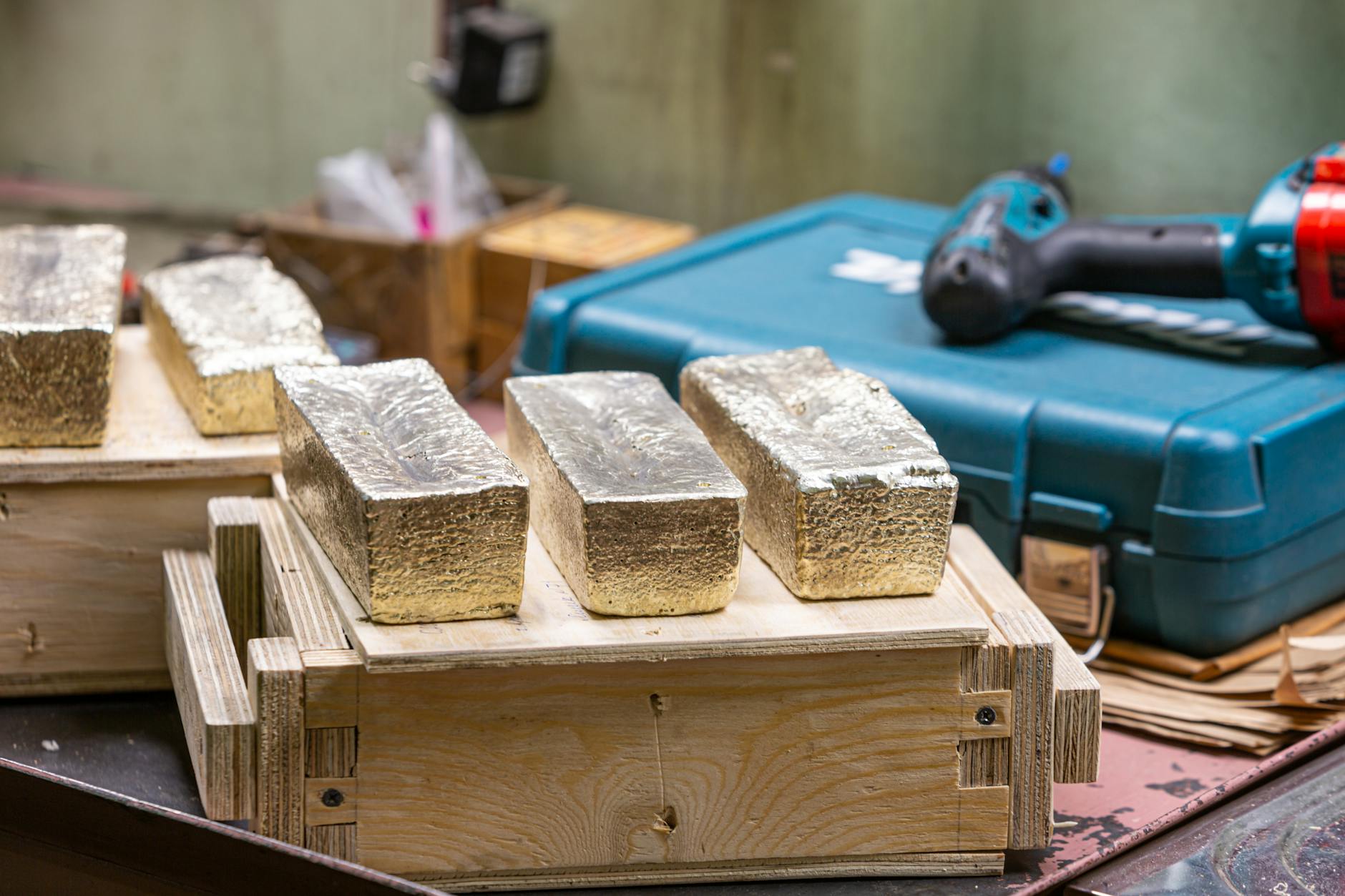
Sovereign Gold Bonds (SGBs) are the most financially intelligent way to hold gold in India if you do not need to wear it or touch it.
They are issued by the Reserve Bank of India on behalf of the Government of India, which means there is no counterparty risk, no storage cost, and no theft risk.
They pay you 2.5% annual interest on top of gold price appreciation. And if you hold them to maturity — eight years — capital gains at redemption are completely tax-free.
No other gold investment vehicle in India matches this combination of safety, income, and tax efficiency.
What Exactly Are Sovereign Gold Bonds?
SGBs are government securities denominated in grams of gold.
When you buy one unit of an SGB, you are buying the right to receive the market value of 1 gram of gold on the date of redemption — plus 2.5% annual interest paid on the initial issue price throughout the tenure.
Key structural features:
- Issuer: Reserve Bank of India (RBI) on behalf of the Government of India. Zero default risk — they are backed by the sovereign.
- Tenure: 8 years from the date of issue.
- Denomination: 1 unit = 1 gram of gold. Minimum purchase: 1 gram. Maximum per person per financial year: 4 kg (for individuals and HUFs); 20 kg for trusts and institutions.
- Interest: 2.5% per annum on the initial issue price (not on the current market price), credited to your linked bank account semi-annually.
- Pricing: Determined by the RBI based on the simple average of IBJA (India Bullion and Jewellers Association) closing prices of 999-purity gold for the last three business days before the subscription period closes.
- Form: Held in demat account or as a paper certificate (demat is strongly recommended for easier management and stock exchange trading).
How to Buy Sovereign Gold Bonds
SGBs are issued in tranches (batches), announced periodically by the RBI. Historically there have been 4–6 tranches per year, though the government has issued fewer tranches in recent years as the programme matures.
You can buy during the subscription window (typically 5 working days) through:
- Scheduled commercial banks — SBI, HDFC, ICICI, Axis, Kotak, and most other banks accept SGB applications through internet banking or branch visits.
- Stock brokers (SEBI-registered) — Zerodha, Groww, Upstox, Angel One, and other registered brokers allow online SGB purchases. Amount deducted from your trading account; bonds credited to your demat account.
- Post offices — India Post accepts applications at designated head post offices and sub-post offices. Suitable for investors who prefer offline transactions.
- NSE/BSE Direct platforms — Available through the exchanges' direct investment platforms.
Online buyers (banks or brokers) receive a ₹50 per gram discount on the issue price — a small but meaningful benefit for large purchases.
If you buy SGBs online through a bank's internet banking portal or through a registered broker, you receive the issue price minus ₹50 per gram. On a 10-gram purchase at ₹7,000/gram, that is ₹500 saved immediately — equivalent to one month's additional interest. Always buy online where possible.
Interest: How and When You Get Paid
The 2.5% annual interest is calculated on the initial issue price at which you purchased, not the current gold market price.
This has an important implication: if gold prices rise significantly after you purchase, your interest in absolute rupee terms stays the same (it was fixed at issue), but your capital appreciation grows.
If gold prices fall, you still receive the same interest income — providing a cushion against short-term price drops.
Interest is credited directly to your registered bank account every six months.
The interest is taxable as income — it falls under "Income from Other Sources" and is added to your total taxable income in the year it is received.
TDS is not deducted on SGB interest, but you must declare it yourself in your ITR.
Early Exit Options
SGBs have an 8-year tenure, but you are not completely locked in for the full period:
- RBI buyback windows (after 5 years): The RBI offers periodic buyback windows starting from the 5th anniversary of the issue date. In these windows, you can redeem your SGBs at prevailing gold prices. Capital gains on this premature redemption are also tax-free for individuals — the same benefit as maturity redemption.
- Secondary market (BSE/NSE): SGBs from previous tranches are listed and traded on the BSE and NSE. You can sell your holdings through your broker at any time during trading hours — no need to wait for the RBI window. However, secondary market prices often trade at a discount to the gold NAV (net asset value), particularly for older tranches with low trading volumes. Liquidity is thin; you may not find a buyer immediately or at the price you want.
SGB units trading on BSE/NSE frequently quote 3–8% below the equivalent gold value (NAV). If you need to exit early via the stock exchange, you may receive less than the gold price for your bonds. Factor this into your decision — SGBs are optimally a hold-to-maturity or hold-to-5-year-RBI-window investment.
Tax Treatment: The Key Advantage
The tax treatment is what separates SGBs from every other gold investment vehicle in India:
- Interest income: Taxable as income at your marginal slab rate. There is no getting around this — 2.5% interest is income.
- Capital gains at RBI maturity (8 years): Completely exempt from capital gains tax for individual investors. If you bought at ₹5,000/gram and gold is at ₹9,000/gram at maturity, that ₹4,000/gram gain is entirely tax-free.
- Capital gains at RBI premature redemption (after 5 years): Also tax-free for individuals — the same exemption applies to the RBI buyback window exits.
- Capital gains via secondary market sale: Taxable. If you sell on BSE/NSE before maturity, capital gains are taxed as long-term capital gains (LTCG) at 12.5% if held over 3 years, or as short-term capital gains (STCG) at your slab rate if held under 3 years. This is the only scenario where you lose the tax-free status.
Comparing SGBs to Other Gold Investment Forms
| Feature | Sovereign Gold Bond | Gold ETF | Digital Gold | Physical Gold |
|---|---|---|---|---|
| Issuer / Backing | Govt. of India / RBI | AMC (SEBI regulated) | Private company | Jeweller / bullion dealer |
| Additional Income | 2.5% per annum | None | None | None |
| Capital Gains Tax (maturity) | Nil (tax-free) | 12.5% LTCG | 12.5% LTCG | 12.5% LTCG |
| Storage Cost | Nil | 0.5–1% expense ratio/yr | 0.5–1% per year | ₹1,500–₹6,000/yr (locker) |
| Liquidity | Low (8yr; exit after 5yr) | Very high (daily) | High | Good |
| Theft / Purity Risk | None | None | Counterparty risk | Yes |
| Minimum Investment | 1 gram (~₹7,000–₹9,000) | ~₹50 (fraction) | ₹1 | 1 gram coin |
| Best For | Long-term (8yr+) investors | Flexible medium-term | Small regular SIP | Wearing or heirloom |
Risks to Understand Before Investing
SGBs are not risk-free from an investment return perspective, even though they carry zero credit risk:
- Gold price risk: If gold prices fall over your 8-year tenure, you will receive less at redemption than you paid, even though the 2.5% interest provides partial cushion. Gold is a volatile asset.
- 8-year lock-in risk: Your money is not freely accessible. If you need liquidity in year 3 or 4, your exit options are the thin secondary market at a potential discount. Never invest money in SGBs that you may need within 5 years.
- Interest rate risk: The 2.5% interest rate is fixed. If inflation runs hot or bank FD rates rise significantly, the opportunity cost increases.
- Programme continuity risk: The government can theoretically discontinue new tranches (it has issued fewer tranches in recent years). Existing bonds remain fully honoured regardless.
Practical Buying Strategy for 2026
If SGBs are right for you, here is a practical approach for 2026:
- Watch the RBI's calendar for the next SGB tranche notification (published on rbi.org.in and covered by financial media).
- Open or confirm your demat account is active with a broker (Zerodha, Groww, or your bank's demat service).
- Allocate a fixed amount — treat it like an 8-year FD in gold terms. Many experienced investors target 10–15% of their total investment portfolio in gold exposure, with SGBs as the primary vehicle.
- Buy online for the ₹50/gram discount.
- Check IBJA gold rates in the week before the subscription window opens to understand roughly where the issue price will fall.
In the entire landscape of gold investment options available to Indian investors in 2026, Sovereign Gold Bonds occupy an almost unassailable position at the top for long-term, tax-conscious investors.
The combination of sovereign safety, guaranteed 2.5% income, and a completely tax-free maturity exit is not matched by any other instrument.
The 8-year commitment is the only real constraint — and for investors who can plan that far ahead, it is a constraint worth accepting.
More in Gold & Precious Metals
Share this article
Our editorial team comprises jewellery industry veterans, certified gemmologists, and passionate writers with decades of combined experience across India's gold, diamond, and gemstone markets. Every article is researched, fact-checked, and written to help Indian buyers make smarter, safer jewellery decisions.
Passionate about jewellery and love to write? We'd love to hear from you.
Join us as a writer →Ready to buy? Find verified jewellers near you
Browse 10,000+ BIS hallmark certified jewellers across India. Compare ratings, check today's gold rate, and book a visit.
Keep Reading