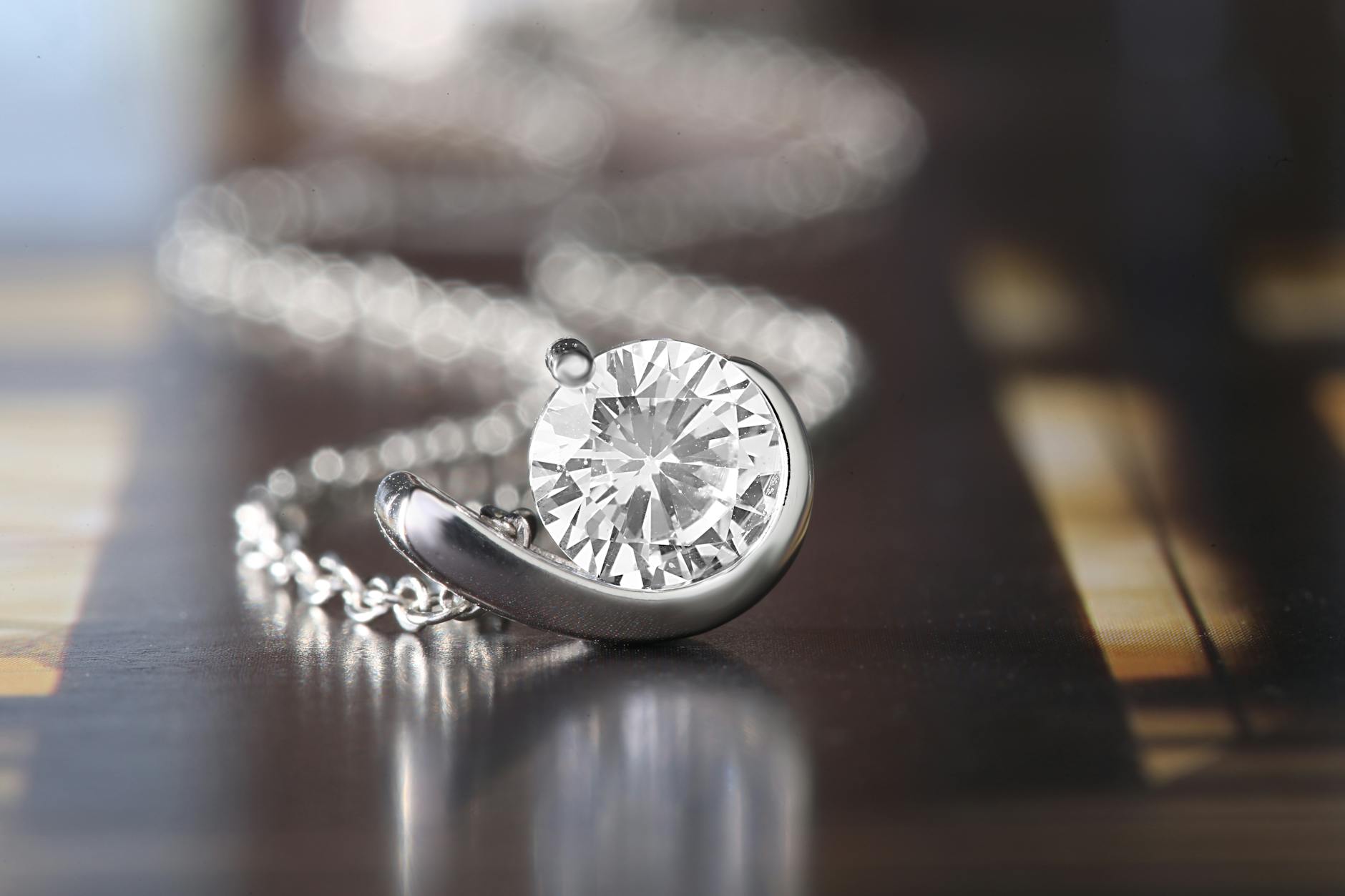
A diamond certificate — formally called a grading report — is a document prepared by an independent gemological laboratory that describes a specific diamond's characteristics in standardised, measurable terms.
It is not a valuation (it does not tell you the price) and it is not a guarantee (it does not promise the diamond won't chip).
It is a description, and learning to read it accurately is the most important skill a diamond buyer can develop.
This guide walks through a GIA report field by field, then explains the key differences with an IGI report.
GIA: The World Standard
The Gemological Institute of America (GIA) created the 4Cs grading system (Cut, Colour, Clarity, Carat) in the 1950s and remains the most widely accepted and trusted diamond grading laboratory in the world.
A GIA report commands a price premium in the market — diamonds with GIA reports typically sell at 15-25% more than identical diamonds with lesser-known lab reports, because buyers trust the consistency and strictness of GIA grading.
For any diamond above approximately ₹50,000 in value, insisting on GIA certification is a sound policy.
Reading the GIA Diamond Grading Report: Field by Field
Report Number: A unique numeric identifier printed on the report and laser-inscribed on the girdle (the thin outer edge) of the diamond.
Every GIA report number is verifiable in real time at gia.edu/report-check.
If the report number doesn't appear on the GIA website, the report is either fake, the diamond doesn't match, or it has been reported stolen. Always verify online.
Shape and Cutting Style: Describes the overall form of the diamond. "Round Brilliant" is the most common — 58 facets arranged to maximise light return.
"Oval Brilliant," "Cushion Modified Brilliant," "Emerald Cut," "Pear Shape" — each describes a different outline (shape) and facet arrangement (cutting style).
The cutting style significantly affects price: round brilliants typically command the highest prices per carat.
Measurements: Three dimensions in millimetres: for round diamonds, expressed as "minimum diameter – maximum diameter × depth" (e.g., 6.40–6.43 × 3.96).
For fancy shapes: "length × width × depth." These measurements let you verify the stone matches the certificate when examining it.
Carat Weight: The weight of the diamond in carats, measured to two decimal places (e.g., 0.51 ct). One carat = 200 milligrams = 0.2 grams.
Carat weight is the most significant price driver in the market — there are price jumps at commercially significant weights (0.50 ct, 0.70 ct, 0.90 ct, 1.00 ct) because of demand for "over-carat" stones.
Colour Grade: Expressed on an alphabetical scale from D (completely colourless) to Z (noticeably yellow or brown).
D-F are "colourless," G-J are "near colourless," K-M are "faint yellow," and N-Z are "light to very light yellow." For most jewellery, G-H colour is the sweet spot: visually indistinguishable from D-F to the unaided eye in a mounted setting, but significantly less expensive.
Clarity Grade: A measure of the internal and surface characteristics (inclusions and blemishes).
The scale runs from FL (Flawless — no inclusions or blemishes under 10× magnification) through VVS1/VVS2 (Very Very Slightly Included), VS1/VS2 (Very Slightly Included), SI1/SI2 (Slightly Included — inclusions visible under 10× loupe), to I1/I2/I3 (Inclusions visible to the unaided eye).
For everyday jewellery, VS2 or SI1 offers excellent value — inclusions are present but not visible without magnification.
Cut Grade (Round Brilliants Only): GIA's Cut grade — Excellent, Very Good, Good, Fair, Poor — applies only to standard round brilliant diamonds.
It evaluates how well the diamond's proportions, symmetry, and polish interact to produce brightness, fire, and scintillation.
An Excellent cut diamond is significantly more brilliant than a Good cut of identical colour and clarity. For round diamonds, never compromise on cut below Very Good.
Polish Grade: Evaluates the smoothness of each facet surface — Excellent, Very Good, Good, Fair, or Poor.
Minor polish imperfections are invisible to the unaided eye but affect brilliance under magnification. Excellent or Very Good polish is standard for any quality diamond.
Symmetry Grade: Evaluates the precision of facet placement, shape, and alignment. Off-centre or misaligned facets affect how light is redirected within the stone.
As with polish, Excellent or Very Good is the benchmark.
Fluorescence: Describes the diamond's response to ultraviolet (UV) light. Grades: None, Faint, Medium, Strong, Very Strong.
The colour of fluorescence is almost always blue.
Strong blue fluorescence in a D-H colour diamond is considered a negative in the trade because it can make the diamond appear slightly hazy in certain lighting.
In lower-colour diamonds (I-J), mild fluorescence can actually make the stone appear whiter.
The market discounts strongly fluorescent D-F stones by 5-15% — this creates a buying opportunity if the haziness is not visible to your eye in person.
Proportions Diagram: A technical diagram showing the key proportional measurements: Table percentage (width of top flat facet as % of overall diameter), Total Depth percentage, Crown Angle, Pavilion Angle, Girdle Thickness description, Culet size.
The ideal round brilliant has a table of 54-58%, depth of 59-62.5%, crown angle 34-35°, and pavilion angle 40.6-41°. Deviations from these ranges reduce brilliance.
Clarity Plot: A diagram of the diamond's outline (crown view and pavilion view) with symbols plotted to show the location and type of each inclusion.
The legend explains each symbol: a feather (internal crack), cloud (group of tiny pinpoints), crystal (mineral inclusion), needle (thin crystal), etc. This plot is the diamond's unique fingerprint — no two diamonds have identical clarity plots.
IGI vs GIA: Key Differences
| Feature | GIA | IGI |
|---|---|---|
| Founded | 1931, USA | 1975, Antwerp (India offices: Mumbai, Delhi, Surat) |
| Industry recognition | Highest — global gold standard | High — widely accepted in India, strong for lab-grown |
| Grading strictness | Strictest — consistent across labs globally | Generally slightly more generous than GIA |
| Cost premium in market | 15–25% over lesser labs | 5–12% over lesser labs |
| Lab-grown diamond reports | Yes (separate "Laboratory-Grown" report) | Yes — dominant in India for LGD reports |
| Verification | gia.edu/report-check | igiworldwide.com/verify |
| Report fee | Higher | Lower — more accessible for smaller stones |
Red Flags on a Diamond Certificate
Fake certificates are a real risk in the Indian market. Always verify the report number online before purchasing.
Warning signs of a fraudulent report include: blurry or non-embossed printing; report number that returns no result or a different stone on the lab's website; colour grade of D-F combined with Clarity FL or IF at a surprisingly low price; no hologram or security features on the physical document; and the report number not matching what is laser-inscribed on the diamond's girdle.
More in Education
Share this article
Our editorial team comprises jewellery industry veterans, certified gemmologists, and passionate writers with decades of combined experience across India's gold, diamond, and gemstone markets. Every article is researched, fact-checked, and written to help Indian buyers make smarter, safer jewellery decisions.
Passionate about jewellery and love to write? We'd love to hear from you.
Join us as a writer →Ready to buy? Find verified jewellers near you
Browse 10,000+ BIS hallmark certified jewellers across India. Compare ratings, check today's gold rate, and book a visit.
Keep Reading