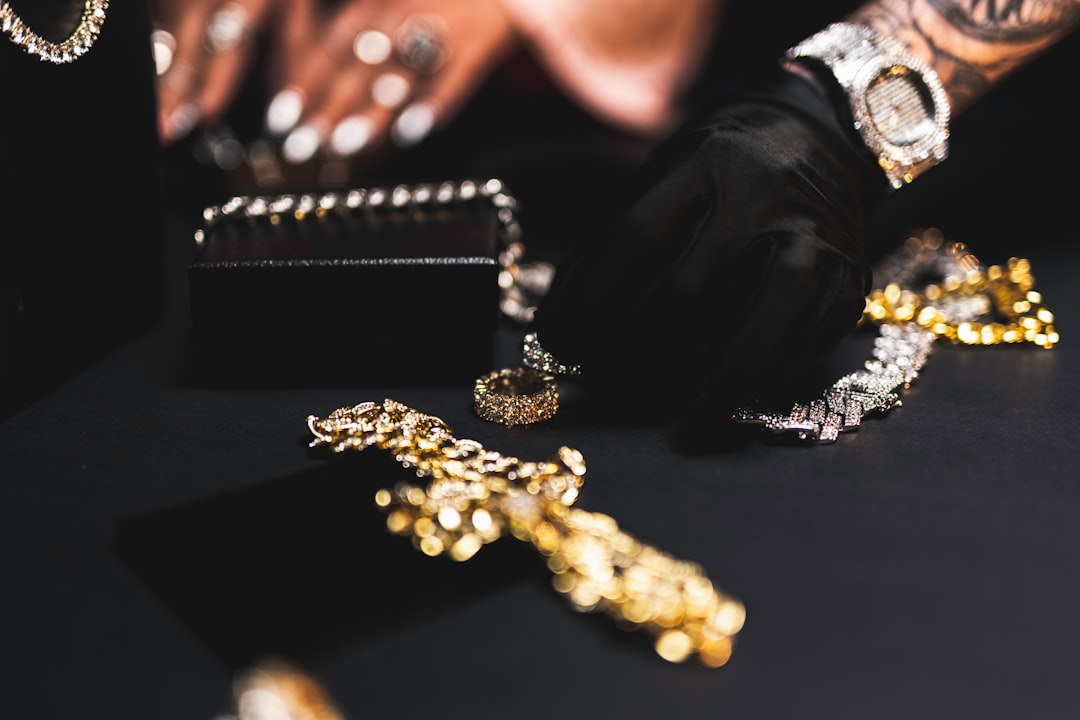
The question of where to store jewellery in India carries more weight than in most countries. With gold forming a significant part of family wealth — the average Indian household holds an estimated 11 grams of gold — the decision between a bank locker and a home safe affects both security and accessibility. This guide breaks down costs, risks, and the practical realities of each option for Indian families in 2025.
Bank Locker: The Traditional Choice
Bank lockers have been the default storage choice for valuable jewellery in India for generations. The perceived safety of a bank vault offers genuine peace of mind — and rightly so. A bank strong room is fire-rated, flood-protected, and guarded 24/7 by security systems that no home can match. For a family heirloom collection worth ₹20–50 lakhs or more, a bank locker remains the most defensible choice.
What a Bank Locker Actually Guarantees
The 2022 RBI directive on locker agreements changed the liability landscape significantly. Prior to this directive, banks routinely disclaimed all responsibility for locker contents. The revised framework introduced a meaningful liability structure:
- Banks are now liable for losses if caused by their negligence or fraud by bank employees
- Maximum liability is capped at 100 times the annual locker rent
- Banks are NOT liable for losses due to natural calamities (floods, earthquakes) or "acts of God"
- Banks are NOT liable for losses from robbery unless bank negligence is proven
⚠️ Critical Insurance Gap
The 100x rent liability cap is far less protection than it sounds. If you pay ₹5,000 per year for your locker, the bank's maximum liability is only ₹5,00,000 — far below the value of most Indian jewellery collections. A separate jewellery insurance policy is essential regardless of whether you store at a bank or at home.
Bank Locker Costs in India (2025)
| Bank | Small Locker / Year | Medium Locker / Year | Large Locker / Year |
|---|---|---|---|
| SBI (Metro branch) | ₹2,000 | ₹4,000 | ₹8,000 |
| HDFC Bank | ₹1,500–₹3,000 | ₹4,000–₹6,000 | ₹8,000–₹12,000 |
| ICICI Bank | ₹2,000–₹4,000 | ₹5,000–₹8,000 | ₹10,000–₹15,000 |
| Bank of Baroda | ₹1,500–₹2,500 | ₹3,000–₹5,000 | ₹6,000–₹10,000 |
Rates vary by branch location (metro vs semi-urban), branch vintage, and current RBI guidelines. Some banks also charge a refundable security deposit of ₹10,000–₹25,000. Verify current rates directly with your branch.
Bank Locker Limitations
The most significant practical limitation of a bank locker is accessibility. Bank lockers are only accessible during branch banking hours — typically 10:00 AM to 4:00 PM on weekdays, with limited Saturday hours and no access on Sundays, national holidays, or bank holidays. This becomes a real problem when:
- A wedding falls on a Sunday and you need to retrieve the bridal set at 6 AM
- A family emergency requires access to jewellery outside banking hours
- Your branch is in a different city from where you now live
- The bank goes through a system upgrade or strike (RBI-supervised strikes have affected branches)
Home Safe: 24/7 Access With the Right Investment
A quality home safe provides round-the-clock access and a one-time cost that pays for itself within 3–5 years compared to annual locker rental. However, not all home safes are equal — a cheap ₹3,000 digital box bolted to nothing provides minimal real security. Understanding the hierarchy of home safe quality is essential.
Home Safe Categories and Costs
| Category | Price Range | Protection Level | Best For |
|---|---|---|---|
| Basic digital box | ₹3,000–₹8,000 | Low | Cash, documents only |
| Fire-resistant safe | ₹15,000–₹35,000 | Medium | Jewellery + documents |
| Wall/floor-anchored fire safe | ₹25,000–₹60,000 | High | Jewellery collections |
| Burglary-rated safe (B-rated) | ₹50,000–₹1,50,000 | Very High | High-value collections |
💡 Pro Tip
A safe that is not bolted to the wall or floor can be physically carried away by a determined thief. Any home safe used to store significant jewellery should be anchored with expansion bolts into a concrete wall or floor. Concealment (behind a painting, inside a wardrobe's false bottom) adds a meaningful additional deterrent layer.
Home Insurance for Jewellery in India
This is where most Indian homeowners are seriously under-protected. A standard comprehensive home insurance policy typically either excludes jewellery entirely or caps the claim at ₹50,000–₹1,00,000 — a fraction of what most families actually own. To be fully protected, you need a standalone jewellery floater policy or a specific jewellery endorsement added to your home insurance.
Key points for jewellery insurance in India:
- Insurers require a detailed inventory with photographs and valuations from a certified valuer
- BIS Hallmarked pieces with HUID numbers are significantly easier to insure and claim
- Annual jewellery floater premiums typically range from 0.5–1.5% of insured value per year
- Keep purchase bills, hallmark certificates, and photographs stored digitally in a cloud backup
- Some policies cover jewellery only at home; others are "all risks" covering theft from persons, overseas travel, etc.
The Smart Hybrid Approach
Most Indian families with significant jewellery holdings benefit from a hybrid strategy rather than an either/or choice:
- Bank locker — for high-value rarely worn pieces: ancestral jewellery, bridal sets used once or twice a year, gold coins and bars purchased as investment
- Home safe (fire-resistant, anchored) — for frequently worn pieces: daily earrings, commonly used necklaces, pieces needed for monthly or weekly occasions
- Dedicated jewellery insurance — covering both locations, with an updated inventory reviewed annually
Jewellery Inventory Management
A comprehensive jewellery inventory is valuable for insurance purposes, estate planning, and simply knowing what you own. Best practices:
- Photograph each piece from multiple angles in good natural light, with a ruler for scale
- Record the HUID (Hallmark Unique ID) number from each BIS Hallmarked piece — this is your strongest proof of identity
- Note purchase price, current estimated value, and purchase jeweller
- Store this inventory in a secure cloud service (Google Drive, iCloud) and a printed copy in a separate location from the jewellery
- Update the inventory whenever pieces are added, modified, or sold
India-Specific Considerations
Power cuts: Digital home safes with electronic locks require battery power. In areas with frequent power cuts or extended outages, ensure your safe uses high-quality alkaline batteries and keep spares nearby. Most quality safes have a manual key override for battery failure.
Monsoon flooding: Ground-floor storage is a significant risk during monsoon season in flood-prone cities. If your home is in a flood zone, store high-value jewellery in a bank locker during the June–September period or ensure your home safe is mounted at height, not on the floor.
Domestic help access: Consider the physical layout of your safe storage carefully. A safe that is easily visible or that domestic staff could discover reduces the security of concealment-based home safe strategies.
⚠️ Post-Demonetisation Rules
Per current income tax and bank regulations, bank lockers must not be used to store cash. The IT Department has increased scrutiny of bank locker access patterns. Jewellery stored in lockers should be consistent with declared income and existing tax records to avoid complications during audits.
Rental Income and Tax Implications
Bank locker rent is paid from your personal savings account. There is no direct income tax deduction available for personal jewellery storage costs. If you are storing business jewellery assets, the rent may qualify as a business expense — consult your chartered accountant for the correct treatment.
From a wealth and estate planning perspective, jewellery stored in a bank locker should be properly documented in your will or succession plan. Without proper nomination and will documentation, heirs face lengthy legal processes to access locker contents after the holder's death. Banks are required to notify nominees and follow specific RBI procedures — but these procedures take time, which can create practical difficulties during bereavement periods.
Getting a Bank Locker in India — Practical Reality
Demand for bank lockers significantly exceeds supply at most urban branches. The RBI requires banks to maintain a waiting list and offer lockers strictly in order, but wait times of 6–24 months are not uncommon at popular branches in Mumbai, Delhi, Bengaluru, and Chennai. Practical strategies to secure a locker:
- Apply at multiple banks simultaneously — do not wait for one to respond
- Consider applying at slightly less central branches of the same bank, where waiting lists are shorter
- New bank customers are sometimes offered lockers as part of premium account packages (like HDFC Preferred or SBI Premium) — worth asking about
- Semi-urban branches of nationalised banks often have shorter wait lists than metro branches
Frequently Asked Questions
Is a bank locker 100% safe for jewellery?
No storage is 100% safe, but bank lockers are extremely secure against common theft risks. The main gaps are: the bank's capped liability (100x rent), no access outside banking hours, and limited bank accountability for natural disasters. Insurance is essential regardless.
Will the bank pay if my locker is robbed?
Only if negligence by bank staff or systems is proven. Under the 2022 RBI guidelines, the bank's maximum liability is 100 times the annual locker rent even in cases of proven bank negligence. A standalone jewellery insurance policy is the only way to ensure full coverage.
Does bank locker rent qualify for income tax deduction?
No direct deduction is available for personal jewellery storage. However, if the locker is used for business-purpose items, the rent may be deductible under business expenses. Consult your CA for specifics.
How many names can be on a bank locker?
Most banks allow up to 3 joint holders for a single locker. You can also designate a nominee. Joint holders can access the locker individually unless the bank specifies "jointly operated" access.
Can I store my jewellery in a locker and still insure it?
Yes. Many jewellery insurance policies specifically cover jewellery stored in bank lockers. In fact, some insurers offer lower premiums for locker-stored jewellery versus home storage due to the lower risk profile. Disclose the storage location accurately when taking out the policy.
More in Jewellery Care
Share this article
Our editorial team comprises jewellery industry veterans, certified gemmologists, and passionate writers with decades of combined experience across India's gold, diamond, and gemstone markets. Every article is researched, fact-checked, and written to help Indian buyers make smarter, safer jewellery decisions.
Passionate about jewellery and love to write? We'd love to hear from you.
Join us as a writer →Ready to buy? Find verified jewellers near you
Browse 10,000+ BIS hallmark certified jewellers across India. Compare ratings, check today's gold rate, and book a visit.
Keep Reading