Hyderabad's relationship with jewellery is unlike any other Indian city's.
The Nizam of Hyderabad — the last Nizam, Mir Osman Ali Khan — was at one point considered the wealthiest person in the world, and his jewellery collection is legendary.
The Jacob Diamond (one of the largest diamonds ever found), the Nizam's Tiara, and hundreds of other extraordinary pieces from his collection have shaped Hyderabad's jewellery identity permanently.
Today, the city's pearl markets, its Jadau jewellery tradition, and its gold retail scene are among India's most interesting for a serious buyer.
The Pearl Legacy: Why Hyderabad Matters for Pearl Buyers
Before Mikimoto's cultured pearl revolution in the early 20th century, natural pearls were among the world's most precious objects — rarer than diamonds by any measure of natural scarcity.
The Arabian Gulf (then called the Persian Gulf) was the world's primary source of natural pearls, and Hyderabad sat at the apex of the natural pearl trade in India.
Gulf pearls came to Hyderabad; Hyderabad's dealers distributed them across the subcontinent and to Europe.
The Nizam's personal collection included some of the largest and finest natural pearls ever documented.
Today, natural pearls from the Gulf are extremely rare and extraordinarily expensive (a fine natural pearl necklace costs crores of rupees).
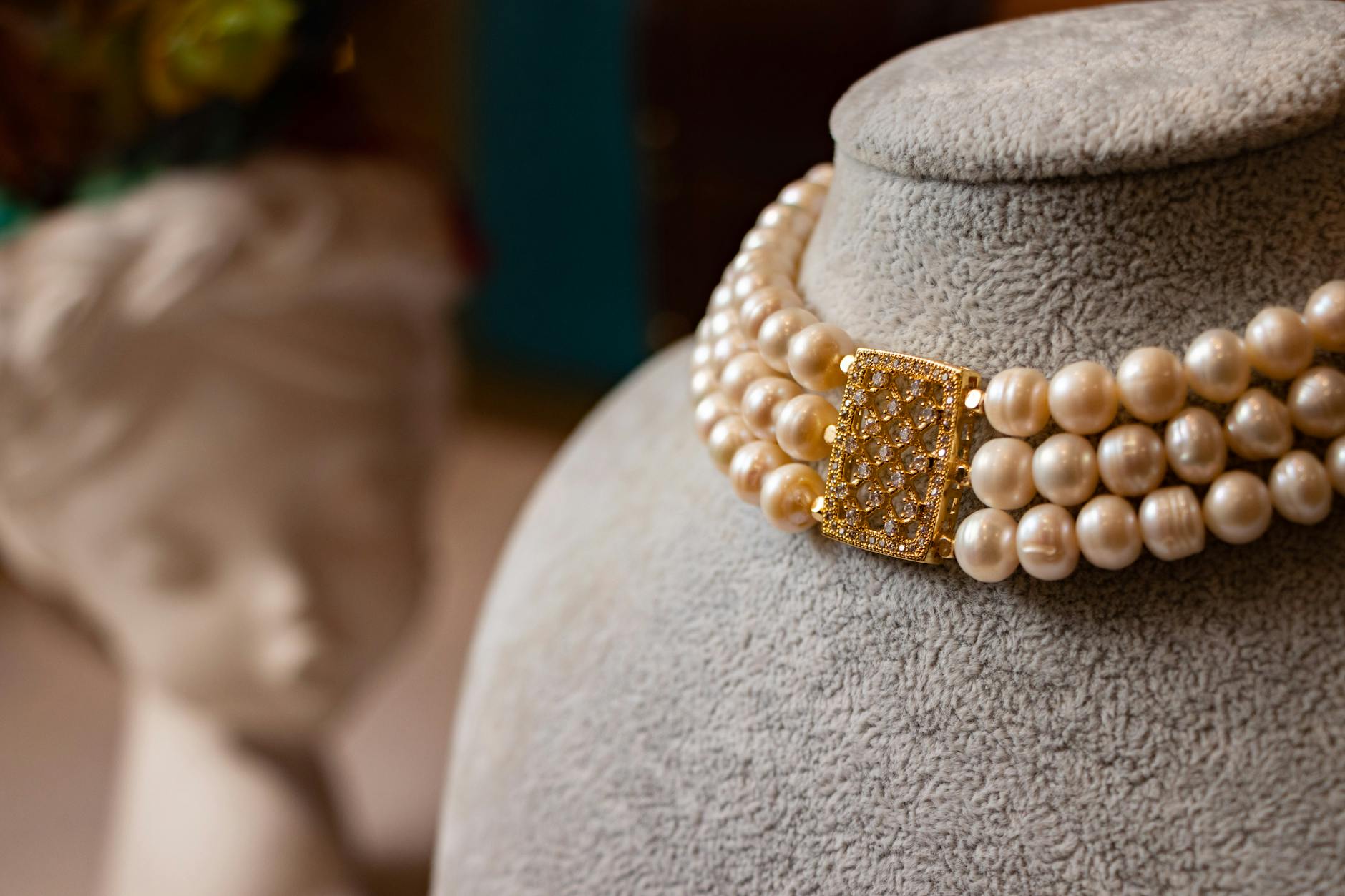
What Hyderabad offers instead is the pearl trade's institutional memory — dealers with generations of expertise, a sophisticated understanding of pearl quality, and access to cultured pearls (South Sea, Japanese Akoya, Chinese freshwater) at genuinely competitive prices compared to Mumbai or Delhi retail.
Types of Pearls Available in Hyderabad
- South Sea pearls: Large (10–20mm), produced by the Pinctada maxima oyster in Australia, Indonesia, and the Philippines. White, gold, and silver-white colours. The most prestigious cultured pearl type. Hyderabad dealers stock these from established farms.
- Japanese Akoya pearls: The classic round white pearl (5–10mm), produced in Japan. Very round, high lustre, the traditional strand necklace pearl. Hyderabad dealers with Japan connections offer competitive pricing.
- Chinese freshwater pearls: High variety, large production volume, much lower price. Quality has improved enormously in the past decade — the best Chinese freshwater pearls now approach Akoya quality at a fraction of the price.
- Basra (natural) pearls: If a Hyderabad dealer offers natural Gulf pearls, require a laboratory certificate from GIA or a reputable laboratory specifically certifying natural (non-cultured) origin. Natural pearl fraud is common. Uncertified "Basra" pearls are very frequently cultured or imitation.
How to Evaluate Pearl Quality: The Hyderabad Buyer's Primer
Pearl buying requires specific knowledge because the quality variation between similar-looking pearls is enormous:
| Quality Factor | What to Look For | Red Flags |
|---|---|---|
| Lustre | Deep, mirror-like reflection on the pearl's surface; you should see your reflection in a fine pearl | Chalky, dull, milky surface with no reflective depth |
| Orient | Iridescent overtone colour — a rainbow shimmer just below the surface; pink or green overtone on white pearls indicates nacre depth | Absent orient; flat, single-colour appearance |
| Surface | Minimal surface characteristics; small ridges or indentations are acceptable; significant pitting or peeling nacre is not | Visible peeling, large pits, or cracks in the nacre surface |
| Shape | Round pearls command premium; drop and oval shapes are acceptable; baroque (irregular) pearls are valued for their uniqueness | "Round" pearls that visibly wobble when rolled on a flat surface |
| Size | Consistent size across a strand; larger pearls are exponentially more valuable | Significant size variation in a strand presented as matched |
| Nacre thickness | Ask the dealer; thicker nacre = more durable lustre over time; X-ray or drill test can verify | Thin-nacre cultured pearls lose lustre quickly with wear |
Hyderabad's Jewellery Markets
Laad Bazaar: The Bangle Market
Laad Bazaar — the market immediately adjacent to the Charminar — is one of India's most famous market experiences.
The bazaar is named for the lac (laad) bangles that have been sold here for centuries.
Today it specialises in glass bangles, lac bangles (coloured wax over glass, sometimes embedded with mirrors and stones), silver jewellery, and traditional Hyderabadi accessories.
It is a high-density tourist destination and prices reflect this — bargain firmly, or seek out the wholesale suppliers in the lanes behind the main bazaar for better pricing on glass bangle purchases in quantity.
Pathar Gatti: The Gold Wholesale Area
Pathar Gatti, near the old city, is Hyderabad's traditional gold and silver wholesale market.
Less accessible to retail buyers than Johari Bazaar in Jaipur, but with an introduction from a local contact or a reputable jeweller, it offers access to traditional Hyderabadi goldwork at wholesale pricing.
Most retail buyers will have better results at the major showrooms.
Sultan Bazaar and Abids: Mixed Traditional and Contemporary
The Sultan Bazaar and Abids areas offer a mix of traditional Hyderabadi jewellers (some with 70–100+ year histories) and contemporary showrooms.
This is the most accessible market for retail buyers who want Hyderabadi jewellery without navigating the wholesale areas.
Jadau Jewellery: Hyderabad's Craft Tradition
Jadau is a jewellery-making technique closely related to Jaipur's Kundan but with distinct Hyderabadi characteristics developed under Nizami court patronage.
In Jadau, gold is worked into intricate structural forms and stones are embedded directly into the gold framework — the gold and the stone become inseparably unified rather than the stone simply sitting within a gold surround.
The result is jewellery of extraordinary three-dimensional complexity.
Hyderabadi Jadau typically features:
- Elaborate gold structural work with raised relief patterns
- Uncut diamonds (polki) embedded within the gold framework
- Pearl drops and accents (reflecting the pearl heritage)
- Mughal-influenced motifs: floral sprays, scrolling vines, bird forms
Authentic Jadau requires master craftsmen and significant time investment — a single elaborate Jadau necklace can take months to complete.
This explains the significant price premium and the rarity of truly authentic pieces outside of established Hyderabadi jewellery houses.
The Nizam's Jewellery: Context and Inspiration
The Nizam's jewellery collection — parts of which are on display at the Salar Jung Museum and the Nizam's Museum in Hyderabad — provides extraordinary context for understanding the Hyderabadi jewellery aesthetic.
A visit to these museums before jewellery shopping is genuinely useful: you will understand the Jadau technique, the Nizami gold aesthetic, and the extraordinary quality of Hyderabadi pearl jewellery at its historical best.
This context makes you a more discerning buyer.
Pearl Buying Strategy in Hyderabad
Visit at least three dealers before committing to a pearl purchase.
Ask each dealer to show you pearls of the same type (South Sea, Akoya, or freshwater) at the same nominal size and quality grade, and compare lustre, orient, and surface quality side by side.
The difference between a ₹25,000 strand and a ₹75,000 strand of apparently similar pearls will become visible only through comparison.
The dealer who is most willing to allow detailed comparison and explain the quality differences is the dealer worth trusting.
Budget Ranges for Hyderabad Jewellery Purchases
| Category | Budget Range | Notes |
|---|---|---|
| Freshwater pearl strand (standard quality) | ₹2,000–₹15,000 | Good everyday jewellery; not investment quality |
| Akoya pearl strand (fine quality) | ₹20,000–₹1,50,000 | Quality varies enormously — compare before buying |
| South Sea pearl strand (genuine) | ₹1,50,000–₹20,00,000+ | Fine South Sea requires laboratory certification |
| Jadau necklace set (contemporary) | ₹80,000–₹5,00,000 | Contemporary Jadau-inspired; verify gold and stone quality |
| Authentic traditional Jadau set | ₹3,00,000–₹50,00,000+ | From established houses only; master craftsman work |
| Glass bangles (Laad Bazaar) | ₹200–₹5,000 per set | Decoration, not fine jewellery; pricing is negotiable |
More in City Guides
Share this article
Our editorial team comprises jewellery industry veterans, certified gemmologists, and passionate writers with decades of combined experience across India's gold, diamond, and gemstone markets. Every article is researched, fact-checked, and written to help Indian buyers make smarter, safer jewellery decisions.
Passionate about jewellery and love to write? We'd love to hear from you.
Join us as a writer →Ready to buy? Find verified jewellers near you
Browse 10,000+ BIS hallmark certified jewellers across India. Compare ratings, check today's gold rate, and book a visit.
Keep Reading