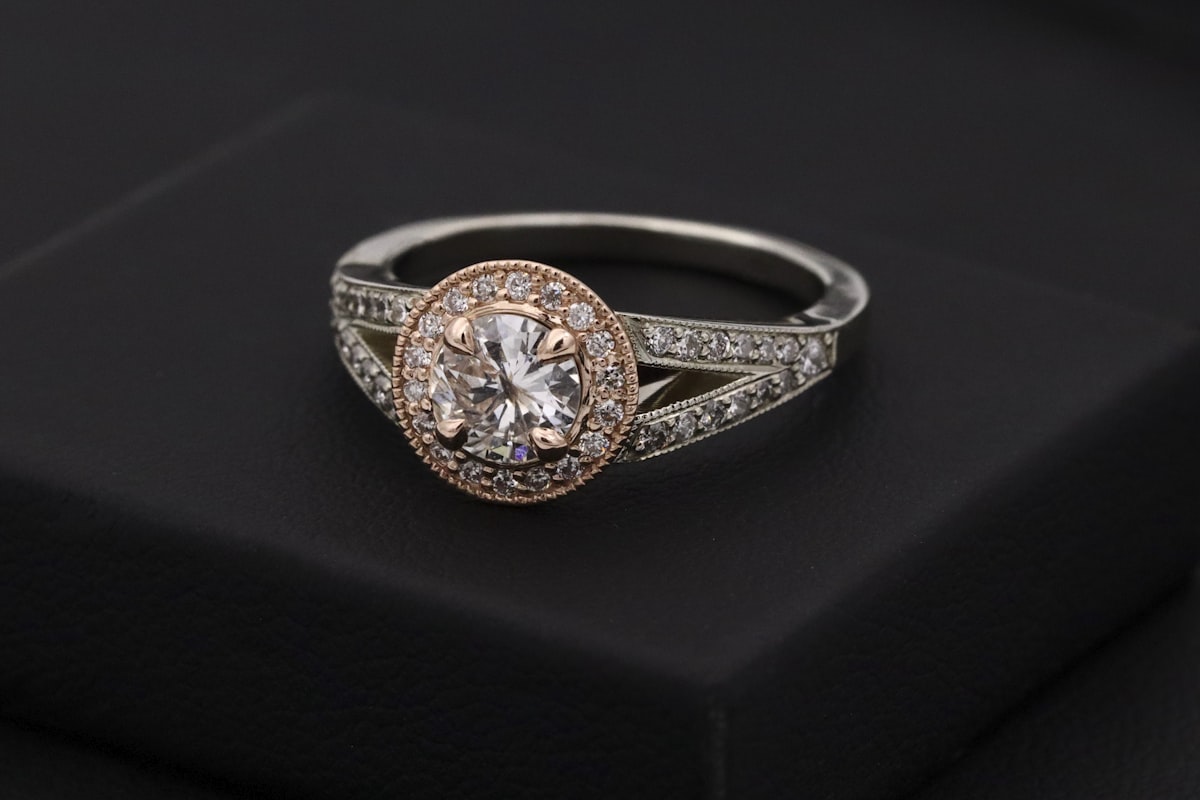
A diamond ring that once caught every light source in a room can become visibly dull within weeks of daily wear. The culprit is not dirt in the usual sense — it is the accumulation of skin oils, hand cream, soap film, cooking residue, and the microscopic particles that coat the back of the stone and the underside of the setting. This film doesn't damage the diamond; it simply blocks light from entering and refracting, killing the sparkle. Cleaning is simple and essential.
Why Diamonds Lose Their Sparkle
Diamonds work by light entering the stone, bouncing off internal facets, and returning to the eye as brilliance and fire. When the stone's surface and the underside of the setting are coated with oils, this light entry is blocked. A clean diamond under the same light conditions sparkles dramatically more than a coated one — this is why diamond ring photographs in advertisements use meticulously cleaned stones.
The Standard Home Cleaning Method
This method is safe for diamond solitaires and diamond-set rings in standard gold settings:
- Fill a small bowl with warm (not hot) water. Add 2–3 drops of mild dish soap (Vim, Fairy, or any surfactant-based dish cleaner). Avoid antibacterial soaps or those with added moisturizers — these leave film.
- Soak the ring for 20–30 minutes. This loosens accumulated oil and product residue without requiring scrubbing force.
- Scrub gently with a very soft toothbrush (a baby toothbrush or denture brush is ideal — regular toothbrush bristles can be too stiff for delicate prong areas). Focus on: the back of the setting (where fingers touch and oil accumulates most), between the stone and the prongs, and the underside of the band.
- Rinse thoroughly under warm running water. Hold over a bowl or with a drain stopper in — a loose stone can go down a drain. Ensure all soap is removed; residual soap film is itself a dulling agent.
- Pat dry with a lint-free cloth (microfibre or soft cotton). Air dry for a few minutes before storing or wearing.
The Ammonia Method (Diamonds Only)
Professional jewellers sometimes use diluted ammonia for diamond cleaning. Mix 1 part household ammonia (clear, not sudsy) with 6 parts water. Soak for 15–20 minutes, brush gently, rinse thoroughly.
IMPORTANT: Ammonia is safe for pure diamond and gold only. Do NOT use on: pearls, emeralds, opals, coral, tanzanite, or any treated stone. Ammonia attacks the organic material in pearls and can damage oil-filled fractures in emeralds. If your ring has any coloured side stones or accent gems, use the mild soap method instead.
Cleaning Products That Are Safe
- Mild dish soap + warm water: The safest and most effective home method
- Diluted ammonia (diamond/gold only): As above
- Commercial jewellery cleaning solutions (from jewellers): Formulated for jewellery; safe if used per instructions. Avoid those containing bleach.
- Jeweller's polishing cloth (for metal surface shine): Removes surface tarnish and mild scratches from gold; safe for exterior metal
What Never to Use on Diamond Jewellery
| Product | Risk | Effect |
|---|---|---|
| Bleach / chlorine | High | Pits and degrades gold alloy; destroys plating; can discolour prongs |
| Toothpaste | High | Scratches gold setting; particularly damages soft gold alloys |
| Baking soda paste | High | Abrasive; scratches metal; leaves white residue in settings |
| Acetone / nail polish remover | High | Strips gold plating; dissolves some stone treatments; damages rhodium |
| Hydrogen peroxide | Moderate | Can damage certain organic and treated stones; generally safe for plain diamond but not worth the risk |
| Boiling water | Moderate | Thermal shock can crack included stones; can loosen pavé settings; damages fracture-filled stones |
| Hand sanitiser | Low | OK occasionally; repeated use dulls metal finish over time due to isopropyl alcohol content |
Ultrasonic Cleaners: When to Use, When to Avoid
Household ultrasonic jewellery cleaners (₹1,000–₹5,000 on Amazon) use high-frequency sound waves to create microscopic bubbles that dislodge dirt from every surface — including the hard-to-reach areas of settings.
Safe to Ultrasonic Clean
- Plain diamond solitaires in secure prong settings
- Gold chains and plain bangles
- Diamonds graded VS2 or better (fewer inclusions; less crack risk)
Do NOT Ultrasonic Clean
- Fracture-filled or clarity-enhanced diamonds (filling is dislodged)
- Emeralds (virtually always oil-filled; ultrasonic removes the oil)
- Pearls (organic material damaged by vibration)
- Opals (can crack under vibration)
- Tanzanite (sensitive to thermal and mechanical stress)
- Pieces with loose stones (vibration accelerates stone loss)
- Antique pieces with delicate construction
Cleaning Mixed-Stone Pieces
If your diamond piece has coloured accent stones, the cleaning approach must accommodate the most sensitive stone:
- Diamond + ruby/sapphire: mild soap method is safe
- Diamond + emerald: mild soap only — no ammonia, no ultrasonic
- Diamond + pearl: mild soap only — no soaking; wipe pearl surface separately with damp cloth
- Diamond + opal: minimal water contact; no soaking; wipe carefully
When to See a Professional Jeweller
Home cleaning handles surface film. Professional cleaning adds:
- Prong inspection: Prongs that hold diamonds wear over time; a jeweller uses a loupe to check for bent, worn, or broken prongs that might allow a stone to fall out
- Deep cleaning of complex settings: Pave settings, channel settings, and elaborate vintage pieces need professional tools for thorough cleaning
- Rhodium re-plating: White gold rings that have yellowed (the rhodium has worn off) need professional re-plating — not something you can do at home
- Ring shank polishing: Removes surface scratches and restores factory polish to the band
Professional cleaning frequency: every 6–12 months for daily-wear rings. Most major jewellers offer free cleaning for pieces purchased from them. Find jewellers near you on JewellersInCity.
Prevention: Keeping Diamonds Cleaner Longer
- Remove rings before applying hand cream, sunscreen, or cooking oils — these are the primary film-forming agents
- Remove before swimming (chlorine is damaging; saltwater less so but sand can abrade settings)
- Store individually in soft pouches — diamonds scratch other gemstones and metals
- Take rings off before cleaning with household products — even "gentle" cleaners contain surfactants that build up on settings
Conclusion
Diamond jewellery cleaning is simple, cheap, and dramatically effective — a monthly 30-minute soak and scrub routine keeps your rings sparkling like new. The main errors to avoid are abrasive agents (toothpaste, baking soda) and harsh chemicals (bleach, acetone). Professional cleaning every 6–12 months adds the prong check that home cleaning cannot provide. Read our full jewellery storage guide for complementary care practices.
More in Jewellery Care
Share this article
Our editorial team comprises jewellery industry veterans, certified gemmologists, and passionate writers with decades of combined experience across India's gold, diamond, and gemstone markets. Every article is researched, fact-checked, and written to help Indian buyers make smarter, safer jewellery decisions.
Passionate about jewellery and love to write? We'd love to hear from you.
Join us as a writer →Ready to buy? Find verified jewellers near you
Browse 10,000+ BIS hallmark certified jewellers across India. Compare ratings, check today's gold rate, and book a visit.
Keep Reading