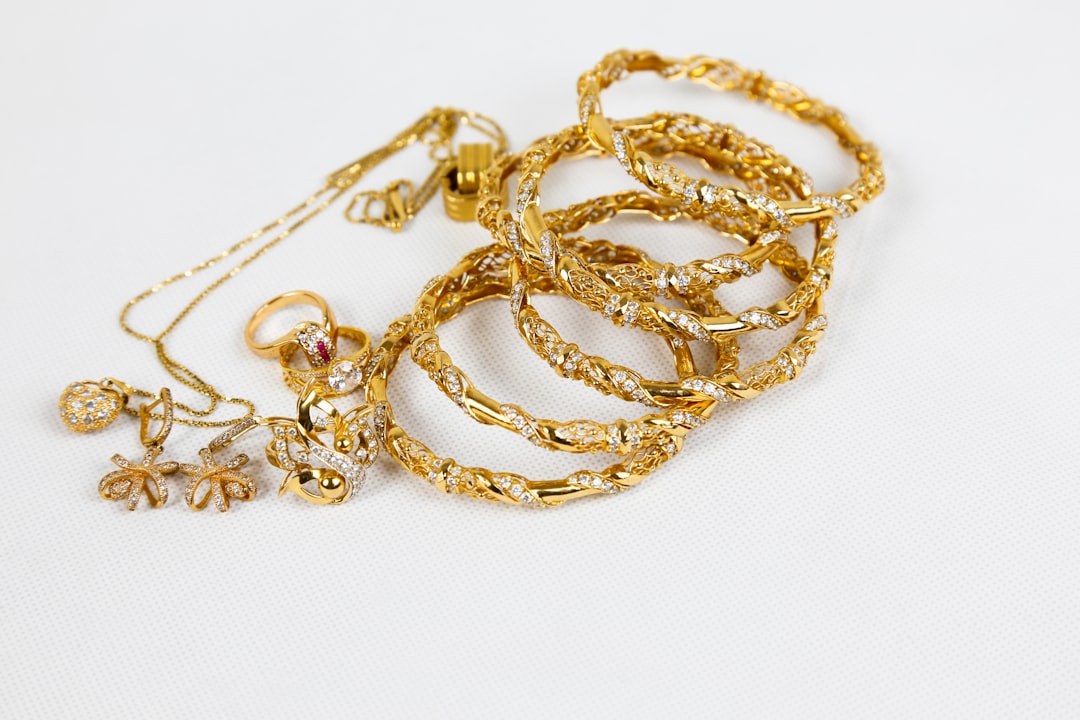
Introduction: Knowing What Your Jewelry Is Really Worth
Lakshmi Rao inherited a collection of gold jewelry from her grandmother in Hyderabad — 15 pieces accumulated over five decades, stored in a bank locker. When she finally had them appraised in 2025, the results surprised her in both directions. A heavy gold necklace she assumed was worth ₹8 lakh was appraised at ₹5.2 lakh (it was 18K, not 22K as the family believed). Meanwhile, a seemingly modest pair of temple earrings she would have guessed at ₹40,000 was valued at ₹1.8 lakh because of exceptional Chettinad craftsmanship and antique premium.
Without a professional appraisal, Lakshmi would have under-insured the earrings and over-insured the necklace — paying more premium while receiving less coverage where it mattered. She might have sold the earrings at a fraction of their true value or divided the inheritance unequally among her siblings.
Jewelry appraisal is not merely an academic exercise in determining value — it is a practical necessity that affects insurance coverage, estate planning, resale decisions, legal proceedings, and tax compliance. Yet most Indian jewelry owners never get their pieces professionally appraised, relying instead on the original purchase price (which may be decades old) or rough mental calculations based on today's gold rate.
This comprehensive guide covers when and why you should get jewelry appraised, how to find and evaluate certified appraisers, the different valuation methodologies, costs involved, and how to use appraisal results effectively.
When to Get Your Jewelry Appraised
Mandatory Appraisal Situations
Certain life events and legal requirements make jewelry appraisal essential rather than optional.
Insurance purchase or renewal: Insurance companies require a current appraisal to determine coverage amount and premium. Most insurers accept appraisals up to 2 to 3 years old, after which a re-appraisal is needed. If your jewelry has appreciated significantly (as gold has in recent years), outdated appraisals mean you are under-insured. Estate settlement and inheritance: When dividing inherited jewelry among heirs, a professional appraisal ensures equitable distribution. Courts may require certified appraisals in contested inheritance cases. As discussed in our inheritance planning guide, the appraised value serves as the reference for division. Divorce proceedings: Jewelry is a significant marital asset in Indian divorces. Courts require certified appraisals to determine the value of jewelry held by each spouse. Streedhan (the wife's personal jewelry) and jointly acquired jewelry are treated differently, but both need valuation. Income tax matters: If you sell gold jewelry, capital gains tax is calculated based on the difference between the sale price and the cost of acquisition (with indexation). If you lack original purchase records, an appraisal establishing "fair market value as on April 1, 2001" provides the deemed acquisition cost. Loan collateral: Banks and NBFCs accepting jewelry as collateral for gold loans conduct their own appraisal, but having an independent appraisal gives you negotiating leverage if you believe the bank's valuation is conservative.Recommended Appraisal Situations
| Situation | Why Appraisal Is Valuable | Frequency |
|---|---|---|
| After purchase of high-value piece | Verify quality, establish baseline value | Once, at purchase |
| Annual insurance review | Ensure coverage matches current value | Every 2-3 years |
| Before selling or exchanging | Know minimum acceptable price | Before each sale |
| After significant gold price movement | Update portfolio value awareness | Annual if gold moves 15%+ |
| Before international travel | Customs documentation if carrying jewelry | Before each trip |
| Vintage/antique pieces acquired | Determine if value exceeds gold content | Once, upon acquisition |
| Before pledging for gold loan | Maximize loan amount | Before each loan |
Certified Appraisers in India
Who Qualifies as a Jewelry Appraiser?
India does not have a single unified licensing body for jewelry appraisers, but several qualifications and certifications establish credibility.
Government-registered valuers: Under the Income Tax Act and the Companies Act, valuers registered with the Insolvency and Bankruptcy Board of India (IBBI) are recognized for official valuation purposes. These valuers must pass examinations and maintain registration. Their appraisals carry legal weight in court proceedings and tax matters. GII-certified gemologists: The Gemological Institute of India (GII) in Mumbai certifies gemologists who can appraise gemstones and set jewelry. A GII certification ensures competence in gemstone identification and grading. GIA-trained appraisers: Appraisers trained by the Gemological Institute of America (GIA) — through their programs in India — bring internationally recognized expertise, particularly for diamond and gemstone valuation. BIS-recognized assaying centres: For gold purity testing specifically (not full jewelry appraisal), BIS-recognized assaying and hallmarking centres provide certified purity reports. India has over 1,300 such centres.Finding a Reliable Appraiser
| Source | How to Find | Expected Credential |
|---|---|---|
| IBBI registered valuers | ibbi.gov.in (valuer search) | Government registration |
| GII Mumbai | giionline.com | GII Gemologist certificate |
| Local jeweler associations | City-level jeweler bodies | Trade reputation |
| Insurance company referral | Ask your insurer | Insurer-approved panel |
| Bank appraisal department | Major banks' gold loan divisions | Internal bank certification |
| Court-appointed valuers | Through your lawyer | Court-recognized credentials |
Red Flags to Watch For
Be cautious of appraisers who provide significantly higher valuations than expected (inflated appraisals for insurance fraud are a serious legal risk), appraisers who want to buy your jewelry (conflict of interest), lack of formal certification or registration, no written report or vague documentation, and unwillingness to use calibrated equipment for testing.
Valuation Methods Explained
Melt Value (Intrinsic Metal Value)
The most fundamental valuation is melt value — what the gold would be worth if you melted the piece down to pure metal. This represents the absolute floor value of any gold jewelry.
Calculation:Melt Value = Net Gold Weight (grams) x Purity Factor x Current Gold Rate per gram (fine gold)
Example: A 22K gold necklace weighing 40 grams gross with 2 grams of stones.Net gold weight: 38 grams
Purity factor: 0.916 (22K)
Fine gold content: 38 x 0.916 = 34.81 grams
Gold rate (April 2026): ₹7,500 per gram (fine gold)
Melt value: 34.81 x ₹7,500 = ₹2,61,075
Melt value ignores all craftsmanship, design, brand, and antique value. It is the value a gold refiner would pay. For plain, mass-produced jewelry in standard designs, the actual sale value may be only 5% to 10% above melt value. For highly crafted, antique, or branded jewelry, the sale value may be 30% to 300% above melt value.
Retail Replacement Value
This is the cost of purchasing an identical or substantially similar piece from a retail jewelry store today. Retail replacement value includes the current gold value, current making charges for the design type, stone replacement cost, applicable taxes, and any brand premium.
Retail replacement value is the standard used for insurance appraisals because it reflects what you would need to spend to replace a lost or stolen piece. It is typically 15% to 50% higher than melt value for standard pieces and can be multiples higher for high-craftsmanship or branded jewelry.
Example (same necklace):Melt value: ₹2,61,075
Making charges (₹900/gram x 38g): ₹34,200
Stone value: ₹4,000
GST (3%): ₹8,978
Retail replacement value: ₹3,08,253
Fair Market Value
Fair market value is what a willing buyer would pay to a willing seller, both having reasonable knowledge of relevant facts, without any pressure to buy or sell. This falls between melt value (seller's floor) and retail replacement (buyer's ceiling).
For most jewelry, fair market value is approximately 70% to 85% of retail replacement value. This is the value used for estate tax purposes (if applicable), divorce settlements, and arm's-length sales between individuals.
Liquidation Value
This is the price achievable in a forced or quick sale — to a jeweler buying old gold, at auction, or through an urgent sale. Liquidation value is typically at or slightly above melt value, unless the piece has significant collector interest.
| Valuation Method | Typical Range (Relative) | Used For |
|---|---|---|
| Melt/intrinsic value | 100% (base) | Quick sale, gold loan, floor value |
| Liquidation value | 100-110% of melt | Forced sale, auction |
| Fair market value | 110-130% of melt | Estate, divorce, individual sale |
| Retail replacement | 120-160% of melt | Insurance, replacement purchase |
| Antique/collector value | 150-500%+ of melt | Rare and vintage pieces |
The Appraisal Process
What to Expect During an Appraisal
A professional jewelry appraisal typically involves the following steps, taking 30 to 60 minutes per piece for thorough evaluation.
Visual examination: The appraiser examines the piece with the naked eye and under magnification (10x loupe or microscope), assessing overall condition, design quality, and craftsmanship level. Metal testing: Purity is verified using one or more testing methods.| Testing Method | Accuracy | Destructive? | Cost | Time |
|---|---|---|---|---|
| XRF (X-Ray Fluorescence) | ±0.1% | No | ₹200-₹500/piece | 30 seconds |
| Touchstone (acid test) | ±2-3% | Slightly (scratch) | ₹50-₹100/piece | 5 minutes |
| Fire assay (cupellation) | ±0.01% | Yes (sample removed) | ₹500-₹1,000 | 24 hours |
| Electronic tester | ±1-2% | No | ₹100-₹200/piece | 1 minute |
| Specific gravity test | ±1% | No | ₹100-₹200/piece | 5 minutes |
The Appraisal Report
A complete appraisal report should include the appraiser's credentials, registration number, and contact information, the date of appraisal, the purpose of appraisal (insurance, estate, sale, etc.), for each piece a detailed description, photographs, measurements, metal type and purity with testing method, weight breakdown, stone identification and grading, condition assessment, and the stated value with the valuation method used. The report should be signed and stamped by the appraiser.
Cost of Jewelry Appraisal
Fee Structures
Appraisers use different fee structures. Understanding these helps you budget and avoid overpaying.
Per-piece fee: The most common structure. Typical rates in India range from ₹200 to ₹500 per piece for basic gold jewelry appraisal and ₹500 to ₹2,000 per piece for diamond or gemstone jewelry. Hourly rate: Some appraisers charge by the hour — typically ₹1,000 to ₹3,000 per hour. This is common for large collections where per-piece pricing would be excessive. Percentage of value: Avoid appraisers who charge a percentage of the appraised value — this creates an incentive to inflate valuations. Reputable appraisers never use percentage-based fees. Flat fee for collection: For large collections (20+ pieces), many appraisers offer discounted flat fees. A 50-piece collection that would cost ₹15,000 at ₹300/piece might be appraised for a flat ₹8,000 to ₹10,000.| Collection Size | Per-Piece Rate | Estimated Total Cost |
|---|---|---|
| 1-5 pieces | ₹300-₹500 | ₹300-₹2,500 |
| 6-15 pieces | ₹250-₹400 | ₹1,500-₹6,000 |
| 16-30 pieces | ₹200-₹350 | ₹3,200-₹10,500 |
| 31-50 pieces | ₹150-₹300 | ₹4,500-₹15,000 |
| 50+ pieces | Flat fee negotiation | ₹8,000-₹25,000 |
Where to Get Appraised and Typical Costs
At a BIS-recognized assaying centre: ₹200 to ₹500 per piece for purity testing and weight verification. These centres provide purity certification but not full valuation (they confirm the gold is 22K but do not state the piece is worth ₹X). At a reputable jeweler: Many established jewelers offer appraisal services, typically ₹300 to ₹800 per piece. Ensure the jeweler has no interest in buying the piece (conflict of interest). Some jewelers offer free appraisal with the expectation that you will buy or sell through them — be aware of this dynamic. From an independent registered valuer: ₹500 to ₹2,000 per piece. These appraisals carry the most legal weight and are recommended for estate, divorce, and tax purposes. Online appraisal services: Some services offer preliminary valuations based on photographs and descriptions you submit — ₹200 to ₹500 per piece. These are useful for rough estimates but cannot verify purity or weight and are not accepted for legal or insurance purposes.Insurance Appraisal: Protecting Your Jewelry
What Insurers Need
Insurance companies require specific information from an appraisal to issue or renew a jewelry policy. The appraisal must state the retail replacement value (not melt value or fair market value), include detailed descriptions sufficient to identify each piece uniquely, provide photographs, be recent (within 2 to 3 years for most insurers, within 1 year for high-value pieces), and be signed by a qualified appraiser whose credentials are stated.
Under-Insurance vs. Over-Insurance
Under-insurance occurs when your insured value is less than the actual replacement cost. If you insure a necklace for ₹2 lakh but the replacement cost is ₹3.5 lakh, your claim payout will be proportionally reduced under the "average clause." You would receive approximately ₹1.14 lakh on a total loss claim (₹2 lakh / ₹3.5 lakh x ₹2 lakh), not the full ₹2 lakh. Over-insurance means you are paying premium on value that does not exist. If you insure the same necklace for ₹5 lakh, you are paying premium on ₹1.5 lakh of phantom value — the insurer will never pay more than the actual replacement cost regardless of the insured amount.The goal is to insure at accurate retail replacement value, updated every 2 to 3 years or when gold prices move significantly.
Appraisal Update Schedule
| Gold Price Movement | Action Needed |
|---|---|
| Stable (±5% per year) | Re-appraise every 3 years |
| Moderate increase (5-15% per year) | Re-appraise every 2 years |
| Significant increase (15%+ per year) | Re-appraise annually |
| After major acquisition | Immediate appraisal |
| After inheritance or gift | Immediate appraisal |
| Before selling any piece | Current appraisal recommended |
Special Appraisal Situations
Antique and Heritage Jewelry
Appraising antique jewelry (generally defined as 100+ years old) requires specialized expertise beyond standard gemological and metallurgical knowledge. The appraiser must assess historical period and provenance, rarity of the design or technique, condition relative to age, collector demand, and cultural or historical significance.
A Mughal-era gold pendant may contain only 10 grams of gold (melt value approximately ₹75,000) but be worth ₹5,00,000 or more at auction due to its historical significance. Similarly, pre-Independence era temple jewelry from Tamil Nadu commands premiums of 3x to 5x over melt value among collectors.
For antique appraisals, seek appraisers affiliated with auction houses (Sotheby's, Christie's, Astaguru in India) or those specializing in period jewelry. Expect to pay ₹2,000 to ₹10,000 per piece for a qualified antique jewelry appraisal.
Diamond Jewelry Appraisal
Diamond jewelry appraisal involves two distinct valuations: the gold/metal component and the diamond component. Diamonds are graded using the 4C system (Cut, Clarity, Color, Carat weight) as standardized by GIA.
For diamonds above 0.30 carats, a GIA or IGI certification provides an independent quality assessment that significantly impacts value. An appraiser evaluating certified diamonds cross-references the certification, examines the stone to confirm it matches the certificate, and applies current market pricing based on the 4C combination.
Uncertified diamonds, common in older Indian jewelry, require the appraiser to grade the stones independently — a more subjective process. For high-value pieces, consider having loose stones extracted and certified before appraisal, though this is impractical for pavé or channel-set pieces.
Kundan, Polki, and Traditional Indian Jewelry
Traditional Indian jewelry styles present unique appraisal challenges. Kundan and polki work uses uncut or flat-cut diamonds set in gold foil — the diamonds in traditional kundan are valued differently from faceted diamonds. Meenakari (enamel work) adds value that is difficult to quantify in standard appraisal frameworks. Temple jewelry's value depends significantly on the artisan tradition and regional style.
For these categories, seek appraisers with specific experience in Indian traditional jewelry. The appraisal should separately identify the gold value, the stone value (assessed according to the uncut/polki market rather than the faceted diamond market), and the craftsmanship premium.
Frequently Asked Questions
1. How often should I get my jewelry appraised?
For insurance purposes, every 2 to 3 years or whenever gold prices change by more than 15%. For estate planning, update your valuation every 3 to 5 years or after significant acquisitions. For pieces you plan to sell, get a current appraisal within 3 months of the intended sale. If your jewelry is locked in a bank vault and you have no immediate plans to sell, insure, or divide it, a comprehensive appraisal every 5 years is sufficient to maintain current awareness of value.
2. Can my local jeweler do an appraisal, or do I need an independent appraiser?
Your local jeweler can provide an informal valuation, but for legal, insurance, or estate purposes, use an independent appraiser with no financial interest in buying or selling the piece. The jeweler who sold you the piece has a conflict of interest in valuation — they may inflate value (to make you feel good about your purchase) or deflate value (if they want to buy it back). Independence and credentials matter.
3. What is the difference between an appraisal and a certification?
An appraisal determines the monetary value of a piece of jewelry as a whole. A certification (like a GIA diamond certificate or a BIS hallmark) verifies specific quality attributes (purity, 4Cs) of a component material. A certification does not state a rupee value; an appraisal does. A thorough appraisal references available certifications as supporting evidence for its valuation.
4. Will an appraisal reveal if my jewelry is fake?
Yes, a proper appraisal includes metal purity testing and stone identification, which will reveal if gold is gold-plated rather than solid, if stated purity is inaccurate, if diamonds are actually cubic zirconia or moissanite, and if stones are synthetic rather than natural. This is one of the most valuable aspects of an appraisal for inherited or gifted jewelry whose provenance you cannot verify independently.
5. Can I get my jewelry appraised without removing it from my bank locker?
Some appraisers offer in-vault appraisal services — they come to your bank, you open the locker, and they appraise on-site. This avoids the security risk of transporting jewelry. However, it limits the equipment available (a portable XRF analyzer is feasible; a precision scale might not be). For high-value collections, this in-vault approach is worth the premium that appraisers typically charge for on-site visits (₹2,000 to ₹5,000 travel fee plus per-piece charges).
6. How does a gold loan appraiser's valuation differ from an independent appraisal?
Gold loan appraisers typically use conservative valuations — they assess only the melt value of gold, ignore making charges and design value, and apply a further haircut of 10% to 15% for safety margin. This results in valuations 20% to 40% below fair market value. If you are getting a gold loan, an independent appraisal gives you leverage to argue for a higher loan amount if the bank's internal valuation seems excessively low.
7. What documentation should I bring to an appraisal?
Bring any original purchase receipts or invoices, certification documents (GIA, IGI, BIS hallmark certificates), previous appraisal reports, photographs showing provenance (old family photos of the jewelry being worn), insurance policy documents (if the appraisal is for insurance), and any gift deeds or inheritance documents. These help the appraiser establish history and context, potentially increasing the accuracy of the valuation.
8. Can an online appraisal replace an in-person one?
For preliminary estimates and informal guidance, online appraisals (based on photos and descriptions) are useful. However, they cannot verify metal purity (they can only assume what you tell them), accurately weigh the piece, identify stone quality beyond visual appearance, or detect sophisticated fakes. No insurance company, court, or tax authority accepts online-only appraisals. Use them for general awareness, but invest in in-person appraisals for any official purpose.
9. What if I disagree with the appraiser's valuation?
Ask the appraiser to explain their methodology and the basis for each value component. If the disagreement is about gold value, compare their gold rate to the IBJA rate on the appraisal date. If it is about making charge or design premium, ask for comparable market examples. If you remain unsatisfied, obtain a second appraisal from a different independent appraiser. Significant discrepancies between two appraisals (more than 15%) suggest one appraiser may be under or over-qualified for your specific type of jewelry.
10. Is the purchase price I paid the same as the appraised value?
Not necessarily, and the gap widens over time. The price you paid reflects gold rates and making charges on the purchase date. The appraised value reflects current gold rates and current replacement costs. If gold has risen 50% since your purchase, the appraised value will be significantly higher than your purchase price. Conversely, making charges may have changed, affecting the replacement value calculation. For recently purchased pieces, the appraised value should be close to the purchase price.
11. How do I prepare my jewelry for an appraisal appointment?
Clean each piece gently with a soft cloth to remove surface grime (dirty jewelry is harder to examine and may result in lower visual grading). Remove any personal attachments (black thread, safety pins, additional chains). If pieces have detachable components (removable drops on earrings, interchangeable pendants), bring all components. Organize pieces in a way that makes them easy to handle — small pouches or compartments in a jewelry box, rather than tangled together.
12. Does a higher appraisal value always benefit me?
No. An inflated appraisal means higher insurance premiums (paying for phantom value), potential issues with tax authorities if you later sell at a significantly lower price, and possible insurance fraud liability if the inflation is deliberate. An accurate appraisal benefits you in every scenario — you pay appropriate insurance premiums, have a credible reference for sale or estate purposes, and maintain clean legal standing.
Get accurate gold rate references for your jewelry valuation at our gold rate page. Find certified and trusted jewelers offering appraisal services through our store directory, and explore our comprehensive guides for more jewelry knowledge.
More in Investment
Share this article
Our editorial team comprises jewellery industry veterans, certified gemmologists, and passionate writers with decades of combined experience across India's gold, diamond, and gemstone markets. Every article is researched, fact-checked, and written to help Indian buyers make smarter, safer jewellery decisions.
Passionate about jewellery and love to write? We'd love to hear from you.
Join us as a writer →Ready to buy? Find verified jewellers near you
Browse 10,000+ BIS hallmark certified jewellers across India. Compare ratings, check today's gold rate, and book a visit.
Keep Reading