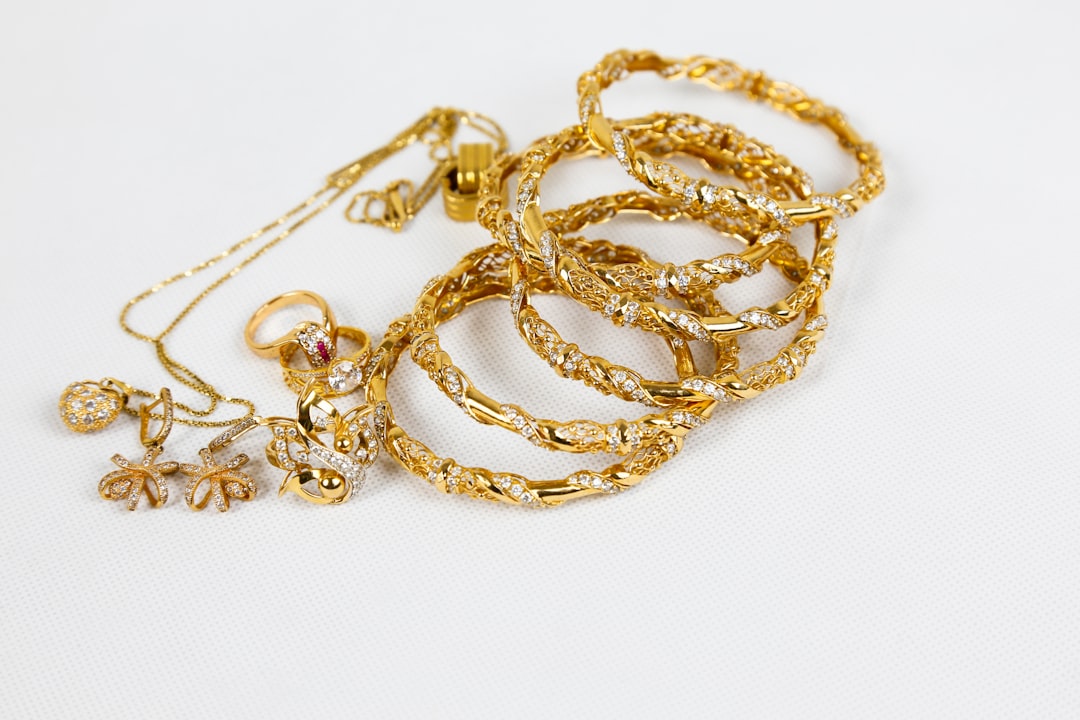
The intersection of jewellery and healing is as old as civilisation itself. Long before gemstones were graded by the 4Cs or gold was traded on commodity exchanges, precious stones and metals were valued primarily for their perceived spiritual and medicinal properties. In India, this tradition runs deeper than perhaps anywhere else on earth. The ancient texts of Ayurveda, the Vedas, and the Tantric traditions describe in meticulous detail how specific gemstones and metals interact with the body's energy systems — the chakras — to promote health, balance, and spiritual growth.
In 2026, chakra healing jewellery is experiencing a remarkable resurgence, driven by a global wellness movement that has embraced yoga, meditation, and holistic healing, and by a younger generation of Indians rediscovering their own spiritual heritage. Whether you approach chakra jewellery as a devout practitioner, a cultural enthusiast, or a curious sceptic, understanding the framework adds a rich layer of meaning to the pieces you wear.
This guide provides a thorough exploration of the seven-chakra system, the gemstones and metals associated with each energy centre, the specific role of gold in energy healing according to Ayurvedic and Tantric traditions, practical guidelines for choosing and wearing chakra jewellery, and an honest assessment of both the spiritual and scientific perspectives.
Understanding the Seven Chakras
The chakra system originates in ancient Indian spiritual traditions, with detailed descriptions appearing in texts dating to at least 1500 BCE. The word "chakra" is Sanskrit for "wheel" or "disc," referring to spinning vortices of energy believed to exist along the central axis of the body, from the base of the spine to the crown of the head.
Each of the seven primary chakras is associated with specific physical organs, emotional states, spiritual qualities, colours, elements, and — crucially for our purposes — gemstones and metals that are believed to resonate with and support that energy centre.
1. Muladhara (Root Chakra)
Location: Base of the spine Colour: Red Element: Earth Governs: Survival, security, grounding, physical vitality When balanced: Feeling safe, stable, energetic, and connected to the physical world When blocked: Anxiety, fear, lethargy, financial insecurity, lower back painThe root chakra is the foundation of the entire energy system. It represents our most basic needs — shelter, food, safety — and our connection to the physical world and the earth beneath our feet.
2. Svadhisthana (Sacral Chakra)
Location: Lower abdomen, approximately two inches below the navel Colour: Orange Element: Water Governs: Creativity, sexuality, emotions, pleasure, relationships When balanced: Creative flow, healthy relationships, emotional stability When blocked: Creative blocks, emotional numbness, intimacy issues, guilt3. Manipura (Solar Plexus Chakra)
Location: Upper abdomen, stomach area Colour: Yellow Element: Fire Governs: Personal power, confidence, self-esteem, willpower, digestion When balanced: Strong sense of self, decisiveness, healthy ambition When blocked: Low self-esteem, control issues, digestive problems, indecisiveness4. Anahata (Heart Chakra)
Location: Centre of the chest Colour: Green (secondary: pink) Element: Air Governs: Love, compassion, forgiveness, emotional healing, relationships When balanced: Capacity for deep love, empathy, forgiveness, inner peace When blocked: Jealousy, bitterness, inability to trust, heart and lung issues5. Vishuddha (Throat Chakra)
Location: Throat Colour: Blue Element: Ether (Akasha) Governs: Communication, self-expression, truth, creativity When balanced: Clear communication, authentic self-expression, good listening When blocked: Fear of speaking, dishonesty, thyroid issues, neck pain6. Ajna (Third Eye Chakra)
Location: Centre of the forehead, between the eyebrows Colour: Indigo Element: Light Governs: Intuition, wisdom, insight, imagination, mental clarity When balanced: Strong intuition, clear thinking, vivid imagination, spiritual awareness When blocked: Confusion, indecision, headaches, poor memory, disconnect from intuition7. Sahasrara (Crown Chakra)
Location: Top of the head Colour: Violet or white Element: Cosmic energy (beyond elements) Governs: Spiritual connection, enlightenment, universal consciousness, bliss When balanced: Spiritual awareness, sense of unity, inner wisdom, peace When blocked: Spiritual disconnection, cynicism, close-mindedness, depressionGemstones for Each Chakra
The association between gemstones and chakras is based on colour correspondence, vibrational frequency (as understood in traditional systems), and centuries of empirical observation within Ayurvedic, Tantric, and Vedic astrological traditions.
Chakra-Gemstone Reference Table
| Chakra | Primary Stones | Secondary Stones | Vedic Gem (Navaratna) | Price Range (₹/carat, April 2026) |
|---|---|---|---|---|
| Muladhara (Root) | Red jasper, garnet, black tourmaline | Ruby, hematite, bloodstone | Ruby (Manik) | Garnet: ₹500–₹3,000; Ruby: ₹10,000–₹5,00,000+ |
| Svadhisthana (Sacral) | Carnelian, orange calcite | Sunstone, amber, coral | Coral (Moonga) | Carnelian: ₹200–₹1,500; Coral: ₹1,000–₹15,000 |
| Manipura (Solar Plexus) | Citrine, yellow topaz, tiger's eye | Yellow sapphire, pyrite | Yellow Sapphire (Pukhraj) | Citrine: ₹300–₹2,000; Yellow Sapphire: ₹5,000–₹1,00,000+ |
| Anahata (Heart) | Green aventurine, rose quartz | Emerald, jade, malachite | Emerald (Panna) | Rose quartz: ₹100–₹800; Emerald: ₹5,000–₹3,00,000+ |
| Vishuddha (Throat) | Lapis lazuli, blue lace agate | Aquamarine, turquoise | Blue Sapphire (Neelam) | Lapis: ₹300–₹3,000; Blue Sapphire: ₹10,000–₹5,00,000+ |
| Ajna (Third Eye) | Amethyst, sodalite | Iolite, fluorite | Cat's Eye (Lehsunia) | Amethyst: ₹200–₹2,000; Cat's Eye: ₹3,000–₹50,000+ |
| Sahasrara (Crown) | Clear quartz, amethyst | Diamond, selenite, moonstone | Diamond (Heera) | Clear quartz: ₹100–₹500; Diamond: ₹25,000–₹10,00,000+ |
Choosing Gemstones for Healing Jewelry
When selecting gemstones for chakra jewellery, practitioners recommend choosing based on which chakras feel out of balance rather than attempting to address all seven simultaneously. A common approach is to identify your one or two most challenged energy centres and select primary stones for those chakras.
Quality matters in traditional practice. Ayurvedic texts specify that healing gemstones should be natural (not synthetic or treated), free from significant cracks or inclusions that might be visible to the naked eye, and of good colour saturation. The stone should "appeal to the eye and the heart" — a principle that aligns surprisingly well with modern gemological standards of beauty.
Gold's Role in Energy Healing
Gold holds a unique and exalted position in the chakra healing tradition. While gemstones are associated with specific chakras, gold is considered a "universal amplifier" — a metal that enhances the energy of any gemstone it holds and that carries its own powerful healing properties.
Ayurvedic Perspective on Gold
In Ayurveda, gold (Swarna) is classified as one of the seven noble metals (Sapta Dhatus) and is associated with the sun (Surya). It is considered warm in nature (Ushna Virya) and is believed to balance the Kapha and Vata doshas while mildly increasing Pitta.
Swarna Bhasma (gold ash) has been used in Ayurvedic medicine for centuries as a Rasayana (rejuvenating) therapy. Classical texts including the Charaka Samhita and the Rasa Ratna Samuccaya describe gold's properties as strengthening the heart, improving intelligence, enhancing memory, boosting immunity, and promoting longevity. While Swarna Bhasma is an ingestible preparation distinct from wearing gold jewellery, the underlying philosophy supports gold's role in health and healing.Gold as an Energy Conductor
Practitioners of chakra healing describe gold as an excellent conductor of subtle energy (prana or chi). When a gemstone is set in gold, the metal is believed to amplify and direct the stone's vibrational energy into the body more effectively than silver, copper, or other metals. This is why traditional Indian gem therapy (Ratna Chikitsa) strongly prefers gold settings for solar-energy stones (ruby, yellow sapphire, coral) and silver settings for lunar-energy stones (pearl, diamond, blue sapphire).
Gold and Specific Chakras
While gold influences all chakras, it is most strongly associated with the Manipura (solar plexus) chakra due to its solar connection and yellow colour. Gold jewellery worn near the solar plexus — such as a long chain with a pendant resting at the stomach area, or a waist chain (kamarbandh) — is believed to strengthen personal power, confidence, and digestive fire (Agni).
Gold is also strongly associated with the Anahata (heart) chakra when worn as a necklace close to the chest. In this position, it is believed to open the heart to love, compassion, and emotional healing.
Comparison of Metals in Healing Traditions
| Metal | Associated Energy | Best Chakras | Dosha Effect | Traditional Use |
|---|---|---|---|---|
| Gold (Swarna) | Solar, warm, activating | Manipura, Anahata, Sahasrara | Balances Vata/Kapha | Amplifies solar gems; heart, immunity |
| Silver (Rajata) | Lunar, cool, calming | Ajna, Vishuddha, Svadhisthana | Balances Pitta | Amplifies lunar gems; mind, cooling |
| Copper (Tamra) | Grounding, balancing | Muladhara, Svadhisthana | Balances Kapha | Joint health, blood circulation |
| Platinum | Neutral, purifying | Sahasrara, Ajna | Neutral | Spiritual clarity, modern preference |
| Panchdhatu (five metals) | Balanced, all doshas | All chakras | Tridosha balancing | Traditional rings, kadas |
Designing Chakra Jewelry: A Practical Guide
Single-Chakra Focus Pieces
The most effective approach for beginners is a single-chakra focus piece — a ring, pendant, or bracelet designed to support one specific energy centre.
Root chakra ring: A garnet or red jasper cabochon set in a gold or copper ring, worn on the index finger of the right hand. Approximate cost: ₹15,000 to ₹35,000 in 22K gold with a quality garnet. Heart chakra pendant: A rose quartz or green aventurine pendant set in gold, worn on a chain that allows the stone to rest at the centre of the chest. Approximate cost: ₹20,000 to ₹45,000 in 22K gold with a semi-precious stone. Throat chakra necklace: A lapis lazuli or aquamarine bead necklace strung with gold spacer beads, sitting close to the throat. Approximate cost: ₹25,000 to ₹60,000 depending on stone quality and gold content.Multi-Chakra Pieces
Multi-chakra pieces incorporate stones for multiple energy centres in a single jewellery item.
Seven-chakra bracelet: Perhaps the most popular chakra jewellery format, featuring seven stones — one for each chakra — set in a gold link bracelet or strung on gold wire. Stones are arranged in order from root (clasp end) to crown. Approximate cost: ₹35,000 to ₹80,000 in gold with semi-precious stones. Navaratna (nine gems) ring or pendant: The traditional Indian Navaratna arrangement features nine gems representing the nine planetary bodies (Navagraha), which correspond to all seven chakras and two additional energy points. This is the most comprehensive and revered form of gem therapy in Indian tradition. A quality Navaratna ring in 22K gold costs ₹50,000 to ₹3,00,000+ depending on stone quality.Price Guide: Chakra Jewelry by Type
| Piece Type | Stones | Metal | Approx. Cost (₹) |
|---|---|---|---|
| Single stone ring (semi-precious) | Amethyst, citrine, garnet | 22K gold, 5–8g | 50,000 – 80,000 |
| Single stone ring (precious) | Ruby, emerald, sapphire | 22K gold, 5–8g | 1,00,000 – 5,00,000+ |
| Chakra pendant (semi-precious) | Rose quartz, lapis, etc. | 22K gold chain + setting | 40,000 – 75,000 |
| 7-chakra bracelet (semi-precious) | Seven stones, beads | Gold wire/spacers, 8–12g | 70,000 – 1,20,000 |
| Navaratna ring (standard) | Nine gems, standard quality | 22K gold, 6–10g | 80,000 – 1,50,000 |
| Navaratna ring (premium) | Nine gems, certified quality | 22K gold, 8–12g | 2,00,000 – 5,00,000+ |
| Healing bangle set | Multiple semi-precious | Gold-plated or Panchdhatu | 5,000 – 25,000 |
Wearing Guidelines for Chakra Jewelry
Traditional Prescriptions
Vedic and Ayurvedic traditions provide specific guidelines for wearing healing jewellery that have been followed for centuries.
Finger associations for rings:- Index finger (Tarjani): Associated with Jupiter (Guru). Wear yellow sapphire or citrine here for wisdom, prosperity, and solar plexus activation.
- Middle finger (Madhyama): Associated with Saturn (Shani). Wear blue sapphire, amethyst, or lapis lazuli for discipline, throat and third eye activation.
- Ring finger (Anamika): Associated with the Sun (Surya). Wear ruby, garnet, or diamond here for vitality, heart activation, and personal power.
- Little finger (Kanishthika): Associated with Mercury (Budh). Wear emerald or peridot for communication and heart/throat activation.
Modern Practical Guidelines
For those who appreciate the chakra framework but prefer a less ritualistic approach, these practical guidelines preserve the essential principles.
Wear stones close to their associated chakra. A heart chakra stone worn as a necklace near the chest is more aligned than the same stone worn as an anklet. A throat chakra stone works best as a close-fitting choker or short necklace. Start with one stone at a time. Wearing multiple new healing stones simultaneously can feel overwhelming for sensitive individuals. Introduce one new piece, wear it for at least a week, and observe how you feel before adding another. Set an intention. When you first put on a chakra jewellery piece, take a moment to mentally state your intention — what quality you wish to cultivate, what imbalance you hope to address. This practice of conscious intention is recommended across traditions and costs nothing. Cleanse regularly. Practitioners believe that healing stones absorb negative energy over time and need periodic cleansing. Methods include placing the piece in sunlight for a few hours (not recommended for amethyst, rose quartz, or citrine, which can fade), burying it in clean earth overnight, placing it on a large clear quartz cluster, or simply rinsing it under cool running water while visualising the negative energy washing away.The Navaratna Tradition: India's Supreme Healing Arrangement
The Navaratna (nine gems) is India's most revered healing jewellery tradition, dating back at least 2,000 years with references in the Brihat Samhita and Garuda Purana.
The Nine Gems and Their Associations
| Gem | Planet (Graha) | Chakra Connection | Position in Navaratna |
|---|---|---|---|
| Ruby (Manik) | Sun (Surya) | Manipura, Muladhara | Centre |
| Pearl (Moti) | Moon (Chandra) | Ajna, Svadhisthana | Adjacent to ruby |
| Red Coral (Moonga) | Mars (Mangal) | Muladhara, Manipura | Prescribed position |
| Emerald (Panna) | Mercury (Budh) | Anahata, Vishuddha | Prescribed position |
| Yellow Sapphire (Pukhraj) | Jupiter (Guru) | Manipura, Sahasrara | Prescribed position |
| Diamond (Heera) | Venus (Shukra) | Anahata, Sahasrara | Prescribed position |
| Blue Sapphire (Neelam) | Saturn (Shani) | Ajna, Vishuddha | Prescribed position |
| Hessonite (Gomed) | Rahu | Ajna | Prescribed position |
| Cat's Eye (Lehsunia) | Ketu | Muladhara, Sahasrara | Prescribed position |
Scientific vs Spiritual Perspectives
Any honest guide to chakra healing jewellery must address the tension between traditional beliefs and scientific evidence. Both perspectives deserve respect.
The Spiritual View
Practitioners of Ayurveda, yoga, and Tantric traditions have used gemstones and metals therapeutically for millennia. The sheer longevity and cross-cultural consistency of these practices — similar traditions exist in Chinese medicine, Tibetan healing, and Western crystal therapy — suggests that millions of people across thousands of years have experienced subjective benefits. The mechanisms proposed include vibrational resonance (each stone emitting a subtle energy frequency that interacts with the body's energy field), colour therapy (the visual impact of specific colours on mood and physiology), and the placebo effect in its most positive interpretation (the power of belief and intention to influence well-being).
The Scientific View
Modern science has not found evidence for chakras as physical structures, for gemstones emitting healing energy, or for gold having medicinal properties when worn (as opposed to ingested in Ayurvedic preparations, where gold nanoparticles are an active area of pharmaceutical research). The scientific consensus is that any benefits experienced from wearing healing jewellery are attributable to placebo effects, the psychological comfort of ritual and meaning, and the aesthetic pleasure of wearing beautiful objects.
However, it is important to note that the placebo effect is a real and measurable phenomenon. If wearing a rose quartz pendant makes someone feel more open to love, or a citrine ring makes someone feel more confident, those subjective experiences are valid and the resulting behavioural changes are real, regardless of the mechanism.
A Balanced Approach
The most intellectually honest approach is to appreciate chakra jewellery for what it demonstrably offers — beauty, cultural connection, personal meaning, and the psychological benefits of intentional self-care — without making medical claims or substituting it for professional healthcare. Wear your healing jewellery because it is beautiful, because it connects you to a profound tradition, and because the practice of setting intentions and cultivating awareness through your accessories enriches your daily life. Do not rely on it to treat medical conditions.
Frequently Asked Questions
1. Do I need to believe in chakras for healing jewelry to work?
This depends on your definition of "work." If you expect physical healing effects, the evidence is not there regardless of belief. If you seek a mindfulness tool that reminds you to focus on specific qualities (confidence, compassion, communication), the jewellery serves that purpose whether or not you subscribe to the full chakra framework. Many people enjoy chakra jewellery as a symbolic practice without literal belief in energy centres.
2. Which chakra should I focus on first?
Traditional practitioners recommend starting with the root chakra (Muladhara) because it is the foundation of the system. If your root chakra is unbalanced — manifesting as anxiety, financial stress, or a general feeling of insecurity — balancing upper chakras is believed to be ineffective. However, if you have a specific concern (communication issues suggesting a throat chakra focus, or relationship difficulties suggesting a heart chakra focus), you may begin there.
3. Can I wear multiple chakra stones at once?
Yes, but moderation is recommended. A seven-stone chakra bracelet worn alone is generally considered harmonious because all chakras are represented equally. Wearing multiple individual stone pieces (a ring, a pendant, and earrings all with different stones) can feel energetically overwhelming for some people. Start gradually and notice how you feel. If you experience agitation or unease, simplify.
4. Does the quality of the gemstone matter for healing?
Traditional Ayurvedic and Vedic texts emphasise that healing gemstones should be natural, untreated, and of good quality — free from visible cracks, chips, or cloudiness. However, they need not be the finest gem-quality specimens. A clean, vibrant ₹2,000 garnet may be as effective for healing purposes as a ₹50,000 collector-grade garnet. The key qualities are natural origin, good colour, and freedom from major flaws.
5. Why is gold preferred over silver for certain healing stones?
In Vedic gem therapy (Ratna Chikitsa), gold is associated with solar energy (warm, activating, masculine) and silver with lunar energy (cool, calming, feminine). Solar-energy stones — ruby, yellow sapphire, coral — are traditionally set in gold to amplify their warm, activating properties. Lunar-energy stones — pearl, diamond, blue sapphire — are set in silver to amplify their cool, calming properties. Emerald (Mercury) can be set in either.
6. What is the cost of a basic chakra healing jewelry set?
A basic set consisting of a single-chakra pendant and a seven-stone bracelet in gold with semi-precious stones costs approximately ₹80,000 to ₹1,50,000. A budget-friendly alternative using gold-plated Panchdhatu (five-metal alloy) with semi-precious stones can be assembled for ₹10,000 to ₹30,000. A premium set with precious stones in 22K gold can exceed ₹5,00,000.
7. Can men wear chakra healing jewelry?
Absolutely. Chakra healing is not gender-specific, and the tradition of men wearing gemstone rings for astrological and healing purposes is deeply rooted in Indian culture. Men commonly wear Navaratna rings, planetary gemstone rings (particularly yellow sapphire, ruby, and emerald), and healing stone bracelets or kadas. The styling may differ from women's pieces, but the principles are identical.
8. How often should I cleanse my healing jewelry?
Most practitioners recommend cleansing weekly for pieces worn daily, and after any particularly stressful or negative experience. Cleansing methods include running water, sunlight (for stones that do not fade), moonlight (full moon is considered most powerful), placing on a clear quartz cluster, or smudging with sage or incense. Gold settings do not require special cleansing beyond normal jewellery care.
9. Is there a connection between Navaratna and chakra healing?
Yes, a strong one. The Navaratna (nine gems) system maps directly to the chakra system, with each planetary gem influencing one or more energy centres. The Navaratna is essentially a comprehensive chakra-balancing tool compressed into a single ring or pendant. It represents the most sophisticated integration of gemstone healing in Indian tradition.
10. Can chakra jewelry help with anxiety?
Many people report that wearing grounding stones (black tourmaline, garnet, red jasper) associated with the root chakra helps them feel calmer and more centred. Whether this is a direct energetic effect or a psychological benefit from the ritual of mindful adornment is debatable. Chakra jewellery should complement, not replace, professional support for clinical anxiety.
11. Where can I buy authentic chakra healing jewelry in India?
Look for jewellers who specialise in gemstone therapy or Vedic jewellery. Cities like Jaipur (the gemstone capital of India), Mumbai, Chennai, and Varanasi have numerous jewellers with expertise in healing stones. Ensure stones are natural and untreated by requesting a gem lab certificate. Avoid online sellers who make extravagant healing claims without providing certification. Use our store finder to locate specialist jewellers near you.
12. What is Panchdhatu and how does it relate to chakra healing?
Panchdhatu is a five-metal alloy traditionally composed of gold, silver, copper, iron, and zinc (or tin). In Ayurvedic tradition, each metal corresponds to a planetary body and influences specific chakras and doshas. A Panchdhatu ring or bangle is believed to provide balanced healing across all energy centres. It is a more affordable alternative to pure gold for healing jewellery, with pieces available from ₹2,000 to ₹15,000 depending on the proportion of gold and the complexity of the design.
Conclusion
Chakra healing jewellery occupies a beautiful space at the intersection of ancient wisdom, personal spirituality, and the simple human love of beautiful adornment. Whether you wear a garnet ring to feel grounded, a Navaratna pendant to harmonise your planetary energies, or a seven-stone bracelet simply because it reminds you to be mindful of your well-being, you are participating in a tradition that stretches back millennia and spans cultures.
The key is to approach the practice with open-minded sincerity, reasonable expectations, and an appreciation for both the spiritual and aesthetic dimensions of your jewellery. Explore gemstone jewellers through our store finder, check current gold rates for your setting, and let the ancient wisdom of India's healing traditions add depth and meaning to your personal collection.
Published: April 2026 | Category: Healing Jewelry | Last Updated: April 9, 2026
More in Style Guide
Share this article
Our editorial team comprises jewellery industry veterans, certified gemmologists, and passionate writers with decades of combined experience across India's gold, diamond, and gemstone markets. Every article is researched, fact-checked, and written to help Indian buyers make smarter, safer jewellery decisions.
Passionate about jewellery and love to write? We'd love to hear from you.
Join us as a writer →Ready to buy? Find verified jewellers near you
Browse 10,000+ BIS hallmark certified jewellers across India. Compare ratings, check today's gold rate, and book a visit.
Keep Reading