Choosing between 22K, 24K and 18K gold is the single most important decision before any gold purchase in India. The right karat depends on whether you're buying for daily wear, ceremonial use, diamond settings or pure investment. This 2026 guide gives you a clear decision framework with worked price examples.
The fundamentals first: karatage describes how pure gold is on a scale of 24. 24K means 24 parts pure gold out of 24 — 100% pure (in practice 99.9%, hallmarked as "999"). 22K is 22 parts gold out of 24 — 91.6% pure, hallmarked as "916". 18K is 18 parts of 24 — 75%, hallmarked "750". 14K is 14/24 = 58.5%, hallmarked "585". The non-gold part is alloy metal (silver, copper, palladium) added for hardness and color.
24K (999): Investment-grade, but unsuitable for jewellery
Pure gold is the softest of the precious metals — softer than copper. A 24K ring deforms with normal daily wear; the prongs holding stones bend; the band loses its shape. For these reasons 24K is almost never used for jewellery in India.
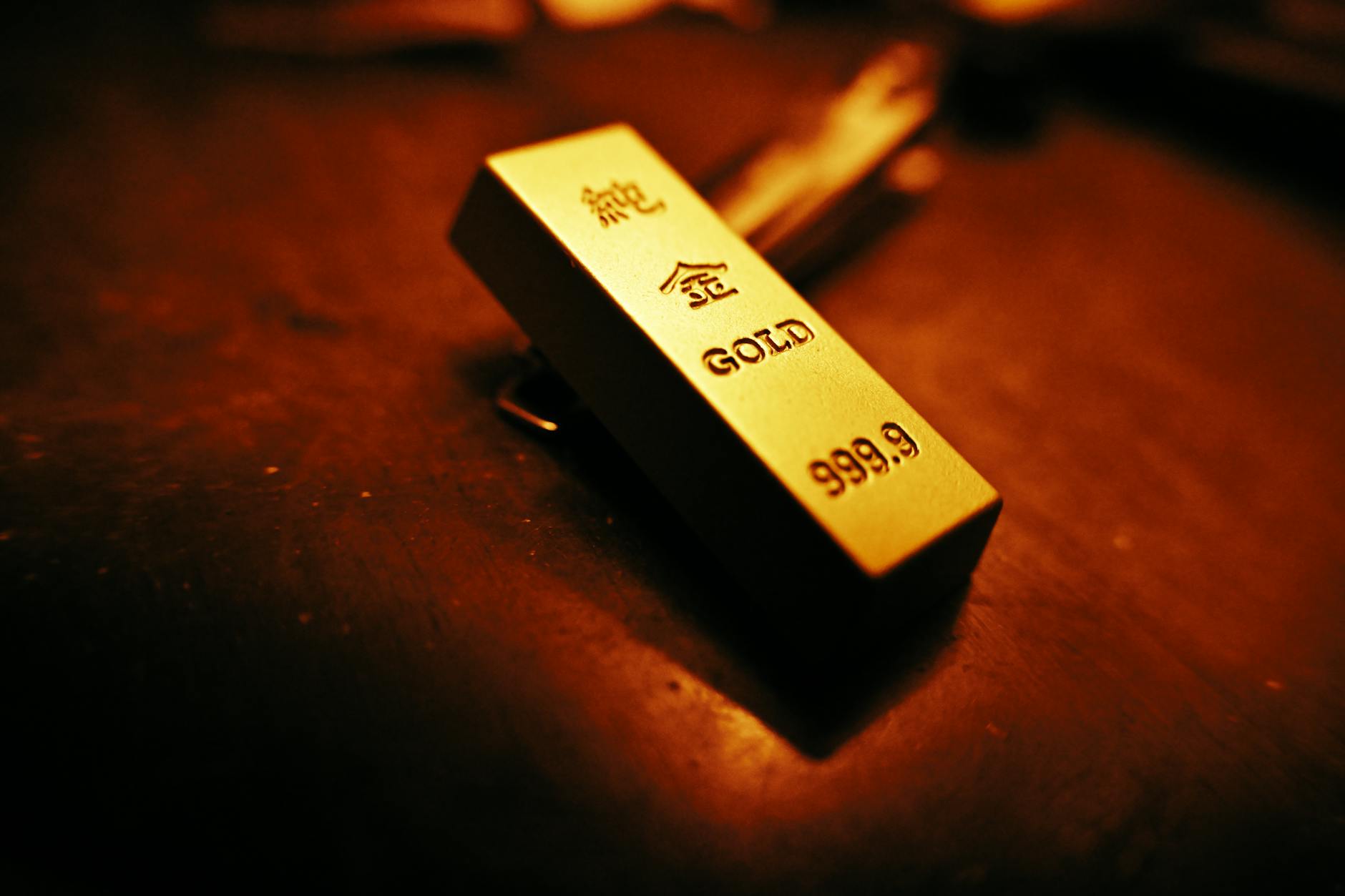
Where 24K excels is investment. Gold coins and bars are produced in 24K because pure gold has the closest possible relationship with international gold prices. MMTC-PAMP coins, bank-issued coins and bullion bars are all 24K. The advantage on resale is significant — 24K coins fetch 96–98% of today's IBJA rate, vs 75–85% for jewellery.
For purely religious purposes (offering at temples, ceremonial pieces, deity ornaments), 24K is also preferred because Vedic tradition values purity. A small Lakshmi coin gifted on Dhanteras is almost always 24K.
22K (916): India's jewellery gold standard
The 8.4% alloy in 22K does two essential things. It makes the gold hard enough to resist daily wear damage, and it adds a slight color enhancement (the copper component gives 22K its characteristic warm yellow). Roughly 95% of all gold jewellery sold in India is 22K because of this balance.
22K is the right choice for: chains (sturdy enough for clasp engagement and daily wear), bangles (resists deformation when knocked), simple rings (without prong-set stones), traditional Indian bridal pieces (mangalsutra, thaali, kasu mala — see our wedding gold buying checklist for community-specific traditions).
22K's resale liquidity is also strong — every Indian jeweller readily buys back 22K hallmarked gold at 92–96% of today's rate. Compare that to 18K (resale 80–88%) and 14K (resale 70–80%) — 22K is the most "liquid" karat in the Indian market.
18K (750): Best for diamond and stone-set jewellery
The 25% alloy in 18K makes it significantly harder than 22K. This matters when the gold must hold gemstones securely — the prongs in a diamond engagement ring need to clamp firmly without bending; pavé settings need to grip dozens of small stones without losing them. 22K is too soft for high-density stone work; 18K is the global standard.
18K is also used for: white gold (alloyed with palladium or nickel for the white color, then rhodium-plated for the bright finish), contemporary designer jewellery (modern aesthetics suit the slightly cooler tone of 18K), international-style engagement rings (Western jewellery market standard).
The price-per-gram of 18K is roughly 82% of 22K (proportional to gold content). At today's rates, if 22K is ₹13,628/g, 18K is ₹11,170/g. So an 18K piece appears cheaper than an equivalent 22K piece by weight — a real saving for buyers who don't need the highest purity.
14K (585): Functional but not popular in India
14K (58.5% gold) is the standard in the United States, Western Europe and many fashion-jewellery markets. In India 14K has limited adoption — Indian buyers have a strong cultural preference for higher gold content. Where 14K appears in India is typically: lightweight men's chains, fashion rings, watches and pieces marketed to younger / Western-leaning buyers.
14K's hardness is excellent — it resists scratches and deformation better than higher karats. But the lower gold content reduces resale liquidity and cultural value. For pieces you'll keep and pass down, 14K is rarely the right choice in India.
Price comparison: 10g 22K vs 24K vs 18K (worked example)
Using today's IBJA 24K rate of ₹14,878/g and standard gold pricing formula:
- 10g 24K coin (sealed MMTC-PAMP, plain finish): Gold value: ₹1,48,780. Making + finishing 1.5%: ₹2,232. GST: ₹4,463 + ₹112 = ₹4,575. Total: ₹1,55,587.
- 10g 22K plain bangle: Gold value: ₹1,36,280. Making 12%: ₹16,353. GST: ₹4,088 + ₹818 = ₹4,906. Total: ₹1,57,539.
- 10g 18K plain ring: Gold value: ₹1,11,585. Making 12%: ₹13,390. GST: ₹3,348 + ₹670 = ₹4,018. Total: ₹1,28,993.
So 10g of 18K is about 18% cheaper than 10g of 22K — proportional to the gold content difference. The 24K coin is similar to the 22K bangle because the lower making charge of investment-grade gold offsets the higher gold purity.
Resale value: how each karat performs
Buy-back rates as a percentage of (today's IBJA × purity factor) for typical Indian jewellers:
- 24K sealed coin (MMTC-PAMP): 96–98%. Highest liquidity.
- 22K hallmarked plain piece: 92–96%. Standard liquidity.
- 22K hallmarked bridal piece (heavy making): 75–82%. Making charges lost permanently.
- 18K hallmarked piece: 80–88%. Smaller buyer pool than 22K.
- 14K piece: 70–80%. Limited Indian market.
The pattern: investment-grade 24K coins are most liquid; jewellery-grade 22K is second; lower karats lose liquidity. For pieces intended as wealth storage, prioritise high karat + low making charge.
Cultural and ritual considerations
Different communities and rituals favour specific karats:
- Hindu wedding mangalsutra: almost always 22K. The cultural premium for high purity in this central piece is non-negotiable.
- Catholic wedding ring: commonly 18K white gold with a diamond — Western influence. Plain bands sometimes 22K.
- Muslim Mahr gift: typically 22K — same cultural preference for high purity.
- Sikh ceremonial gold: 22K is dominant; some communities use 24K coins as ceremonial gifts.
- South Indian temple jewellery: 22K with antique finish. The motifs (Lakshmi, peacock, swan) are 22K-traditional.
The decision tree
To choose your karat:
- Investment with no jewellery use: 24K (sealed coins, bars, or SGBs for tax efficiency).
- Daily-wear or traditional Indian jewellery: 22K. Hallmarked, with HUID verified via BIS Care app.
- Diamond engagement ring or pavé / prong-set stones: 18K (yellow, white or rose). Setting durability matters.
- Modern fashion / Western-style: 14K or 18K depending on price preference.
- Wedding bridal set with high making complexity: 22K hand-crafted by master karigar; verify HUID across all pieces in the set.
For city-specific making charges and verified jewellers in your area, browse our tehsil-level jeweller directory across all 36 Indian states. Each tehsil page shows today's hub-adjusted gold rate, BIS-licensed shop count, and local making charge ranges.
External authoritative references
The official karat / fineness mappings are governed by the Bureau of Indian Standards. See bis.gov.in for the current hallmarking schedule. Daily Indian gold rates are published by the India Bullion and Jewellers Association at ibjarates.com — both the AM and PM benchmark rates.
More in Education
Share this article
Our editorial team comprises jewellery industry veterans, certified gemmologists, and passionate writers with decades of combined experience across India's gold, diamond, and gemstone markets. Every article is researched, fact-checked, and written to help Indian buyers make smarter, safer jewellery decisions.
Passionate about jewellery and love to write? We'd love to hear from you.
Join us as a writer →Ready to buy? Find verified jewellers near you
Browse 10,000+ BIS hallmark certified jewellers across India. Compare ratings, check today's gold rate, and book a visit.
Keep Reading